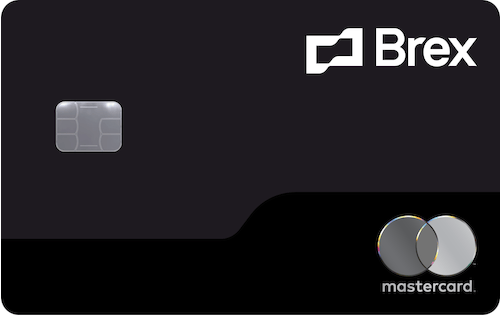
Pros and cons
- Pros:
- No personal guarantee required, keeping founders' personal assets protected
- Generous rewards multipliers on startup-relevant categories like software, travel, and dining
- No annual fee for the basic plan and no foreign transaction fees
- Built-in expense management software that saves time on accounting and bookkeeping
- Cons:
- Steep eligibility requirements, needing significant cash in a business bank account
- Exclusivity requirement to unlock the best rewards forces a choice between Brex and other card issuers
- Rewards structure can be complicated with different multipliers across spending categories
Welcome offer
The current sign-up bonus is 10,000 points after you spend $3,000 in the first three months. It's not going to blow anyone away. It's worth about $100 if you book travel through their portal. It's a nice little extra, but it's not the main reason to get this card. When you compare this to other business cards that offer bonuses worth $500 or more, the Brex offer seems a bit underwhelming. However, it's important to remember that Brex is targeting a different type of customer. For a well-funded startup, a small sign-up bonus is less important than the long-term value of the rewards program and other benefits.
Key benefits and perks
Beyond the rewards, the Brex card has some genuinely useful perks for startups. The built-in expense management software to be a real lifesaver. It automates a lot of the tedious receipt tracking and expense reporting that nobody wants to do. You can set spending limits for employees, issue virtual cards for specific vendors, and automatically sync transactions with your accounting software. This can save your finance team a ton of time and help you keep a close eye on your company's spending.
The partner discounts are another valuable perk. Brex has partnerships with a wide range of companies that are popular with startups, such as AWS, Slack, and QuickBooks. These discounts can add up to significant savings, especially for a company that is just starting out. For example, the AWS credit can be worth up to $5,000, which is a huge benefit for a tech startup that relies on cloud infrastructure. And since it's a World Elite Mastercard, you get the usual travel protections, such as travel accident insurance and rental car insurance.
Earning rewards
Now for the fun part: earning points. This is where the Brex card gets interesting, and a little complicated. To get the best rewards, you have to go all-in with Brex. If you make it your exclusive corporate card, you'll earn:
- 7 points per dollar on rideshares
- 4 points per dollar on travel booked through Brex
- 3 points per dollar on restaurants
- 2 points per dollar on software subscriptions
- 1 point per dollar on everything else
The 2x on software. For a tech startup, that can be a huge amount of spending. The best part is that these rewards are uncapped. If you're spending a lot, you won't hit a ceiling like you would with some other business cards. But if you don't want to be exclusive, you'll just get a flat 1 point per dollar on everything. It's a big difference. The opportunity cost of the exclusivity requirement is something that every business needs to consider. If you have a lot of spending in a category that is not bonused by Brex, you might be better off with a different card, even if it means giving up the high multipliers on the Brex card.
Redeeming rewards
You've got a few ways to use your points. The best option is to transfer them to one of Brex's airline partners. That's where you'll get the most value. You can also book travel through the Brex portal, where your points are worth 1 cent each. If you just want cash back, they're only worth 0.6 cents each, which is not recommended. They also have some weird redemptions, like paying for billboards. It's an unusual option, but it exists. To get the most value from your points, you'll need to be strategic. For example, you could transfer your points to Avianca LifeMiles to book a business class flight to Europe on a Star Alliance partner, which could give you a value of 3 cents per point or more.
Transfer partners
This is a real strength of the Brex program. You can transfer your points 1:1 to a solid list of airlines:
| Airline | Alliance |
|---|---|
| Aeromexico Rewards | SkyTeam |
| Air France-KLM Flying Blue | SkyTeam |
| Avianca LifeMiles | Star Alliance |
| Cathay Pacific Asia Miles | Oneworld |
| Emirates Skywards | None |
| Qantas Frequent Flyer | Oneworld |
| Singapore Airlines KrisFlyer | Star Alliance |
This gives you access to all three major airline alliances, so you can book flights pretty much anywhere.
Competing cards
How does Brex stack up? The most direct competitor is the Ramp Card. It's also a corporate card with no personal guarantee and expense management software. Ramp keeps it simple with 1.5% cash back on everything. It's less rewarding than Brex if you can maximize the bonus categories, but it's a lot more straightforward.
Then there's the BILL Divvy Corporate Card. It's another all-in-one solution. The rewards are tied to how often you pay your bill, which is an interesting twist. If you're looking for premium travel perks and don't mind a personal guarantee, the American Express® Business Platinum Card® is in a different league, but it has a hefty annual fee.
Here's a quick comparison of the key features of these cards:
| Feature | Brex Card | Ramp Card | BILL Divvy Card | Amex Business Platinum |
|---|---|---|---|---|
| Personal Guarantee | No | No | No | Yes |
| Annual Fee | $0 | $0 | $0 | $695 |
| Rewards | 1x-7x points | 1.5% cash back | Up to 7x points | 1x-5x points |
| Expense Management | Yes | Yes | Yes | No |
Who should get this card?
The Brex card is a great fit for a specific type of company: a well-funded, incorporated startup that's ready to scale. If you want to keep your personal finances separate from your business and you need high credit limits, this card is designed for you. If your company spends a lot on software and travel, and you're willing to go all-in with Brex, you can earn a ton of rewards. The ideal customer is a tech startup that has just raised a Series A or B round of funding and is looking to grow quickly. This company would have a team of employees who need to travel for work and would be able to take advantage of the high multipliers on travel and dining.
But it's not for everyone. If you're a freelancer or your business isn't incorporated, you can't get it. If you don't have a lot of cash in the bank, you won't qualify. And if you're not comfortable with the exclusivity requirement, you're better off with a different card. A company that has a lot of spending in a category that is not bonused by Brex, such as advertising, would be better off with a card that offers a high flat rate of cash back on all purchases.
Bottom line
So, what's the verdict? The Brex Corporate Card for Startups is a powerful tool, but it's not a simple one. It solves a real problem for founders who don't want to personally guarantee their company's debt. The rewards can be fantastic, but you have to play by their rules. If you're the right kind of startup, this card could be exactly what you need. For everyone else, there are simpler options out there. Before you apply, you should carefully consider your company's spending habits and decide whether the exclusivity requirement is worth the high rewards. If it is, then the Brex card could be a valuable addition to your company's financial toolkit.
Related reading
Card reviews
Compare cards
Looking for a better option?
Lovie combines company formation, banking, and virtual cards in one platform. No personal guarantee, 1.5% cashback on everything.