
On this page · 8 sections
Federal Tax Basics for Robotics LLCs
For a robotics LLC in Colorado, understanding federal tax classifications is your first critical step. The IRS offers flexibility in how an LLC is taxed, which directly impacts your reporting requirements and potential liabilities. By default, a single-member LLC (SMLLC) is treated as a disregarded entity, meaning its income and expenses are reported on the owner's personal tax return (Form 1040, Schedule C). This pass-through taxation avoids double taxation, where the business itself is taxed, and then the owners are taxed again on distributions. For LLCs with multiple members, the default federal classification is a partnership. As a partnership, the LLC files an informational return (Form 1065) with the IRS, reporting its income, gains, losses, and deductions. Each partner then receives a Schedule K-1 detailing their share of the partnership's income or loss, which they report on their individual tax returns. Again, this is a pass-through entity, avoiding corporate-level taxation. We cover this in depth in our resource on how to register an LLC in Colorado. Beyond these defaults, an LLC can elect to be taxed as a corporation, either an S-corporation or a C-corporation. An S-corp election (Form 2553) can be attractive for established robotics LLCs with significant profits, as it allows owners to be paid a reasonable salary, subject to payroll taxes, while any remaining profits distributed are not subject to self-employment taxes. This can lead to substantial tax savings for profitable businesses. A C-corp election (Form 8832) is less common for small to medium-sized LLCs due to double taxation – the corporation pays taxes on its profits, and then shareholders pay taxes again on dividends received. However, C-corps can be beneficial for businesses seeking venture capital funding or planning for an IPO, as they offer structural advantages for investors and stock options. Your choice of federal tax classification will dictate much of your compliance strategy for 2026 and beyond.
Colorado State Tax Landscape for LLCs
Colorado’s state tax environment is generally considered business-friendly, but it has specific nuances that a robotics LLC must navigate. Unlike some states, Colorado does not impose a separate state-level corporate income tax on LLCs that are federally classified as pass-through entities (disregarded or partnership). Instead, the profits and losses flow through to the owners, who then pay individual income tax at the state level. Colorado has a flat individual and corporate income tax rate. For 2026, the state income tax rate is 4.40% for both individuals and corporations. This simplicity can be a significant advantage, as it removes the complexity of tiered tax brackets. However, it's crucial to understand that even if your LLC is a pass-through entity, individual members will still owe this 4.40% on their share of the business's taxable income. Check out our guide on starting a business in Colorado for step-by-step instructions. One unique aspect of Colorado tax law is the existence of numerous special districts, which can levy additional sales or property taxes. These districts often fund specific local projects or services, and their boundaries can be complex. A robotics LLC operating in Colorado needs to be aware of the specific tax rates applicable in its physical location and any locations where it conducts business. The Colorado Department of Revenue (CDOR) provides resources to help businesses identify these rates, but it requires diligent research. Staying compliant with these varying local tax obligations is essential to avoid penalties and ensure smooth operations for your robotics venture.
Income Tax Filing Requirements in Colorado
The specific income tax filing requirements for your robotics LLC in Colorado depend heavily on its federal tax classification. If your LLC is a disregarded entity (single-member), you'll report your business income and expenses on your personal Colorado income tax return, Form DR 0104. This mirrors the federal Schedule C reporting on your Form 1040. The deadline for filing is typically April 15th of the following year, though extensions can be requested. Estimated taxes are often required if you expect to owe more than $1,000 in state income tax for the year. These are paid quarterly using Form DR 0104ES. For LLCs taxed as partnerships, the partnership itself does not pay state income tax in Colorado. However, it must file an informational partnership return, Form DR 0106, with the Colorado Department of Revenue. This return informs the state of the partnership's income, deductions, and allocations to each partner. Our resource on forming an LLC in Colorado breaks this down further. Each partner then includes their share of the income, as reported on their federal Schedule K-1, on their individual Colorado income tax return (Form DR 0104). The partnership return is also typically due April 15th. If your LLC has elected C-corporation status, it will be subject to Colorado corporate income tax at the 4.40% flat rate. The LLC will file Form DR 0112, Colorado C Corporation Income Tax Return. Estimated tax payments are generally required if the corporation anticipates owing more than $1,000 in tax. For S-corporations, the entity files an informational return, Form DR 0106, similar to partnerships, and shareholders report their share of income on their individual returns. Keeping accurate financial records throughout the year is paramount for all classifications to ensure a smooth and accurate filing process.
Sales, Use, and Property Taxes
Beyond income taxes, your robotics LLC in Colorado will likely encounter sales, use, and property taxes. Colorado has a state sales tax rate of 2.9%, but this is often combined with various local sales taxes levied by cities, counties, and special districts. These local rates can vary significantly, sometimes bringing the combined sales tax rate to over 8%. As a business selling robotics products or services, you are generally responsible for collecting sales tax from customers and remitting it to the Colorado Department of Revenue (CDOR). This requires obtaining a sales tax license, which can be done through the Colorado Business Express portal. Understanding the specific sales tax rates for each jurisdiction where you sell is crucial for accurate collection and remittance.
Use tax is essentially a sales tax on items purchased outside Colorado but used, stored, or consumed within the state, where sales tax was not collected at the point of purchase. For a robotics company, this could apply to specialized equipment or components sourced from out-of-state suppliers. You are responsible for self-assessing and remitting use tax on these purchases. This often catches new businesses off guard, leading to compliance issues.
Property taxes in Colorado are levied by local governments (counties, cities, school districts) on real estate and certain business personal property. Robotics companies often invest in specialized machinery, equipment, and sometimes real estate for manufacturing or R&D facilities. This tangible personal property is subject to property tax assessments. Property tax rates and assessment methods vary by county. For example, in Boulder County, commercial property is assessed at 29% of its actual value. You will receive an annual declaration form to report your business personal property to the county assessor. Missing this declaration or under-reporting can lead to penalties and increased tax burdens. Maintaining a detailed asset register is highly recommended.

Key Deductions and Credits for Robotics
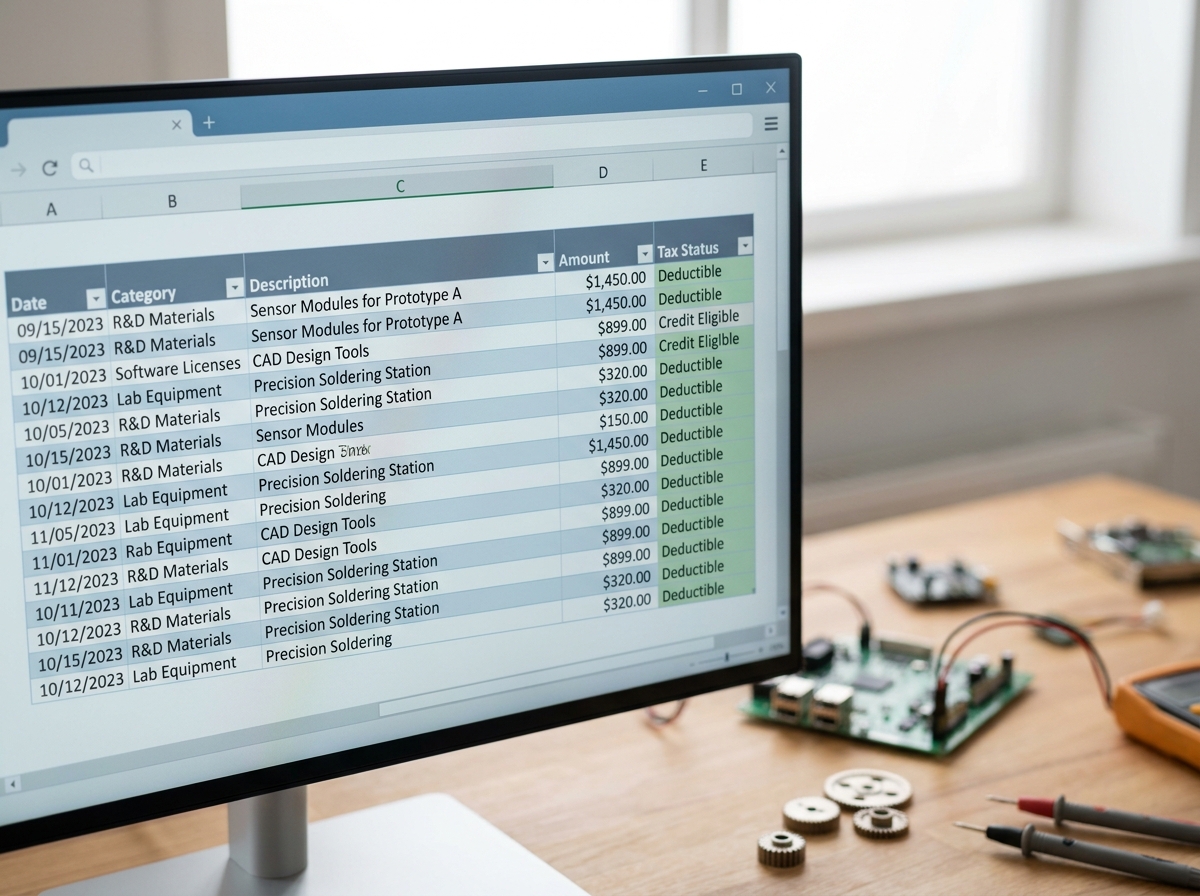
Maximizing deductions and credits is crucial for any robotics LLC to reduce its taxable income. The research and development (R&D) tax credit is particularly relevant for robotics companies. Federally, the R&D credit (IRC Section 41) allows businesses to claim a credit for increasing research activities. This credit can be applied against payroll taxes for qualified small businesses (those with less than $5 million in gross receipts and no gross receipts for any of the five preceding tax years), up to $250,000 annually for up to five years. For larger businesses, it reduces federal income tax liability. Colorado also offers its own R&D tax credit, which is a nonrefundable income tax credit for increasing qualified research expenses incurred in Colorado. This state credit is 3% of the amount by which qualified research expenditures exceed the taxpayer's average expenditures in the three preceding tax years, up to a maximum of $75,000.
Beyond R&D, several other deductions are common for robotics LLCs. These include ordinary and necessary business expenses such as salaries and wages, rent for office or lab space, utilities, insurance, professional fees (legal, accounting), advertising, and travel. Depreciation of tangible assets like machinery, equipment, computers, and vehicles is also a significant deduction. Under Section 179 of the IRS tax code, businesses can elect to deduct the full purchase price of qualifying equipment and software purchased or financed during the tax year, up to certain limits (e.g., $1,220,000 for 2024, subject to change). This can provide an immediate tax benefit rather than depreciating assets over several years.
Another important consideration is the Qualified Business Income (QBI) deduction, under IRC Section 199A. This allows eligible self-employed individuals and small business owners to deduct up to 20% of their qualified business income. While there are income limitations and service business restrictions, many robotics companies can qualify, significantly reducing their federal tax burden. Keeping meticulous records of all expenses and understanding the specific requirements for each deduction and credit will ensure your robotics LLC capitalizes on every opportunity to lower its tax liability. Proactive planning and consulting with a tax professional are highly recommended to navigate these complex areas.
Payroll and Employment Taxes
If your robotics LLC in Colorado plans to hire employees, you will be responsible for a range of payroll and employment taxes at both federal and state levels. Federally, you must withhold income tax, Social Security, and Medicare taxes from employee wages. You, as the employer, also pay a matching portion of Social Security and Medicare taxes (FICA taxes) and contribute to the Federal Unemployment Tax Act (FUTA). The FUTA tax funds unemployment compensation for workers who lose their jobs. The federal FUTA tax rate is 6.0% on the first $7,000 of each employee's wages, though most employers receive a credit for state unemployment taxes paid, reducing the effective federal rate to 0.6%.
At the state level, Colorado requires employers to pay state unemployment insurance (SUI) taxes. The SUI tax rate for new employers in Colorado is generally 1.7% on the first $18,700 of each employee's wages for 2026, though this rate can fluctuate based on the state's unemployment trust fund balance and your company's claims history over time. These SUI taxes are paid quarterly to the Colorado Department of Labor and Employment. Additionally, Colorado does not have a state income tax withholding requirement beyond what is outlined for federal income tax, but employers must adhere to federal withholding rules.
It's also crucial to understand workers' compensation insurance. While not a tax, it's a mandatory employer expense in Colorado for most businesses with employees. This insurance provides wage replacement and medical benefits to employees injured in the course of employment, in exchange for relinquishing the employee's right to sue the employer for negligence. Employers can obtain workers' compensation insurance through private carriers or the state's Pinnacol Assurance. Misclassifying employees as independent contractors to avoid payroll taxes is a significant compliance risk and can lead to severe penalties from both the IRS and the Colorado Department of Labor and Employment. Ensuring proper classification and timely payment of all payroll and employment taxes is fundamental for compliant operation and avoiding costly audits. Lovie assists with EIN registration, a critical first step for any employer.
Avoiding Common Tax Mistakes
New robotics LLCs in Colorado often fall prey to several common tax mistakes, which can lead to penalties, interest, and unnecessary financial stress. One of the most frequent errors is failing to make estimated tax payments, or underpaying them. Because LLCs are typically pass-through entities, owners are responsible for paying income taxes quarterly throughout the year, rather than as a lump sum at filing time. Both federal and Colorado state tax authorities can impose penalties for underpayment or late payment of estimated taxes. Always project your income and expenses accurately and adjust your quarterly payments as your business grows.
Another prevalent mistake is inadequate record-keeping. The IRS and CDOR require detailed records to substantiate all income, expenses, deductions, and credits. Many founders neglect to separate personal and business finances, leading to commingling of funds that makes accurate accounting nearly impossible and can even jeopardize the LLC's liability protection. Implement robust accounting software from day one and maintain separate bank accounts and credit cards for your business. Keep receipts, invoices, and digital records for at least seven years.
Misclassifying workers as independent contractors instead of employees is another high-risk area. The IRS and state agencies apply strict tests to determine worker status. If a worker is deemed an employee but treated as a contractor, your LLC could face significant back taxes for FICA, FUTA, SUI, and income tax withholding, plus penalties. The Colorado Department of Labor and Employment is particularly vigilant on this issue. Finally, neglecting to stay updated on tax law changes is a critical oversight. Tax codes, especially regarding R&D credits and depreciation, can change annually. Regularly review updates from the IRS and CDOR or work with a tax professional to ensure ongoing compliance. Proactive engagement with your tax obligations will save you significant headaches and costs in the long run. Lovie's $29 one-time fee covers formation preparation and filing, with compliance reminders included; state filing fees are paid directly to your state, and registered agent service is priced separately at $79/year ($49/year in Wyoming).

Streamlining Your Tax Compliance
For a growing robotics LLC, streamlining tax compliance is not just about avoiding penalties; it’s about freeing up valuable time and resources to focus on innovation and growth. One of the most effective strategies is to implement robust accounting software from the outset. Platforms like QuickBooks, Xero, or FreshBooks can automate expense tracking, invoice generation, and financial reporting, providing real-time insights into your company’s financial health. Integrating these tools with your business bank accounts and credit cards ensures that all transactions are accurately categorized and recorded, significantly simplifying tax preparation.
Another critical step is to establish a clear financial calendar. This calendar should highlight all federal and state tax deadlines, including quarterly estimated tax payments, annual income tax filings, sales tax remittances, and payroll tax due dates. Missing these deadlines can result in costly penalties and interest. Setting up automated reminders and integrating them with your team's workflow can help ensure nothing falls through the cracks. Consider also the benefits of outsourcing payroll if you have employees; specialized payroll services handle withholdings, tax filings, and year-end reporting, reducing your administrative burden and ensuring accuracy.
Finally, partnering with experienced professionals, such as a CPA or a business formation service, can provide invaluable support. A CPA specializing in small businesses or the tech sector can offer tailored advice on deductions, credits, and tax planning specific to the robotics industry. Services like Lovie can assist with the foundational elements of compliance, such as EIN registration and ongoing state report filings. While Lovie is not a tax advisor, it automates many of the initial setup and ongoing state compliance tasks that free you to focus on the more complex tax strategy. By leveraging technology and expert assistance, your robotics LLC can navigate the Colorado tax landscape with confidence, ensuring compliance while maximizing financial efficiency and allowing you to concentrate on building the future of robotics. Remember, proactive compliance is always more cost-effective than reactive problem-solving. This strategic approach minimizes risks and positions your company for sustainable success in a competitive market.
Frequently asked questions
What is the primary difference between federal and state tax obligations for a Colorado robotics LLC?
Federally, your LLC's tax treatment (disregarded, partnership, S-corp, C-corp) dictates how income is reported to the IRS. Colorado, meanwhile, has a flat 4.40% income tax rate. For pass-through LLCs, owners pay this on their individual state returns; for C-corps, the entity pays it. Colorado also has specific state-level sales, use, and property taxes, plus unemployment insurance, which vary from federal equivalents.
Does Colorado have a franchise tax for LLCs?
No, Colorado does not impose a franchise tax or a capital stock tax on LLCs or corporations. The primary state-level recurring fee for an LLC in Colorado is the annual periodic report filing fee, which is currently $10 for online filings. This is distinct from a tax based on capital or income.
How do I register for sales tax in Colorado?
To register for sales tax in Colorado, your robotics LLC must obtain a sales tax license from the Colorado Department of Revenue (CDOR). This can typically be done online through the Colorado Business Express portal. You'll need your federal EIN and business information. Once registered, you'll be assigned a sales tax account and filing frequency, usually monthly or quarterly, depending on your sales volume.
Are there specific state grants or incentives for robotics companies in Colorado?
Yes, Colorado offers various programs to support high-tech and innovative companies, including those in robotics. While not direct tax credits, programs like the Advanced Industries Accelerator Grant Program (AIAGP) provide funding for R&D, commercialization, and infrastructure. Additionally, the Colorado Office of Economic Development and International Trade (OEDIT) offers resources and incentives that can indirectly reduce your overall operational costs, thereby impacting your tax efficiency. It's advisable to check the OEDIT website for the latest opportunities.
What is the penalty for late filing of the Colorado Periodic Report?
The Colorado Secretary of State assesses a penalty for late filing of the annual Periodic Report. While there isn't a specific monetary penalty listed for the report itself, failure to file can lead to the administrative dissolution of your LLC by the Secretary of State, which can incur significant costs and administrative hurdles to reinstate the entity and maintain good standing.
Can I convert my Colorado Robotics LLC to a C-Corp later?
Yes, you can convert your Colorado LLC to a C-Corp. This typically involves filing Articles of Conversion and Articles of Incorporation with the Colorado Secretary of State. Federally, you would file Form 8832 with the IRS to elect C-corp taxation. This can be a complex process with significant tax implications, so consulting with a legal and tax professional is highly recommended to ensure a smooth transition and understand the full impact on your business and personal taxes.
Colorado Formation Data Insights
| State Filing Fee | $50 |
| Annual Fee | $10 |
| First Year Total | $60 |
| Processing Time | 2.4 days avg (official: 1-2 days) |
| Corporate Tax Rate | 4.4% |
Key Insights
- Colorado'de LLC kurulum maliyeti ulusal ortalamanın $164 altında — toplam ilk yıl maliyeti $60.
- Lovie platformu üzerinden Colorado LLC başvuruları ortalama 2.4 iş gününde onaylanmaktadır (eyalet resmi süresi: 1-2 gün).
- Colorado merkezli işletmeler için EIN onay süresi ortalama 4.9 gündür.
- Colorado kurumlar vergisi oranı %4.4'dir (ulusal ortalama: %6.57).
Data sources: State Secretary of State offices, IRS, Tax Foundation (2026). Platform metrics based on anonymized Lovie user data.
Key Concepts: Business Tax Guide
Business Tax Obligations Guide outlines tax obligations, deduction opportunities, and filing requirements for your entity type. Key components include tax deduction strategies, estimated tax payments, and self-employment tax calculation, each playing a critical role in the business tax guide process. Understanding Schedule C reporting and pass-through income treatment is essential, as these factors directly impact tax bracket optimization.
When evaluating business tax guide options, factors such as write-off maximization and state tax nexus determination should inform your decision-making process.
Entity Relationships
- Business Tax Guide requires tax deduction strategies
- Business Tax Guide includes estimated tax payments
- Business Tax Guide establishes self-employment tax calculation
- Business Tax Guide defines quarterly filing requirements
Quick answers
What federal taxes does a Robotics LLC owe in Colorado?
Single-member LLCs pay self-employment tax (15.3%) plus income tax on all net profits, reported on Schedule C of the owner's personal tax return.
What tax deductions are available for Robotics businesses in Colorado?
Deduct ordinary and necessary expenses, such as robotics equipment, software, supplies, and marketing costs.
If you use a portion of your home exclusively for business, you can deduct related expenses, such as rent, utilities, and insurance. Deduct up to 20% of your qualified business income (QBI) from your robotics LLC.
What are the quarterly tax obligations for Robotics in Colorado?
Pay estimated federal income tax if you expect to owe at least $1,000 when you file your return.
Pay estimated Colorado income tax if you expect to owe more than $500 when you file your return. Deposit federal income tax, Social Security tax, and Medicare tax withheld from employee wages.
Explore Formation Guides
State-specific formation guides, cost breakdowns, compliance checklists, and expert comparisons — updated for 2026.
LLC Formation Guides
- How to Form an LLC for Virtual Assistant Hawaii
- How to Form an LLC for Web Developer West Virginia
- How to Form an LLC for Drone Services Wyoming
- How to Form an LLC for Freelancing California
Popular Guides
Cost by Entity & State
- Sole Proprietorship Cost Alabama Formation Costs
- Nonprofit Cost Michigan Formation Costs (2026) | Lovie
- C Corp Cost South Carolina Formation Costs (2026) | Lovie

Lovie is not a government agency, law firm, or professional advisory organization. Lovie is a private business-formation service that prepares and submits filings to the appropriate state agencies on your behalf — we do not issue government documents, and state approval times are not controlled by Lovie. Information on this page is general and not legal, tax, or financial advice.