Pros and cons
- Pros:
- No annual fee, no activation fee, no transaction fees
- Unlimited virtual and physical cards for employees
- Built-in expense management with real-time spend controls
- Multicurrency support with competitive FX rates
- 1% cashback on digital marketing and SaaS spend
- Cons:
- Primarily available in Singapore and Southeast Asia, not a global option
- It is a debit card, so you need funds in the account (or a collateral deposit for credit)
- The cashback program is limited compared to US-based corporate cards
- No travel perks, lounge access, or insurance benefits
Overview
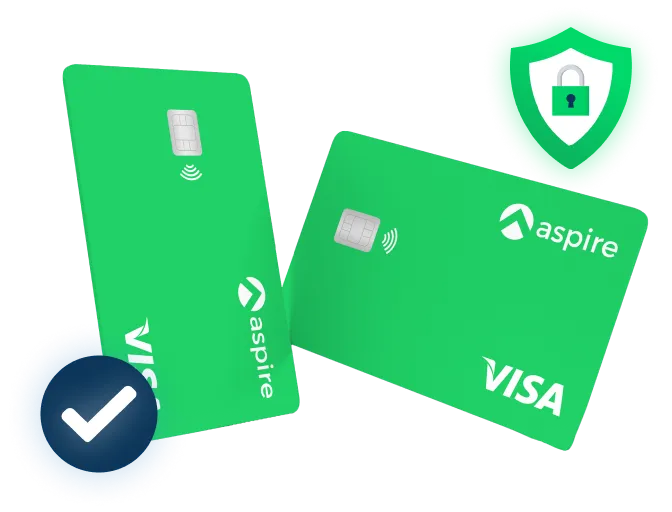
The Aspire Corporate Card is a business debit card from Aspire, a Singapore-based fintech that has quietly built a following among over 50,000 companies across Southeast Asia. It is not a traditional credit card. Instead, it works as a Visa-powered corporate debit card tied to your Aspire business account, with an optional credit line available to eligible businesses. There is no annual fee, no card activation fee, and no per-transaction fee.
If you run a startup or SMB in Singapore or the broader SEA region, this card is worth a close look. Aspire has built an all-in-one platform that combines corporate cards, expense management, payables, and multi-currency business accounts. The card itself is just one piece of a larger financial operating system. The real value here is not the card alone, but the software that wraps around it.
The target audience is clear: growing businesses that need to issue cards to employees, control spending, and stop chasing receipts. If you are a solo founder with minimal expenses, this is probably overkill. But if you have a team making purchases across marketing, SaaS, travel, and operations, Aspire starts to make a lot of sense.
Welcome offer
Aspire is currently running a promotional offer of 12% cashback on all spend for new customers, though this is a limited-time deal and the terms are not fully transparent. Outside of promotions, there is no traditional sign-up bonus like you would see with a Chase or Amex card. This is typical for fintech corporate cards in the region. The value proposition is not about a one-time bonus but about ongoing savings through the platform.
Key benefits and perks
The card's real strength is the software behind it. Aspire gives you a full expense management suite that includes automated receipt reminders, real-time transaction alerts, and expense categorization. You can set spend limits per card, lock cards to specific merchants, and require approval for purchases above a certain threshold. For a finance team that is tired of chasing down receipts at the end of the month, this is a genuine time-saver.
Aspire also supports multicurrency corporate cards. You can issue cards denominated in SGD or USD, which means you can avoid foreign exchange fees when paying US-based SaaS vendors or running ads on Google and Meta. More currencies are reportedly on the way. The platform integrates with major accounting software like Xero and QuickBooks, so your transactions sync automatically.
Employee card management is straightforward. You can issue unlimited virtual cards instantly, which is useful for assigning a card to a specific vendor, project, or department. Physical cards are also available. There is no cost per card, which is a nice contrast to some competitors that charge per active card.
One thing Aspire does not offer is the kind of travel perks you get with premium credit cards. There is no lounge access, no travel insurance, no hotel status, and no purchase protection. If those matter to your business, you will need a separate card for that.
Earning rewards
The standard cashback rate is 1% on digital marketing and SaaS spend. This covers purchases from companies like Google, Meta, AWS, Slack, and similar platforms. For a startup that spends heavily on cloud infrastructure and online advertising, this can add up. On $10,000 a month in SaaS and ad spend, you would earn $100 back. It is not going to change your life, but it is free money on spending you were going to do anyway.
Outside of the digital and SaaS categories, there is no cashback on general purchases. This is a meaningful limitation. If most of your spending is on travel, office supplies, or meals, you will not earn anything. Compare this to Ramp, which offers 1.5% cash back on everything, or Brex, which gives up to 7x on rideshares. Aspire's rewards are narrower, but they are targeted at the kind of spending that SEA startups actually do.
During promotional periods, the cashback rates can be significantly higher. The current 12% cashback promo is aggressive, though It is best not to count on that lasting.
Redeeming rewards
Cashback earned on the Aspire card is credited directly to your Aspire business account. There are no points to manage, no transfer partners to evaluate, and no redemption portals to navigate. The cashback is simply cash. A positive aspect is the simplicity. You do not need to think about point valuations or worry about devaluations. What you earn is what you get.
Transfer partners
Not applicable. Aspire does not have a points program or transfer partners. Rewards are paid as direct cashback.
Competing cards
The Ramp Corporate Card is the closest US-based equivalent. Ramp offers 1.5% cash back on all purchases, built-in expense management, and no annual fee. If your business is US-based, Ramp is probably the better choice. But Ramp does not operate in Southeast Asia, so for businesses in that region, it is not an option.
Volopay is a direct competitor in the SEA market. It offers corporate cards, expense management, and multi-currency accounts with a similar feature set. Volopay's cashback rates and pricing are comparable, so the choice between the two often comes down to user experience and specific integrations.
The Brex Corporate Card is another comparison point, though it targets a different market. Brex is built for US-based startups with significant venture funding. Its rewards are more generous (up to 7x in some categories), but it requires a substantial cash balance and does not serve the SEA market.
Who should get this card?
The Aspire Corporate Card is a good fit for startups and small-to-medium businesses based in Singapore or Southeast Asia that need a combined corporate card and expense management solution. If you have a team of 5 or more people making business purchases, the spend controls and receipt automation alone can save your finance team hours each month. The multicurrency support is a real advantage for businesses that pay US-based vendors.
This card is not the right choice if you are based outside of Southeast Asia, if you want travel perks or insurance, or if you need a traditional credit line. It is also not ideal if your spending is mostly in categories that do not earn cashback, like rent, utilities, or physical goods.
Bottom line
The Aspire Corporate Card is a practical, no-fee corporate debit card that works best as part of Aspire's broader financial platform. The card itself is not going to win any awards for rewards, but the combination of unlimited cards, real-time controls, multicurrency support, and expense management makes it a strong choice for SEA-based businesses that want to modernize their spending operations.
Related reading
Card reviews
Compare cards
Looking for a better option?
Lovie combines company formation, banking, and virtual cards in one platform. No personal guarantee, 1.5% cashback on everything.