
On this page · 8 sections
Understanding the LLC Partner Buyout Process
Buying out a partner in an LLC is a significant event in the life of a business, often driven by a variety of factors such as differing strategic visions, a partner's desire to retire, personal changes, or irreconcilable disputes. Regardless of the reason, a well-structured buyout is crucial for the continuity and stability of the LLC. This process involves a series of legal, financial, and operational steps designed to transfer ownership of a departing partner's interest to the remaining partners or the LLC itself. It's not merely a transaction; it’s a strategic decision that reshapes the company’s future. For example, if a tech startup founder in California decides to pursue a new venture, the remaining co-founders must methodically execute a buyout to maintain control and ownership. Check out our guide on forming an LLC in Arkansas for step-by-step instructions. Without a clear process, such transitions can lead to prolonged disputes, legal challenges, and even the dissolution of the company. The goal is to facilitate a clean break, protecting the interests of both the departing and remaining members, and ensuring the business can continue operating without interruption. Understanding this foundational concept is the first step toward a successful transition, laying the groundwork for subsequent detailed actions in valuation, negotiation, and legal documentation. It requires a forward-thinking approach, anticipating potential challenges and planning for every contingency to safeguard the LLC's operational integrity and its long-term viability.
Legal Framework and the LLC Operating Agreement
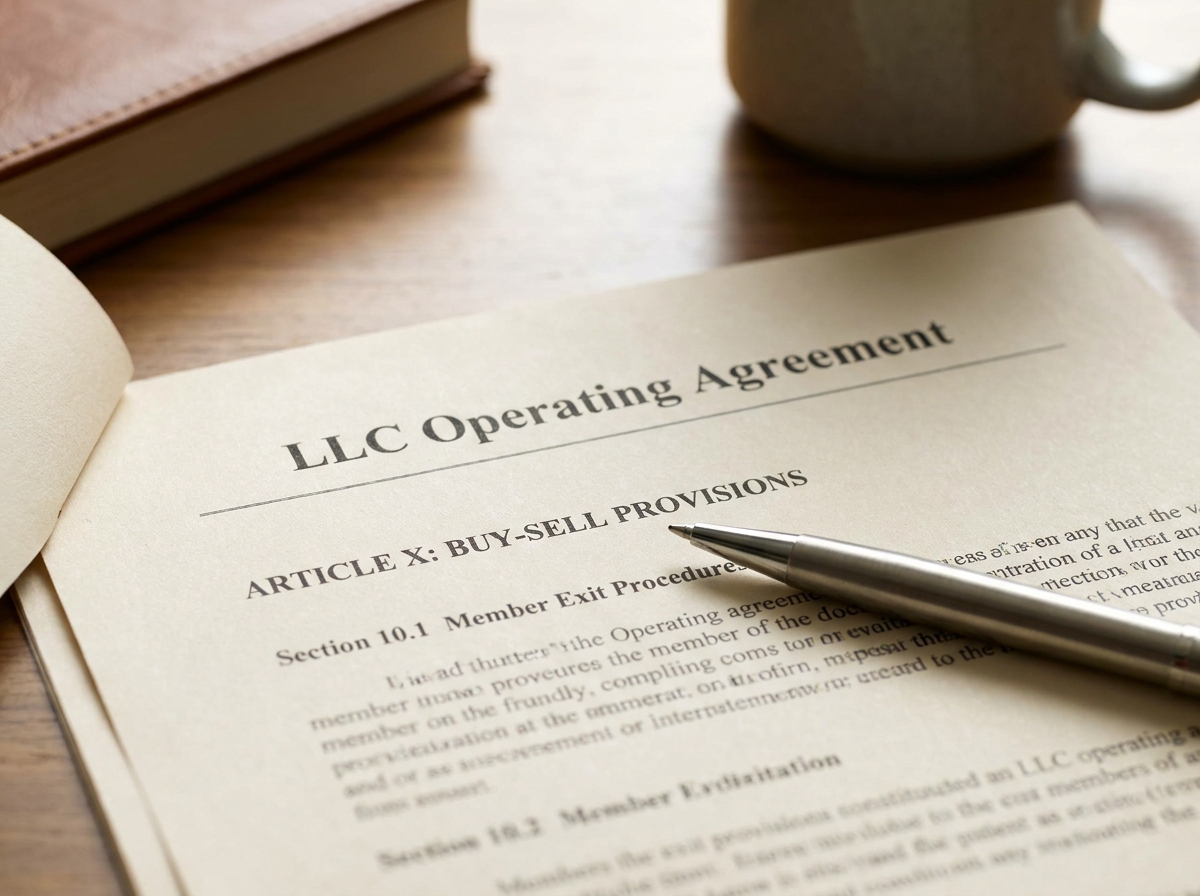
The cornerstone of any LLC partner buyout is the operating agreement. This foundational document, often overlooked during the excitement of formation, dictates the rules for internal governance, member responsibilities, and, critically, exit strategies. A robust operating agreement should include buy-sell provisions that outline the procedures for a partner’s departure, including valuation methods, funding mechanisms, and dispute resolution processes. Without these provisions, negotiating a buyout becomes significantly more complex and contentious. For instance, an LLC formed in Delaware without a detailed buy-sell clause might find itself in a protracted legal battle if partners cannot agree on a fair market value for the departing interest. States like New York and Texas, while offering flexibility in LLC formation, still default to statutory rules if the operating agreement is silent on these matters, which may not align with the partners' intentions. Our resource on starting a business in California breaks this down further. It is essential to review the existing operating agreement thoroughly at the outset of any buyout discussion. If it lacks specific buyout clauses, the partners will need to negotiate these terms from scratch, which can be challenging. This review should involve legal counsel to interpret existing clauses and advise on potential amendments or new agreements required to facilitate the buyout. For new LLC formations, Lovie provides comprehensive operating agreement templates that can be customized to include robust buy-sell provisions, protecting your business from future uncertainties. Establishing clear exit strategies from day one is as important as forming the company itself.
Valuation Methods for LLC Interests
Determining the fair value of a departing partner’s interest is often the most contentious aspect of an LLC buyout. There are several widely accepted valuation methods, and the choice depends on the LLC's industry, assets, liabilities, and profitability. Common methods include: 1. Asset-Based Valuation: Suitable for asset-heavy businesses (e.g., real estate, manufacturing), this method assesses the fair market value of the LLC's assets minus its liabilities. 2. Income-Based Valuation: Often used for service-oriented or growth-stage companies, this approach projects future earnings and discounts them back to a present value. Methods like Discounted Cash Flow (DCF) fall into this category. 3. If you're exploring this further, our guide on LLC registration in Colorado is a helpful next step. Market-Based Valuation: This involves comparing the LLC to similar businesses that have recently been sold or valued. It's most effective when there are comparable transactions available. For a small consulting firm in Georgia, an income-based approach might be most appropriate, focusing on recurring client revenue and profit margins. Conversely, a real estate LLC in Florida would likely favor an asset-based valuation due to its tangible property holdings. If the operating agreement specifies a valuation method (e.g., 'book value' or 'fair market value determined by an independent appraiser'), that method must be followed. If not, partners must agree on a method, often necessitating the engagement of a certified business appraiser to ensure impartiality and a defensible valuation. The cost of a professional valuation can range from $5,000 to $25,000 or more, depending on the complexity of the business, but it is a critical investment to prevent disputes.
Negotiating the Buyout Agreement
Once a valuation is established, the negotiation phase begins. This involves agreeing on the purchase price, payment terms, and other critical conditions of the buyout. Key elements of the buyout agreement include: - Purchase Price: The agreed-upon value for the departing partner’s interest. This might be a lump sum or structured payments over time. - Payment Terms: Details on how and when the payment will be made. Options include a single upfront payment, installment payments (often with interest), or a promissory note. - Release of Liabilities: A crucial clause ensuring the departing partner is released from future liabilities of the LLC and, conversely, that the remaining partners are protected from any personal liabilities incurred by the departing partner during their tenure. - Non-Compete and Non-Solicitation Clauses: These protect the LLC's interests by preventing the departing partner from competing directly or soliciting clients/employees for a specified period and geographical area. - Indemnification: Clauses protecting the remaining partners from any undisclosed liabilities or actions of the departing partner. - Transition Plan: Outlining how the departing partner’s responsibilities and knowledge will be transferred. For instance, if a founder of a fintech startup in New York is being bought out, negotiating a clear non-compete clause for 2 years within the Tri-State area is vital to protect the company's intellectual property and client base. It is highly advisable to have legal counsel representing each party during negotiations to ensure all terms are fair, legally sound, and protect individual interests. Attempts to cut corners here can lead to costly litigation down the road. Patience and clear communication are paramount, aiming for an amicable solution that preserves relationships where possible, even if the business relationship is ending.
Funding the Buyout
Securing the necessary funds to execute a partner buyout is often a significant hurdle. The source of funds can vary widely based on the LLC’s financial health, the buyout amount, and the preferences of the remaining partners. Common funding options include: - Cash Reserves: If the LLC has sufficient liquid assets, using existing cash is the simplest and most direct method. However, this can impact the company's working capital. - Seller Financing: The departing partner agrees to accept installment payments over time, essentially acting as a lender to the LLC or the remaining partners. This often involves a promissory note and an agreed-upon interest rate. - Bank Loans: Traditional business loans or lines of credit can be secured from financial institutions. The LLC’s creditworthiness and assets will determine eligibility and terms. - SBA Loans: Small Business Administration (SBA) loans, like the SBA 7(a) program, can be an option for qualifying businesses, offering favorable terms and lower down payments. - Third-Party Investors: In some cases, new investors might be brought in to provide capital in exchange for an equity stake, which can dilute the ownership of existing partners. - Life Insurance Policies: For buy-sell agreements funded by life insurance, the policy proceeds can be used to purchase the deceased or disabled partner's interest. For example, a restaurant LLC in California might use a combination of cash reserves for a down payment and a bank loan to cover the remainder of a partner's buyout. Consider the long-term financial implications of each funding method on the LLC’s cash flow and debt obligations. A detailed financial projection should be conducted to ensure the chosen funding strategy is sustainable and does not jeopardize the LLC’s future operations. Lovie helps founders establish their LLCs with robust financial structures, making future transitions like buyouts smoother by providing clear operational and financial templates from day one.

Tax Implications for Both Parties
The tax consequences of an LLC partner buyout can be complex and vary significantly based on the LLC’s tax classification (pass-through entity, S-Corp, C-Corp), the nature of the buyout payment, and the individual tax situations of the departing and remaining partners. It is imperative to consult with a tax professional experienced in business transactions. ## Tax Implications for the Departing Partner For the departing partner, the sale of their LLC interest is generally treated as a sale of a capital asset. The gain or loss realized will typically be subject to capital gains tax rates, which can be long-term or short-term depending on the holding period of their interest. However, a portion of the payment may be recharacterized as ordinary income if it relates to 'hot assets' (e.g., unrealized receivables or inventory) under IRS Section 751. For instance, if a partner in an Oregon-based architectural firm sells their interest, a portion of the payment attributable to outstanding client invoices (unrealized receivables) might be taxed as ordinary income, while the rest is capital gain. ## Tax Implications for the Remaining Partners or LLC When the LLC itself buys out a partner, it can be treated as a liquidation of that partner's interest, potentially affecting the basis of the LLC's assets. If the remaining partners purchase the interest, they will typically increase their basis in the LLC by the amount paid. This can impact future depreciation deductions or the calculation of gain/loss upon a subsequent sale of their interests. The method of payment (lump sum vs. installments) also has tax implications. Installment payments can spread the tax liability for the departing partner over several years, while for the remaining partners, the interest paid on a promissory note may be deductible. Understanding these nuances is crucial for minimizing tax burdens and ensuring compliance with IRS regulations.
Post-Buyout Compliance and Operational Changes
After the buyout agreement is finalized and funded, several critical post-buyout compliance and operational steps must be taken to formalize the transition and ensure the LLC remains in good standing. Failure to complete these steps can lead to legal and administrative issues. First, the LLC’s operating agreement must be formally amended to reflect the change in ownership, membership interests, and any revised management structures. This amended agreement should be signed by all remaining members. If the departing partner was a signatory on bank accounts, leases, or other contracts, these agreements will need to be updated to remove their name and add new signatories as appropriate. For example, an LLC in Arizona must update its bank account signatories promptly to prevent unauthorized access or delays in financial operations. Second, state-level compliance filings may be necessary. While most states do not require explicit notification to the Secretary of State for changes in LLC membership unless a manager is also removed, some jurisdictions might have specific requirements. It’s important to verify the specific regulations in the state where your LLC is registered. If the departing partner was a registered agent, a change of registered agent filing would be required, typically costing $25-$50 depending on the state (e.g., $30 in Nevada, $25 in Florida). Lovie provides comprehensive registered agent services across all 50 states, ensuring your LLC remains compliant with these essential requirements. Third, internal records, such as the member register and capital accounts, must be updated to accurately reflect the new ownership structure. Finally, internal communications to employees, clients, and vendors should be carefully managed to ensure a smooth transition and maintain confidence in the LLC’s stability. Transparency, within appropriate legal bounds, can help mitigate uncertainty.
Common Pitfalls and How to Avoid Them
Navigating an LLC partner buyout is fraught with potential pitfalls that can derail the process, lead to costly disputes, or even jeopardize the business's future. Being aware of these common issues and proactively addressing them is key to a successful outcome. One of the most frequent errors is the lack of a clear, comprehensive buy-sell agreement within the initial operating agreement. Without pre-defined terms for valuation, payment, and dispute resolution, partners are forced to negotiate these critical aspects during a potentially emotional and contentious period. This often leads to stalemates and litigation. To avoid this, ensure your LLC's operating agreement includes robust buy-sell provisions from day one. Another significant pitfall is an inaccurate or disputed business valuation. Underestimating or overestimating the value of the departing partner's interest can lead to resentment, legal challenges, and a breakdown of trust. Always engage qualified, independent business appraisers to conduct a fair and objective valuation, especially when significant assets or complex financial structures are involved. Ignoring tax implications is also a common and costly mistake. Without proper tax planning, both the departing and remaining partners can face unexpected tax liabilities. Consult with a tax advisor early in the process to understand the tax consequences and structure the buyout in the most tax-efficient manner possible. Finally, inadequate communication and a lack of legal counsel throughout the process can exacerbate tensions. Each party should have independent legal representation to protect their interests, and open, professional communication can help mitigate conflict. For founders establishing new ventures, Lovie simplifies the company formation process, providing essential templates like operating agreements that can be customized to include these critical buy-sell clauses, setting your business up for long-term success and smooth transitions.
Frequently asked questions
What is a buy-sell agreement in an LLC?
A buy-sell agreement is a legally binding contract among LLC members that dictates what happens to a member's interest if they leave the company due to retirement, disability, death, or a desire to sell. It outlines the valuation method, purchase price, and terms for the transfer of ownership, providing a clear roadmap for future transitions and preventing disputes.
Can an LLC buy out a partner without an operating agreement?
Yes, an LLC can buy out a partner without an operating agreement, but it is significantly more challenging and risky. Without an operating agreement, state default rules will apply, which may not align with the partners' intentions. All terms, including valuation and payment, will need to be negotiated from scratch, often leading to disagreements and potentially costly legal battles. It's highly advisable to create a formal agreement even if one didn't exist initially.
How is an LLC valued for a partner buyout?
An LLC can be valued for a partner buyout using several methods, including asset-based valuation (for asset-heavy businesses), income-based valuation (projecting future earnings), or market-based valuation (comparing to similar businesses). The most appropriate method depends on the LLC's industry, assets, and profitability. Often, an independent business appraiser is engaged to provide an objective valuation.
What are the tax consequences for a departing LLC partner?
For a departing LLC partner, the sale of their interest is generally treated as a sale of a capital asset, subject to capital gains tax. However, a portion of the payment may be recharacterized as ordinary income if it relates to 'hot assets' like unrealized receivables or inventory. The specific tax implications depend on the LLC's tax classification and the structure of the buyout, making professional tax advice essential.
Do I need a lawyer for an LLC partner buyout?
Yes, engaging a lawyer is highly recommended for an LLC partner buyout. A lawyer can help draft or review the buyout agreement, ensure compliance with state laws and the operating agreement, protect your legal interests, and guide you through negotiations. Having independent legal counsel for both the departing and remaining partners helps ensure a fair and legally sound process.
What happens if partners can't agree on a buyout price?
If partners cannot agree on a buyout price, and the operating agreement does not specify a dispute resolution mechanism (like mediation or arbitration), the situation can escalate to litigation. A court may then determine the fair value of the interest, which can be a lengthy and expensive process. This underscores the importance of a clear buy-sell agreement or good-faith negotiation.
Lovie Data Insights
Creative & Media — Formation Context
Recommended Entity: LLC
Key Tax Benefit: Home office, equipment, software subscriptions
Compliance Priority: Copyright/IP protection, contract terms
Data sources: State Secretary of State offices, IRS, Tax Foundation (2026). Platform metrics based on anonymized Lovie user data.
Key Concepts: Business Formation
US Business Formation guides entrepreneurs through the business formation process with actionable steps. Key components include LLC formation, entity registration, and state filing, each playing a critical role in the business formation process. Understanding liability protection and tax optimization is essential, as these factors directly impact legal compliance.
When evaluating business formation options, factors such as business entity types and formation process should inform your decision-making process.
Entity Relationships
- Business Formation requires LLC formation
- Business Formation includes entity registration
- Business Formation establishes state filing
- Business Formation defines business structure selection
Quick answers
What do I need to know about Buying Out A Partner In An Llc for my business?
Understanding Buying Out A Partner In An Llc is essential for business compliance and operational success. The specific requirements vary by state and industry.
How does Buying Out A Partner In An Llc affect my business formation?
This aspect of business formation directly impacts your legal standing, tax obligations, and operational flexibility.
Explore Formation Guides
State-specific formation guides, cost breakdowns, compliance checklists, and expert comparisons — updated for 2026.
LLC Formation Guides
- How to Form an LLC for Virtual Assistant Hawaii
- How to Form an LLC for Web Developer West Virginia
- How to Form an LLC for Drone Services Wyoming
- How to Form an LLC for Freelancing California
Popular Guides
Cost by Entity & State
- Sole Proprietorship Cost Alabama Formation Costs
- Nonprofit Cost Michigan Formation Costs (2026) | Lovie
- C Corp Cost South Carolina Formation Costs (2026) | Lovie

Lovie is not a government agency, law firm, or professional advisory organization. Lovie is a private business-formation service that prepares and submits filings to the appropriate state agencies on your behalf — we do not issue government documents, and state approval times are not controlled by Lovie. Information on this page is general and not legal, tax, or financial advice.