
On this page · 8 sections
The Bedrock of Unique LLC Names
When you set out to form a Limited Liability Company (LLC) in the United States, the very first critical step after conceptualizing your business is choosing its legal name. Many founders instinctively ask: can there be two LLCs with the same name? The answer, unequivocally, is almost always no. This isn't a mere suggestion; it's a fundamental principle embedded in state business statutes across the nation. The primary purpose of this rule is to prevent public confusion, ensure clear legal and tax accountability, and protect the established identity of existing businesses. Imagine the chaos if multiple entities could legally operate under identical names – it would be impossible for customers to know who they're dealing with, for creditors to pursue claims, or for the IRS to accurately track tax obligations. Each state's Secretary of State or equivalent filing office rigorously enforces this uniqueness requirement. Our resource on setting up your Arkansas LLC breaks this down further. Your chosen name must be 'distinguishable upon the records' from all other registered entities. This means not only an exact match, but also names that are confusingly similar in sound, appearance, or meaning are typically rejected. This stringent naming convention is a cornerstone of business registration, designed to foster a clear and orderly commercial environment. Without it, the legal and operational landscape for businesses would be fraught with ambiguity and potential disputes, undermining the very stability an LLC structure aims to provide. Founders must approach name selection with diligence, understanding that this initial choice has significant long-term implications for their brand and legal standing.
How State Laws Govern LLC Names
The rules governing LLC names are set at the state level, not federally. This means that an LLC named 'Green Valley Farms LLC' in California is distinct from a 'Green Valley Farms LLC' in Texas, and typically, one does not impede the other's registration. However, within a single state, duplication is strictly prohibited. Each state's Uniform Commercial Code (UCC) and specific business entity statutes dictate what constitutes a 'distinguishable' name. For example, in Delaware, the General Corporation Law specifies that a name must be distinguishable from other names on file. Similarly, Florida Statute 605.0112 requires names to be distinguishable from the names of other entities on the records of the Department of State. While minor differences like punctuation (e.g., 'ABC Co.' vs. If you're exploring this further, our guide on starting a business in California is a helpful next step. 'ABC, Co.') or corporate designators (e.g., 'ABC LLC' vs. 'ABC Inc.') might sometimes be overlooked, the general trend is towards stricter interpretation. State offices maintain vast databases of registered business names, and your proposed LLC name will be cross-referenced against these records. This is why a thorough name availability search is not just recommended, but essential. Understanding these state-specific nuances is crucial, as a rejected name application can delay your business formation, incurring additional costs and pushing back your operational timeline. Lovie's AI-powered platform assists founders by understanding these state-level differences, streamlining the name check process and helping to avoid common errors that lead to rejections, ensuring your formation process is as smooth as possible.
Distinguishable vs. Identical: What's the Difference?
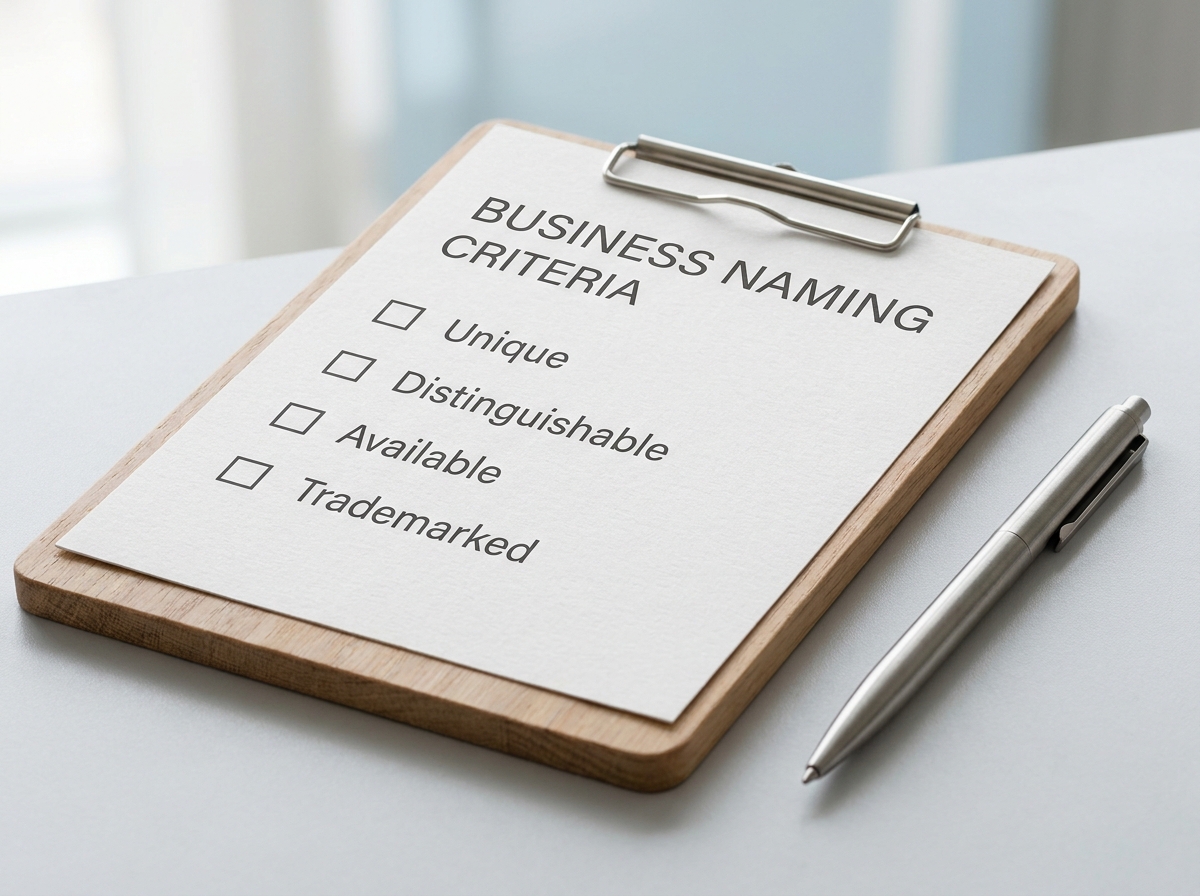
The core of state naming conventions lies in the concept of a 'distinguishable' name. It's not just about an exact, letter-for-letter match; states also reject names that are deemed 'confusingly similar.' This can be a subjective area, but general guidelines exist. Most states will disregard certain elements when determining distinguishability. These often include: 1. Corporate Designators: Words like 'LLC,' 'L.L.C.,' 'Limited Liability Company,' 'Inc.,' 'Corp.,' 'Company,' or 'Co.' are generally ignored for uniqueness checks. So, 'Apex Solutions LLC' is not considered distinguishable from 'Apex Solutions, Inc.' in many jurisdictions. 2. Punctuation and Symbols: Commas, periods, hyphens, and other symbols often don't differentiate names. 'Tech Innovations LLC' is likely indistinguishable from 'Tech-Innovations LLC.' 3. For a deeper dive, see our resource on how to register an LLC in Colorado. Articles and Conjunctions: Words like 'A,' 'An,' 'The,' and 'And' at the beginning or end of a name, or conjunctions, might be overlooked. 'The Best Coffee LLC' might conflict with 'Best Coffee LLC.' 4. Plural vs. Singular: Sometimes, simply changing a word from singular to plural (e.g., 'Star Systems LLC' vs. 'Star System LLC') is not enough for distinguishability. The intent is to prevent names that could easily mislead the public into believing two distinct businesses are related or the same. For instance, in California, the Corporations Code explicitly states that a proposed name must not be 'likely to mislead the public' or 'confuse the public.' This careful distinction protects both consumers and existing businesses from potential fraud or misrepresentation. Choosing a name that is truly unique and distinguishable is paramount to avoiding future legal challenges and ensuring your brand identity stands alone.
Beyond State Registration: Trademarks and DBAs
While state registration prevents two LLCs from having the same legal name within that state, it's crucial to understand that this doesn't automatically grant you federal trademark protection or prevent others from using similar brand names in different contexts. A state-registered LLC name primarily serves as a legal identifier for your entity with the Secretary of State. It does not, by itself, grant you exclusive rights to use that name as a brand or product identifier across the entire United States. For broader brand protection, you need to consider federal trademark registration with the U.S. Patent and Trademark Office (USPTO). A trademark protects your brand name, logo, and slogans from being used by others in a way that could cause consumer confusion, especially within the same industry. This is a separate, more extensive process than LLC formation and is vital for businesses operating nationally or planning significant brand investment. ## The Role of DBAs In contrast, a 'Doing Business As' (DBA), also known as a fictitious name or assumed name, allows an LLC to operate under a name different from its legal registered name. For example, 'Acme Innovations LLC' might file a DBA to operate as 'Cutting Edge Tech' for its product line. A DBA does not create a separate legal entity; it's merely an alias for your existing LLC. Importantly, a DBA also does not offer naming exclusivity. If you file a DBA, it primarily serves as public notice that your LLC is operating under a different name. Another business, even an entirely different legal entity, could potentially file the same DBA, although this is less common due to state-level DBA registration checks. It's essential not to confuse these different layers of naming and protection. State LLC registration, federal trademark registration, and DBA filings each serve distinct purposes, and a comprehensive naming strategy often involves considering all three to fully protect your business identity and brand assets.
The Name Availability Search Process
Before settling on a name for your LLC, conducting a thorough name availability search is non-negotiable. This process typically involves several steps to ensure your chosen name meets state requirements and avoids potential conflicts. ## How to Conduct a Search 1. State Secretary of State Database: The primary step is to search the business entity database of the Secretary of State (or equivalent office) in the state where you plan to form your LLC. These databases are usually publicly accessible online and allow you to search for existing registered business names. You'll want to check not just exact matches, but also variations, misspellings, and names that sound similar. 2. USPTO Trademark Database: Even if your name is available at the state level, a federal trademark search is crucial, especially if you plan to operate nationally or invest heavily in your brand. The USPTO's TESS (Trademark Electronic Search System) database allows you to search for registered and pending federal trademarks. 3. Domain Name and Social Media Handles: In today's digital age, securing a corresponding domain name and relevant social media handles is almost as important as your legal name. Check for availability on popular platforms. 4. Google and General Web Search: A broader internet search can reveal unregistered businesses operating under a similar name, which, while not a legal barrier, could lead to market confusion or even future common law trademark disputes. It's important to remember that a name availability search is a snapshot in time. A name might be available one day and filed by someone else the next. This is why many states offer a name reservation service, which we'll discuss shortly. Lovie's platform integrates real-time name availability checks directly into its formation process, helping founders quickly determine if their desired LLC name is likely to be approved by the state, significantly reducing the risk of rejection and delays. This integrated approach saves valuable time and provides peace of mind, allowing you to move forward with confidence.
Common Pitfalls and How to Avoid Them
Navigating LLC naming can be tricky, and several common pitfalls can lead to delays or legal issues. Being aware of these can help you avoid unnecessary headaches. 1. Ignoring State-Specific Rules: Each state has its own nuances. For instance, some states prohibit words like 'Bank,' 'Trust,' or 'Insurance' unless specific licenses are obtained. Others might restrict the use of professional designations (e.g., 'Engineer,' 'Doctor') without proper accreditation. Always consult your state's specific naming guidelines. 2. Over-Reliance on Exact Match Searches: As discussed, states look for 'distinguishable' names, not just exact matches. Searching only for 'My Company LLC' and finding it available doesn't mean 'MyCompany LLC' or 'My Company, Inc.' isn't already registered and considered too similar. 3. Forgetting Trademark Searches: State LLC registration doesn't protect your brand nationwide. If you launch 'Quantum Leap Software LLC' and later discover 'Quantum Leap Software' is a federally trademarked name in your industry, you could face a cease-and-desist order and be forced to rebrand, costing significant time and money. 4. Neglecting Domain and Social Media: A great LLC name is less effective if you can't secure a matching website domain or social media handles. Always check these concurrently with your legal name search. 5. Assuming Availability Guarantees Approval: Even after a thorough search, the final decision rests with the state filing office. Their interpretation of 'distinguishable' might differ slightly. This is why a name reservation (if available) is often a prudent next step. To avoid these pitfalls, adopt a comprehensive and diligent approach. Start with a broad list of potential names, then narrow them down by systematically checking state databases, USPTO records, and online presence. Lovie's automated tools are designed to guide you through this complex process, flagging potential issues and helping you choose a name that is not only available but also legally sound for your business.
Reserving Your LLC Name
Once you've identified a unique and available name for your LLC, the next strategic move for many founders is to reserve it. A name reservation prevents another entity from registering that name for a specified period, giving you time to finalize your formation documents without the risk of losing your chosen name. Most states offer a name reservation service, though the process, duration, and fee vary. For example, in Texas, you can reserve a name for 120 days by filing Form 501, Certificate of Reservation of an Entity Name, with a fee of $40. California allows for a 60-day reservation with a $10 fee. New York permits a 60-day reservation for a $20 fee. It's important to note that a name reservation typically holds the name for you but does not register the LLC itself. It merely secures the name for future use by your entity. ## The Benefits of Name Reservation - Peace of Mind: You can proceed with other startup tasks – like drafting an operating agreement, securing funding, or building your website – knowing your preferred name is protected. - Prevents Sniping: In competitive markets, a desirable business name can be quickly claimed. Reservation acts as a temporary safeguard. - Streamlined Formation: By securing your name upfront, you reduce the likelihood of your LLC formation application being rejected due to a name conflict, thereby avoiding delays. However, a name reservation is not always necessary, especially if you plan to file your Articles of Organization immediately. For founders who need a little more time between name selection and official filing, the name reservation option is a valuable tool. Lovie can assist with the name reservation process, handling the paperwork and submission to the relevant state office, ensuring your chosen name is secured efficiently before your full LLC formation proceeds. This proactive step is part of Lovie's comprehensive approach to minimizing friction in the company formation journey.
When Name Conflicts Arise
Despite diligent efforts, name conflicts can occasionally arise, or you might find yourself in a situation where a similar name exists. It's crucial to understand the implications and potential remedies. ## After State Approval If your LLC name is approved by the state, it means it was deemed distinguishable from other registered entities in that state. However, this doesn't protect you from a common law trademark claim from an unregistered business, or a federal trademark claim. If another business, particularly one operating in the same industry and geographic area, believes your name is confusingly similar to theirs, they might send a cease-and-desist letter. These situations can be costly and time-consuming, potentially requiring a rebranding effort. ## What If Your Preferred Name is Taken? If your initial name choice is rejected or already taken, you have a few options: 1. Modify the Name: Try adding a descriptive word, a geographic identifier, or a unique term. For example, if 'Phoenix Solutions LLC' is taken, consider 'Phoenix Tech Solutions LLC' or 'Phoenix Valley Solutions LLC.' 2. Choose a Completely New Name: Sometimes, it's simpler to go back to the drawing board and select a fresh name. 3. File a DBA: If your legal LLC name is approved but you prefer to market your business under a different, potentially taken, name (and you're sure it won't cause trademark issues), you can file a DBA. Remember, a DBA doesn't offer exclusivity. ## The Role of Legal Counsel In severe cases of name disputes, particularly involving trademarks, consulting with an attorney specializing in intellectual property law is highly advisable. They can assess the strength of claims, help negotiate resolutions, or represent you in litigation. While Lovie streamlines the official filing process, it's not a law firm and cannot provide legal advice. However, Lovie's platform helps minimize the risk of basic state-level naming conflicts by guiding you through availability checks, allowing you to focus on building your business with a secure and unique identity.
Frequently asked questions
Does a DBA offer name protection for my LLC?
No, a 'Doing Business As' (DBA) name, also known as a fictitious name or assumed name, does not offer name protection for your LLC. A DBA is merely an alias for your existing legal entity. It allows your LLC to operate under a different name for marketing or operational purposes, but it does not create a separate legal entity or provide any exclusive rights to that name. Other businesses could potentially file the same DBA, and it offers no protection against trademark infringement. For true brand protection, consider federal trademark registration.
Can I use a similar name to an existing LLC if it's in a different industry?
It depends on the specific state's interpretation of 'distinguishable' and whether the existing name has trademark protection. Generally, if the industries are vastly different (e.g., 'Apex Software LLC' and 'Apex Bakery LLC'), states might allow it, as there's less likelihood of consumer confusion. However, if the existing name is federally trademarked, especially if it's a very strong or famous brand, the trademark holder could argue that your use, even in a different industry, dilutes their brand or implies an association. A thorough trademark search is crucial here.
What happens if I try to register an LLC name that is already taken?
If you submit Articles of Organization with a name that is already taken or deemed too similar to an existing name on file, your application will be rejected by the state's filing office. This rejection will cause delays in your LLC formation, requiring you to resubmit new documents with a different name. You may also lose any filing fees associated with the initial, rejected application. This is why conducting a comprehensive name availability search and potentially reserving your name beforehand is highly recommended.
Is an LLC name protected across all 50 states?
No, an LLC name registered in one state is generally only protected within that specific state. If you register 'Innovate Tech LLC' in Delaware, another business could potentially register 'Innovate Tech LLC' in Texas, as state registrations are localized. For nationwide protection of your brand name, you would need to pursue federal trademark registration with the U.S. Patent and Trademark Office (USPTO). If you plan to expand your LLC into multiple states, you might also need to register as a foreign LLC in each additional state.
How long does a name reservation last?
The duration of an LLC name reservation varies significantly by state. For instance, in California, a name reservation typically lasts for 60 days. In Texas, it lasts for 120 days. Many states allow for the renewal of a name reservation, often for an additional fee, if you need more time before filing your Articles of Organization. Always check the specific regulations and fees for the state where you intend to form your LLC to understand the exact reservation period.
Can I challenge an LLC name if I believe it's too similar to mine?
Yes, you can challenge an LLC name if you believe it is too similar to your existing business name and is causing consumer confusion, especially if you have prior rights to the name (e.g., through an earlier registration, common law usage, or trademark). The process typically involves sending a cease-and-desist letter to the infringing party. If that doesn't resolve the issue, you may need to pursue legal action, which can involve litigation. Consulting with an intellectual property attorney is essential in such disputes.
Key Concepts: Business Formation
US Business Formation guides entrepreneurs through the business formation process with actionable steps. Key components include LLC formation, entity registration, and state filing, each playing a critical role in the business formation process. Understanding liability protection and tax optimization is essential, as these factors directly impact legal compliance.
When evaluating business formation options, factors such as business entity types and formation process should inform your decision-making process.
Entity Relationships
- Business Formation requires LLC formation
- Business Formation includes entity registration
- Business Formation establishes state filing
- Business Formation defines business structure selection
Quick answers
What do I need to know about Can There Be Two Llc With The Same Name for my business?
Understanding Can There Be Two Llc With The Same Name is essential for business compliance and operational success. The specific requirements vary by state and industry.
How does Can There Be Two Llc With The Same Name affect my business formation?
This aspect of business formation directly impacts your legal standing, tax obligations, and operational flexibility.
Explore Formation Guides
State-specific formation guides, cost breakdowns, compliance checklists, and expert comparisons — updated for 2026.
LLC Formation Guides
- How to Form an LLC for Virtual Assistant Hawaii
- How to Form an LLC for Web Developer West Virginia
- How to Form an LLC for Drone Services Wyoming
- How to Form an LLC for Freelancing California
Popular Guides
Cost by Entity & State
- Sole Proprietorship Cost Alabama Formation Costs
- Nonprofit Cost Michigan Formation Costs (2026) | Lovie
- C Corp Cost South Carolina Formation Costs (2026) | Lovie

Lovie is not a government agency, law firm, or professional advisory organization. Lovie is a private business-formation service that prepares and submits filings to the appropriate state agencies on your behalf — we do not issue government documents, and state approval times are not controlled by Lovie. Information on this page is general and not legal, tax, or financial advice.