On this page · 8 sections
- Why Illinois Licensing Matters for Your Business
- Understanding Illinois's Multi-Layered Licensing Structure
- State-Level Business Licenses and Permits in Illinois
- Navigating County and City-Specific Licenses
- Industry-Specific Licenses and Regulations
- How to Conduct an Effective Illinois License Search
- Maintaining Compliance and Managing Renewals
- Streamlining Your Illinois Formation with Lovie
Why Illinois Licensing Matters for Your Business
Launching a business in Illinois extends beyond just registering your entity with the Secretary of State. The Land of Lincoln, like many states, mandates various licenses and permits to ensure public safety, fair trade practices, and revenue collection. Ignoring these requirements isn't a minor oversight; it can lead to significant penalties, including hefty fines, forced operational shutdowns, legal complications, and irreparable damage to your brand's reputation. For instance, operating a restaurant without the proper health permits could result in immediate closure by the local health department and a fine that could easily exceed $1,000 for a single violation. Beyond the punitive measures, proper licensing signals credibility and professionalism to your customers, partners, and investors. It demonstrates that your business operates legally and adheres to established standards. This builds trust, which is invaluable for long-term success. We cover this in depth in our resource on starting a business in Illinois. Consider the due diligence process for securing a business loan or attracting venture capital; prospective lenders or investors will meticulously review your compliance records. A clean record, free from licensing violations, significantly strengthens your position. Conversely, a history of non-compliance raises red flags and can hinder growth opportunities. Therefore, a proactive and thorough approach to identifying and securing every required Illinois business license is not merely a bureaucratic hurdle, but a foundational element of a resilient and reputable enterprise. It’s an investment in your business’s future stability and growth potential. Don't underestimate the impact of getting this right from day one.
Understanding Illinois's Multi-Layered Licensing Structure
Illinois features a multi-layered licensing framework, meaning permits can be required at the state, county, and municipal (city or village) levels. This layered approach is designed to address diverse regulatory needs, from statewide professional standards to local zoning ordinances. For example, a statewide license might govern a specific profession, while a county permit could relate to environmental impact, and a city license might cover general business operations or signage. ## State-Level Authority At the state level, agencies like the Illinois Department of Financial and Professional Regulation (IDFPR) oversee various professions, from real estate brokers to barbers. The Illinois Department of Public Health (IDPH) regulates food service establishments, childcare facilities, and other health-related businesses. The Illinois Department of Revenue (IDOR) handles tax-related registrations, such as sales tax permits. These state agencies generally focus on broad regulatory categories that apply uniformly across Illinois. Check out our guide on forming an LLC in Illinois for step-by-step instructions. ## County and Municipal Authority Below the state, counties often impose their own requirements, particularly for businesses operating in unincorporated areas or those with specific environmental or public safety concerns. For instance, a county might require a permit for septic system installation or certain agricultural operations. Cities and villages, however, tend to have the most granular and diverse licensing requirements. These can include general business licenses, zoning permits, signage permits, occupancy permits, and specific permits for activities like operating a food truck or hosting special events. The sheer variety at the local level is why a precise geographic search is so crucial. Understanding this hierarchy is the first step in deconstructing what your specific business needs to operate legally in Illinois.
Key State-Level Business Licenses and Registrations in Illinois
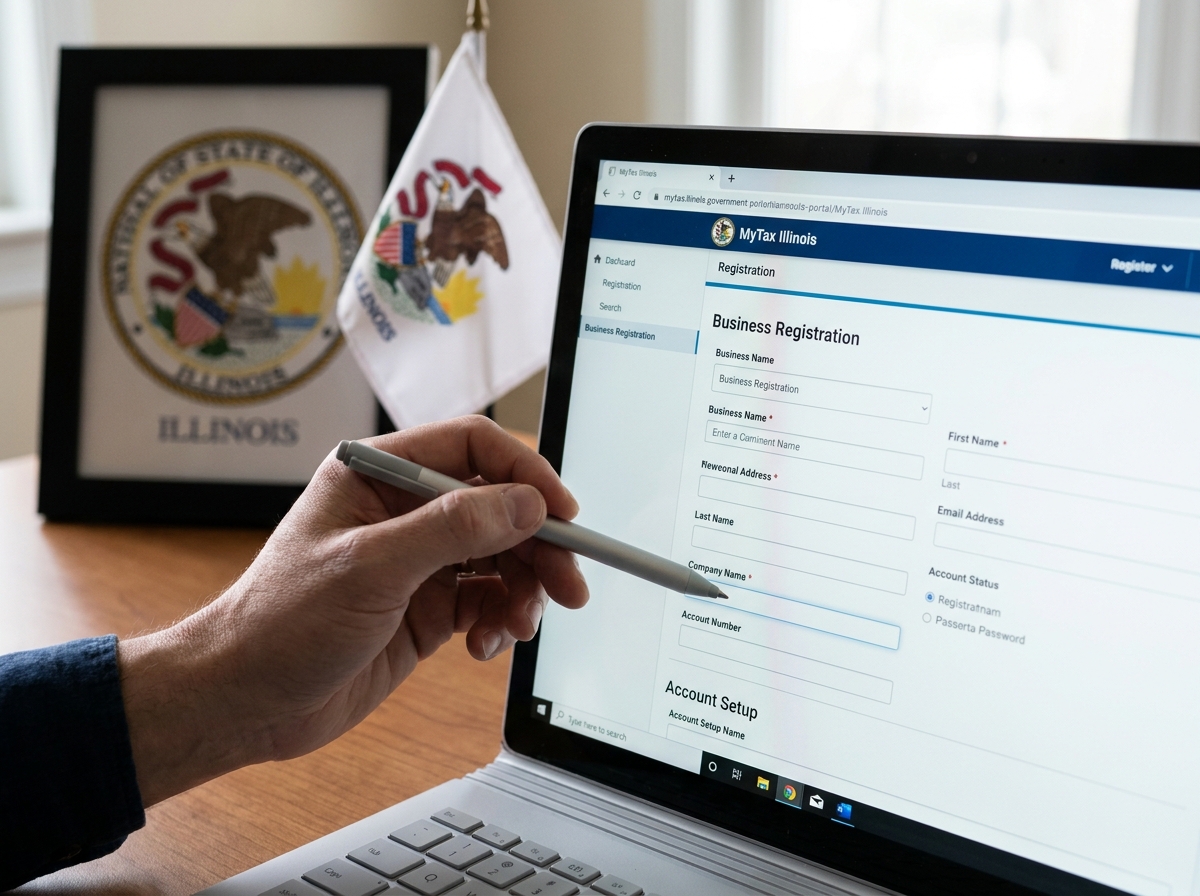
While not every business needs every state license, several are broadly applicable or critical for specific industries. The Illinois Department of Revenue (IDOR) is a primary point of contact for many businesses. If your business sells tangible personal property, you will need to register for a Sales Tax Resale Certificate, often referred to as a seller's permit. This allows you to collect and remit sales tax. The application is typically done online via MyTax Illinois. The current statewide sales tax rate in Illinois is 6.25%, with local additions often pushing it higher. For businesses with employees, registration with the Illinois Department of Employment Security (IDES) is mandatory for unemployment insurance tax. Additionally, if your business manufactures or sells products that are subject to excise taxes (like tobacco, alcohol, or motor fuel), you will need specific permits from IDOR. Our resource on how to register an LLC in Illinois breaks this down further. Professional services, such as healthcare providers, architects, engineers, and cosmetologists, are regulated by the Illinois Department of Financial and Professional Regulation (IDFPR). Each profession has specific licensing boards and educational requirements. For example, a licensed professional engineer must hold a valid PE license issued by IDFPR, renewable biennially with continuing education requirements. Other state agencies like the Illinois Environmental Protection Agency (IEPA) issue permits for businesses that impact air, water, or land quality, such as manufacturing plants or waste disposal facilities. Even if your business doesn't fall into these highly regulated categories, ensuring your entity is properly registered with the Illinois Secretary of State – whether an LLC, Corporation, or DBA – is the foundational state requirement. Lovie assists with this crucial initial step, ensuring your business entity is properly established, which is a prerequisite for many other state and local licenses. This foundational registration streamlines your path to securing further necessary permits.
Navigating County and City-Specific Licenses and Permits
Once state-level requirements are identified, the next critical step is to investigate county and municipal obligations. This is often the most complex part of the license search due to the sheer number of jurisdictions and their varying rules. Illinois has 102 counties and nearly 1,300 municipalities, each with the potential for unique licensing demands.
County-Level Permits
County governments typically regulate businesses operating in unincorporated areas or those with broader regional impacts. For example, a business operating a large waste facility might need a county permit from the local health department or environmental agency. Some counties, particularly those with significant agricultural activity, might have specific permits for certain farming operations or food processing. If your business involves construction, demolition, or significant land use changes, you might need permits from the county's planning and zoning department. A good starting point is the county clerk's office or the county's official website.
Municipal-Level Permits
City and village governments usually have the most direct impact on small and local businesses. Most municipalities require a general business license, often renewed annually. For example, the City of Chicago requires a general business license for most businesses, with fees ranging from $250 to over $1,000 depending on the business type and risk level, renewable every two years. Beyond this, specific activities like operating a food establishment, selling liquor, running a daycare, or even having a street vendor cart will require additional, specialized permits. Zoning permits are crucial to ensure your business location is approved for your type of operation, and signage permits are needed for external displays. Always start by visiting the official website of the city or village where your business is located, looking for sections on 'business licenses,' 'permits,' or 'economic development.' Don't assume that because you have a state license, you're exempt from local rules; often, state and local requirements are cumulative.
Deep Dive: Industry-Specific Licenses and Regulations
Many industries in Illinois are subject to highly specific regulations and licensing requirements due to public safety concerns, environmental impact, or consumer protection. Understanding these nuances is vital for compliance. For instance, the food service industry faces stringent oversight from both state and local health departments. A restaurant in Chicago will need a City of Chicago food establishment license, a state food service sanitation manager certification for at least one employee, and potentially county health permits if operating outside city limits. Regular health inspections are mandatory, and violations can lead to immediate shutdowns or fines up to $5,000.
Healthcare practices, from dental offices to physical therapy clinics, require licenses for individual practitioners (e.g., medical licenses, nursing licenses from IDFPR) and often facility licenses. Controlled substances require DEA registration in addition to state permits. Construction and contracting businesses need various permits for specific projects (building permits, electrical permits, plumbing permits) from the local municipality, and specialized contractors (e.g., plumbers, electricians) must hold state-issued licenses from IDFPR.
Cannabis businesses in Illinois operate under one of the strictest regulatory frameworks. They require extensive state licensing from the Illinois Department of Financial and Professional Regulation (for dispensaries) or the Department of Agriculture (for cultivators), along with specific local zoning and operational permits. The application process is highly competitive and capital-intensive, with fees in the tens of thousands of dollars and rigorous background checks. Even financial services firms, while often regulated federally, still have state-level requirements, such as licensing for mortgage brokers or investment advisors through IDFPR.
It is imperative to research the specific regulatory bodies governing your industry early in the formation process. Generic business licenses are rarely sufficient for these specialized sectors. Lovie helps founders get their entity formed correctly, a crucial first step, but understanding and securing industry-specific operational licenses remains the founder's responsibility, often requiring direct engagement with specialized state and local agencies.
How to Conduct an Effective Illinois Business License Search
An effective license search is systematic and thorough. Start by clearly defining your business activities and geographic location. What exactly will your business do? Where will it operate? These details dictate which licenses apply.
- Illinois Department of Commerce and Economic Opportunity (DCEO): The DCEO offers a helpful Business Information Center. While not a direct licensing body, their website often provides links and resources to relevant state agencies and can be a good starting point for general inquiries. They also have a 'First Stop Business Information Center' which can be reached via phone for personalized guidance.
- State Agencies: Directly consult the websites of key state departments. For professional licenses, visit the Illinois Department of Financial and Professional Regulation (IDFPR). For tax registrations, go to the Illinois Department of Revenue (IDOR). For health-related businesses, check the Illinois Department of Public Health (IDPH). Each agency typically has a 'Licenses & Permits' or 'Business Services' section.
- County Clerk/Recorder: For county-level requirements, visit the official website of the county where your business is located. Look for departments like the County Clerk, Health Department, or Planning and Zoning. Many counties have searchable databases or detailed guides for businesses.
- Municipal Clerk/City Hall: This is perhaps the most critical local step. Go to the official website of your specific city or village. Look for 'Business Licenses,' 'Permits,' 'Economic Development,' or 'Clerk's Office' sections. Many larger cities, like Chicago, Peoria, or Springfield, have dedicated business portals with searchable license directories and application forms. For example, the City of Chicago's Business Affairs and Consumer Protection (BACP) department offers an online license finder tool.
- Professional Associations: Industry-specific associations often provide excellent resources and guidance on required licenses and certifications within their sector. They can offer insights into obscure permits or best practices for compliance.
- SBA and SCORE: The U.S. Small Business Administration (SBA) and SCORE (Service Corps of Retired Executives) offer free counseling and resources. While not providing licenses, they can help you understand the process and point you to relevant government contacts. Remember to document every step, including who you spoke to, the date, and what information you received. This creates an audit trail for your compliance efforts.

Maintaining Compliance and Managing Renewals
Securing your initial licenses is just the beginning; ongoing compliance and timely renewals are equally critical. Many licenses, particularly general business licenses and professional certifications, require annual or biennial renewal. Failing to renew on time can lead to late fees, penalties, and even the suspension of your operating privileges. For example, an expired food permit could lead to a temporary closure until it’s reinstated.
Establishing a Renewal System
Proactive management is key. Create a centralized system to track all your licenses and their expiration dates. This could be a simple spreadsheet, a calendar reminder system, or specialized compliance software. Include details like the issuing authority, license number, renewal fee, and renewal frequency. Set reminders well in advance of expiration dates – at least 60-90 days out – to allow ample time for processing, especially since some renewals might require updated information or continuing education credits.
Staying Updated on Regulations
Regulatory landscapes are not static. Laws and regulations can change at state, county, or municipal levels. Subscribing to newsletters from relevant government agencies (like IDFPR, IDOR, or your city's business department) is a good practice. Industry associations are also excellent sources of information regarding impending regulatory changes that could affect your business. For example, a new state law might mandate additional safety training for employees in a particular sector, requiring new certifications or permits.
The Role of Registered Agent Services
Maintaining a registered agent in Illinois is a compliance requirement for LLCs and corporations. This agent receives official legal and tax correspondence on behalf of your business. Missing these critical documents can result in missed deadlines for renewals or legal notices. Lovie includes registered agent service in its comprehensive plan, ensuring you always have a reliable point of contact for official communications, helping you stay informed about critical compliance updates and reminders. This service acts as an early warning system, funneling essential government notices directly to you, minimizing the risk of overlooking a crucial renewal or regulatory change. It's a foundational element of long-term compliance, providing peace of mind and protecting your business from inadvertent non-compliance.
Streamlining Your Illinois Formation with Lovie
Navigating the complexities of business formation and initial compliance in Illinois can be a daunting task for even the most seasoned founders. From selecting the right entity type to registering with the state and understanding initial compliance requirements, the process is laden with details that, if mishandled, can lead to delays and unnecessary costs. This is where Lovie steps in to simplify and accelerate your journey.
Lovie is an AI-powered platform specifically designed to handle LLC and C-Corp formation across all 50 US states, including Illinois. We don't just file papers; we provide a comprehensive solution that includes your formation filing with the Illinois Secretary of State, all state fees, and crucial elements like EIN registration with the IRS. For businesses operating in Illinois, Lovie ensures your foundational entity is correctly established, which is the prerequisite for many state and local licenses.
Registered agent service is required in every state and is priced separately at $79/year ($49/year in Wyoming). This means you'll have a reliable point of contact for official correspondence, helping you stay informed about critical updates. Additionally, you get digital mail scanning, operating agreement templates, and AI-driven compliance monitoring to help you stay on track with ongoing obligations. While Lovie focuses on the foundational entity formation and ongoing registered agent service, we also provide resources and guidance to help you navigate the subsequent steps of identifying and securing your specific operational licenses. We streamline the initial heavy lifting so you can focus on building your business, secure in the knowledge that your formation is handled with precision and care. We prepare and submit filings on your behalf, providing instant filing-status visibility and 24/7 support, all without hidden fees or upsells. This robust support system is designed for founders who value efficiency and comprehensive, transparent service, allowing you to launch your Illinois venture with confidence.
Frequently asked questions
Do I need a general business license to operate anywhere in Illinois?
Not necessarily statewide. Illinois does not have a single, statewide general business operating license that applies to all businesses. Most general business licenses are required at the municipal (city or village) level. For instance, the City of Chicago requires a general business license, but many smaller towns might not. You'll need to check with the specific city or village where your business is located to determine their requirements. However, all businesses legally operating in Illinois must register their entity (LLC, Corporation, DBA) with the Illinois Secretary of State.
How do I find out what licenses my specific business needs in Illinois?
The most effective way is to conduct a multi-level search. Start by identifying your business activities and location. Then, check the Illinois Department of Financial and Professional Regulation (IDFPR) for professional licenses, and the Illinois Department of Revenue (IDOR) for tax registrations (like sales tax). Next, visit the official website of your county clerk and, most importantly, the city or village where your business operates. Look for sections on 'business licenses,' 'permits,' or 'economic development.' Many municipalities have online search tools or contact information for their business permit offices. Industry-specific associations are also a valuable resource.
What happens if I operate a business in Illinois without the proper licenses?
Operating without the necessary licenses can lead to severe consequences. These can include significant fines (which can be daily or per violation), forced operational shutdowns by state or local authorities, legal actions, and even criminal charges in some cases. Beyond the financial and legal penalties, it can severely damage your business's reputation, making it difficult to attract customers, secure funding, or partner with other businesses. Compliance is crucial for long-term viability and credibility.
Are Illinois business license fees tax-deductible?
Generally, yes. Most ordinary and necessary business expenses, including fees paid for business licenses and permits, are tax-deductible. These expenses can typically be deducted on your federal and state income tax returns. It's always advisable to consult with a qualified tax professional or accountant to ensure proper categorization and deduction of these expenses, as specific situations can vary, and tax laws are subject to change.
Does Lovie help with securing specific operational licenses in Illinois?
Lovie specializes in preparing and submitting your foundational business entity filings (LLC or C-Corp) with the Illinois Secretary of State, along with securing your EIN and providing registered agent services. While we ensure your business is legally established at the state level, we are not a law firm and do not issue government documents or secure specific operational licenses (like health permits for restaurants or professional licenses for doctors). Our platform provides the essential foundation, and we equip you with resources to navigate the subsequent, more granular state, county, and municipal licensing requirements yourself.
How often do I need to renew my Illinois business licenses?
Renewal frequency varies significantly depending on the type of license and the issuing authority. Many general business licenses at the municipal level are annual or biennial. Professional licenses issued by the IDFPR often have biennial renewal cycles. Sales tax permits from the IDOR are typically ongoing once registered, but you'll have periodic filing obligations. It's critical to check the specific expiration date and renewal frequency for each individual license and permit you obtain and set up a system to track them to avoid lapse.
Illinois Formation Data Insights
| State Filing Fee | $150 |
| Annual Fee | $75 |
| First Year Total | $225 |
| Processing Time | 6.2 days avg (official: 5-10 days) |
| Corporate Tax Rate | 9.5% |
Key Insights
- Illinois'de LLC kurulum maliyeti ulusal ortalamanın $1 üzerinde — toplam ilk yıl maliyeti $225.
- Lovie platformu üzerinden Illinois LLC başvuruları ortalama 6.2 iş gününde onaylanmaktadır (eyalet resmi süresi: 5-10 gün).
- Illinois merkezli işletmeler için EIN onay süresi ortalama 5.3 gündür.
- Illinois kurumlar vergisi oranı %9.5 ile ulusal ortalamanın (%6.57) üzerindedir.
Data sources: State Secretary of State offices, IRS, Tax Foundation (2026). Platform metrics based on anonymized Lovie user data.
Key Concepts: Business Formation
US Business Formation guides entrepreneurs through the business formation process with actionable steps. Key components include LLC formation, entity registration, and state filing, each playing a critical role in the business formation process. Understanding liability protection and tax optimization is essential, as these factors directly impact legal compliance.
When evaluating business formation options, factors such as business entity types and formation process should inform your decision-making process.
Entity Relationships
- Business Formation requires LLC formation
- Business Formation includes entity registration
- Business Formation establishes state filing
- Business Formation defines business structure selection
Quick answers
What do I need to know about Illinois Business License Search for my business?
Understanding Illinois Business License Search is essential for business compliance and operational success. The specific requirements vary by state and industry.
How does Illinois Business License Search affect my business formation?
This aspect of business formation directly impacts your legal standing, tax obligations, and operational flexibility.
Explore Formation Guides
State-specific formation guides, cost breakdowns, compliance checklists, and expert comparisons — updated for 2026.
LLC Formation Guides
- How to Form an LLC for Virtual Assistant Hawaii
- How to Form an LLC for Web Developer West Virginia
- How to Form an LLC for Drone Services Wyoming
- How to Form an LLC for Freelancing California
Popular Guides
Cost by Entity & State
- Sole Proprietorship Cost Alabama Formation Costs
- Nonprofit Cost Michigan Formation Costs (2026) | Lovie
- C Corp Cost South Carolina Formation Costs (2026) | Lovie

Lovie is not a government agency, law firm, or professional advisory organization. Lovie is a private business-formation service that prepares and submits filings to the appropriate state agencies on your behalf — we do not issue government documents, and state approval times are not controlled by Lovie. Information on this page is general and not legal, tax, or financial advice.