On this page · 8 sections
Introduction: Mobile Banking Essentials for Modern Businesses
For today's entrepreneurs, managing business finances demands agility and accessibility. Mobile business banking delivers exactly this, transforming what was once a desk-bound activity into a dynamic, on-the-go capability. This shift is not merely about convenience; it's about operational efficiency, empowering founders to maintain financial oversight regardless of their physical location. Whether you're an AI operator launching a new platform from a co-working space, an e-commerce founder managing inventory from a warehouse, or a consultant traveling between client sites, your business banking needs to keep pace. The ability to approve payments, check balances, and deposit checks with a few taps on a smartphone is no longer a luxury but a fundamental requirement for staying competitive and responsive in a rapidly evolving market. Establishing a dedicated business bank account is a non-negotiable step after forming your legal entity. For a deeper dive, see our resource on setting up your Arkansas LLC. This separation of personal and business finances is crucial for compliance, tax purposes, and projecting professionalism. Lovie's $29 one-time fee covers formation preparation and filing, with compliance reminders included; state filing fees are paid directly to your state, and registered agent service is priced separately at $79/year ($49/year in Wyoming). Once your entity is formed and your EIN secured, integrating robust mobile banking capabilities ensures a smooth transition into managing your business's financial health from day one. This guide will walk you through the essential aspects of mobile business banking, from identifying key features to understanding security protocols, ensuring you can leverage these tools effectively to support your company's growth and operational success.
Why Mobile Business Banking is Indispensable for Growth
The modern business landscape is characterized by speed and decentralization. Traditional banking models, often reliant on physical branches and limited operating hours, struggle to meet the demands of founders who operate 24/7 across time zones. Mobile business banking addresses this directly by providing real-time access to financial data and transactional capabilities. Imagine an e-commerce founder needing to verify a payment for an urgent supplier order at 9 PM on a Sunday, or a mobile developer traveling internationally who needs to approve payroll. Mobile banking apps make these scenarios not just possible, but effortless. Beyond immediate access, mobile banking significantly enhances operational efficiency. The ability to quickly categorize expenses, track cash flow, and generate basic financial reports from your device reduces administrative burden. This frees up valuable time that can be reinvested into core business activities, innovation, or strategic planning. For startups and small businesses, where every minute and dollar counts, this efficiency translates directly into a competitive advantage. You might also find our guide on LLC registration in California useful here. Furthermore, the push notification features often associated with these apps provide instant alerts for transactions, deposits, or potential fraud, offering a layer of financial awareness that was previously unavailable without constant manual checking. This proactive financial management helps prevent costly oversights and keeps your business on a stable trajectory. The convenience extends to international founders operating US entities, allowing them to manage their finances remotely without geographical constraints. ## The Cost of Inaction Neglecting mobile banking in favor of outdated methods can lead to delays in critical payments, missed opportunities for investment, and a general lack of financial oversight. In today's market, where competitors are leveraging every technological advantage, a business that cannot respond quickly to financial needs risks falling behind. The time saved from not having to visit a physical branch or log into a desktop portal for every transaction adds up, allowing founders to focus on strategic growth rather than administrative tasks. This is especially true for entities like Delaware LLCs or California C-Corps, where compliance and rapid financial response are often intertwined.
Essential Features of a Robust Mobile Business Banking App
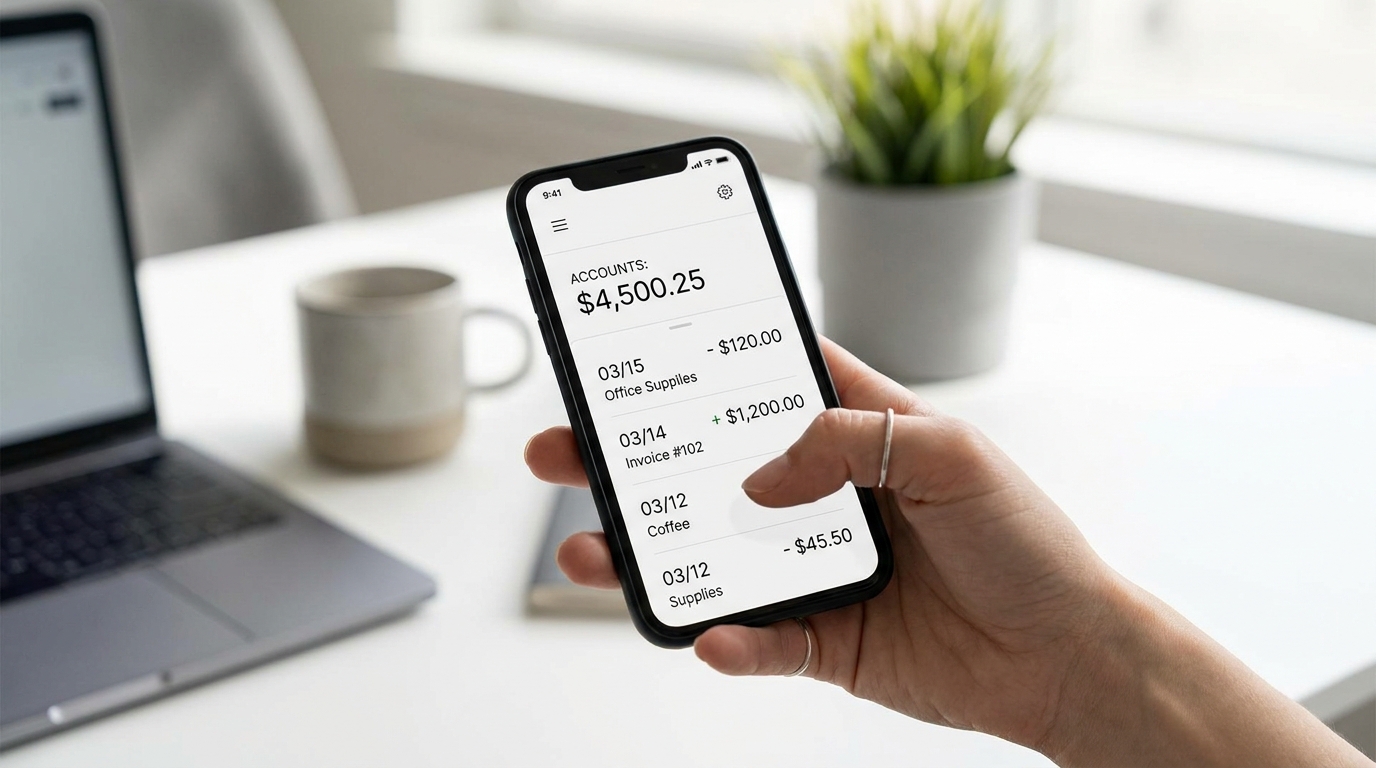
When evaluating mobile business banking options, certain features stand out as critical for operational success. At the core, any effective app must offer comprehensive account management: the ability to view all linked business accounts, check real-time balances, and access detailed transaction histories. This granular visibility is fundamental for daily financial oversight. Next, consider payment functionalities. A robust app should support various payment methods, including ACH transfers for vendor payments, wire transfers for larger or international transactions, and bill pay services to manage recurring expenses. The capability to schedule future payments is also a significant time-saver. Mobile check deposit is another indispensable feature, eliminating the need to visit a branch or ATM. Simply snap a photo of the check, and the funds are on their way. For businesses with multiple team members, user management and permissions are crucial. This connects to our resource on setting up your Colorado LLC, which covers the details. Look for apps that allow you to set specific access levels for employees, such as granting a bookkeeper view-only access while restricting payment initiation. This enhances security and control. Integration with accounting software like QuickBooks or Xero streamlines reconciliation and financial reporting, reducing manual data entry and potential errors. Finally, real-time alerts and notifications for deposits, withdrawals, and low balances provide immediate financial awareness, helping to prevent overdrafts or identify suspicious activity promptly. - Real-time Balance and Transaction History
- ACH and Wire Transfer Capabilities
- Mobile Check Deposit
- Bill Pay and Scheduled Payments
- Multi-User Access with Granular Permissions
- Integration with Accounting Software
- Customizable Alerts and Notifications
These features collectively empower founders to manage their finances with unprecedented efficiency and control, regardless of where their work takes them. For Lovie users who have just formed their LLC or C-Corp, selecting a bank that offers these robust mobile capabilities ensures their financial infrastructure is agile from the outset. For example, a Texas C-Corp founder managing a remote team can easily disburse payroll and track expenses, while an international founder with a Wyoming LLC can monitor their US operations without ever needing to step foot in a physical bank branch.
Selecting the Ideal Mobile Business Bank for Your Entity
Choosing the right mobile business bank involves more than just looking at app features; it requires a holistic assessment of your business needs, entity type, and growth trajectory. Start by considering the bank's fee structure. Many digital-first banks offer competitive or even zero monthly maintenance fees, which can be a significant advantage for startups. However, scrutinize transaction fees, ATM fees, and any charges for wire transfers, as these can accumulate quickly. Next, evaluate the bank's digital infrastructure. Is the app intuitive, stable, and frequently updated? Read reviews on app stores and independent financial forums to gauge user experience and reliability. A glitchy app can be more detrimental than no app at all.
Customer support is another critical factor. While mobile banking emphasizes self-service, there will be times when you need human assistance. Does the bank offer 24/7 support via chat, phone, or email? What are their response times? For businesses with specific needs, such as high-volume transactions, international payments, or specific lending requirements, ensure the bank can scale with you. Some fintech banks specialize in digital-first solutions but may have limitations on certain traditional banking services. Conversely, established traditional banks might offer robust mobile apps but could come with higher fees or more rigid account requirements.
Considerations for Lovie Founders
When you form your LLC or C-Corp through Lovie, you're establishing a compliant legal entity ready for business operations. The next logical step is securing a business bank account that aligns with your operational model. If you're an AI operator focused on rapid iteration and remote work, a purely digital bank might be ideal. If you're a real estate investor in Florida who occasionally handles large cash transactions, a bank with a strong mobile presence plus some physical branch access might be more suitable. Consider specific state requirements too; while most banking is federal, some local regulations or preferred banking partners might exist for certain industries. For instance, a New York LLC might find certain regional banks more attuned to local business needs. Always compare interest rates on checking and savings accounts, as well as any cash back or rewards programs that could benefit your business.
Seamless Integration: Mobile Banking in Your Business Workflow
Integrating mobile business banking effectively into your daily operations can dramatically streamline financial management. The key lies in leveraging its capabilities to automate tasks, improve data accuracy, and enhance decision-making. Start by connecting your mobile banking app with your existing accounting software. Most modern business banking apps offer direct integrations with platforms like QuickBooks Online, Xero, or FreshBooks. This link automates the import of transactions, categorizes expenses, and simplifies reconciliation, saving hours each month. For example, a consulting firm registered as an S-Corp in Georgia can set up automatic feeds to their accounting platform, allowing their bookkeeper to focus on analysis rather than data entry.
Utilize the app's budgeting and expense tracking tools. Many mobile banking solutions provide features to tag transactions, upload receipts, and generate reports directly from your phone. This is invaluable for tracking project-specific costs or monitoring departmental spending. For a healthcare practice in Massachusetts, this means instant visibility into supply costs versus patient revenue. Implement scheduled payments for recurring bills like rent, utilities, and software subscriptions to avoid late fees and ensure consistent cash flow. For payroll, while many mobile apps don't directly process payroll, they facilitate quick transfers to dedicated payroll services like Gusto or ADP. Consider using virtual cards offered by some mobile banks for online purchases, enhancing security and making it easier to track specific expense categories.
- Link to Accounting Software (QuickBooks, Xero)
- Leverage In-App Budgeting and Expense Tracking
- Automate Recurring Payments
- Facilitate Payroll Transfers to Dedicated Services
- Utilize Virtual Cards for Online Transactions
For Lovie clients, particularly those who have just completed their C-Corp formation in Delaware or an LLC in California, integrating mobile banking is a foundational step. Lovie's $29 one-time fee covers formation preparation and filing, with compliance reminders included; state filing fees are paid directly to your state, and registered agent service is priced separately at $79/year ($49/year in Wyoming). By immediately connecting your new business bank account to your financial management tools, you create a robust ecosystem that supports efficient growth. This proactive approach ensures that your financial data is always current and accessible, providing the clarity needed to make informed strategic decisions. This also simplifies tax preparation, as all transactions are neatly categorized and recorded from the outset.
Security and Compliance: Protecting Your Mobile Business Finances
While mobile business banking offers unparalleled convenience, it also introduces unique security and compliance challenges that founders must address. The first line of defense is strong authentication. Ensure your chosen banking app supports multi-factor authentication (MFA), which typically involves a password combined with a biometric scan (fingerprint or face ID) or a one-time code sent to a trusted device. This significantly reduces the risk of unauthorized access. Always use strong, unique passwords and avoid storing them on your device. Regularly review your transaction history for any suspicious activity and report discrepancies immediately.
Data encryption is fundamental. Reputable mobile banking apps use advanced encryption protocols to protect your financial data both in transit and at rest. Verify that the bank adheres to industry standards such as TLS (Transport Layer Security) for data transmission. Be vigilant about phishing attempts; never click on suspicious links in emails or texts claiming to be from your bank. Always access your banking app directly or through a verified bookmark. Keep your mobile device's operating system and the banking app itself updated to benefit from the latest security patches. Public Wi-Fi networks are generally less secure; avoid conducting sensitive banking transactions when connected to them. If you must, use a Virtual Private Network (VPN).
Compliance with Regulatory Standards
For US-based businesses, banks are subject to federal regulations like the Bank Secrecy Act (BSA) and the Electronic Fund Transfer Act (EFTA). These regulations govern how financial institutions handle transactions, report suspicious activity, and protect consumer rights. Mobile banking providers, whether traditional or fintech, must comply with these standards. For businesses, maintaining accurate financial records through mobile banking tools also supports tax compliance, as the IRS requires detailed documentation for all income and expenses. Lovie assists founders with EIN registration, a critical component for tax identification, but maintaining diligent financial records through secure mobile banking is the founder's ongoing responsibility. For a C-Corp in Delaware, for example, precise record-keeping is vital for corporate governance and potential future audits. Always ensure your mobile banking partner has a clear privacy policy and transparent terms of service regarding data handling and security breaches. Understanding these policies helps you assess the bank's commitment to protecting your financial information. Regularly backing up financial data, if the app allows it, provides an additional layer of protection.
Strategies for Optimizing Your Mobile Business Banking Experience
Maximizing the benefits of mobile business banking goes beyond simply downloading an app; it involves adopting practices that enhance efficiency and security. First, dedicate a specific device, if possible, for business banking to minimize exposure to personal apps and potential security risks. If not, ensure your primary device is secured with robust antivirus software and strong access controls. Regularly organize and categorize your transactions within the app. Many apps allow custom tagging or notes, which can be invaluable for future reference, tax preparation, and understanding spending patterns. For a marketing agency operating as an LLC in Colorado, tagging client-specific expenses helps in accurate billing and project profitability analysis.
Leverage the reporting features. While not as comprehensive as dedicated accounting software, many mobile banking apps offer basic reports on income, expenses, and cash flow. These quick insights can inform immediate operational decisions, like adjusting spending or identifying areas for cost reduction. Set up custom alerts for specific thresholds, such as a low balance warning or notification for any transaction over a certain amount. This proactive monitoring helps prevent financial surprises and enhances fraud detection. Periodically review your bank's app for new features and updates; financial technology evolves rapidly, and banks frequently introduce enhancements to their mobile platforms. For example, some banks now offer AI-powered insights into spending patterns or integration with virtual assistants.
- Utilize a Dedicated or Highly Secured Device
- Consistently Categorize and Tag Transactions
- Leverage In-App Reporting for Quick Insights
- Customize and Respond to Financial Alerts
- Stay Updated on App Features and Security Patches
For Lovie founders establishing their entities, whether it's an LLC for a fintech startup in California or a C-Corp for an AI venture in Washington, optimizing mobile banking from the outset provides a scalable financial foundation. Lovie ensures your entity is correctly formed and registered, providing the legal framework. Your optimized mobile banking setup then provides the operational framework for financial management. Consider setting up automatic transfers between checking and savings accounts to build reserves or manage tax liabilities. For example, a restaurant owner with a New York LLC could automatically transfer a percentage of daily deposits into a separate account for sales tax. This proactive approach to financial management, powered by mobile banking, ensures that your business finances are always under control, allowing you to focus on growth and innovation.
The Evolving Landscape: The Future of Mobile Business Banking
The trajectory of mobile business banking points towards greater intelligence, personalization, and integration. We are already seeing the emergence of AI and machine learning within banking apps, moving beyond simple transaction tracking to predictive analytics. Imagine an app that not only shows your current cash flow but also forecasts future liquidity based on historical data and upcoming invoices, or suggests optimal times for payments to maximize interest earnings. This level of predictive insight will empower founders with unprecedented financial foresight, allowing for more strategic decision-making.
Personalization will also intensify. Banking apps will increasingly tailor their interfaces and recommendations based on a business's specific industry, size, and transactional patterns. A healthcare practice, for instance, might see different financial tools highlighted than an e-commerce store. Deeper integration with broader business ecosystems is another key trend. This means seamless connections not just with accounting software, but also with CRM platforms, inventory management systems, and even industry-specific tools. The goal is to create a unified operational dashboard where financial data flows effortlessly across all business functions.
Emerging Technologies
Blockchain technology, while still nascent in mainstream banking, holds promise for secure, transparent, and immutable transaction records, potentially enhancing the security and speed of B2B payments. Voice banking, powered by advanced natural language processing, could offer hands-free financial management, allowing founders to query balances or initiate transfers through voice commands. Open banking initiatives, driven by regulatory changes in some regions, could also lead to greater interoperability between different financial service providers, giving businesses more choice and flexibility in how they manage their money.
For founders forming their companies with Lovie, staying abreast of these developments is crucial. Lovie's commitment to leveraging AI for company formation mirrors the innovation seen in the banking sector. As your business grows, from an initial LLC in Delaware to a multi-state C-Corp, your banking needs will evolve. Choosing mobile banking partners who are actively investing in these future technologies ensures your financial infrastructure remains cutting-edge. The future of mobile business banking is one where financial management is not just convenient, but intelligently integrated, predictive, and a seamless extension of your business operations, ultimately empowering you to build and scale with confidence. This continuous evolution means that the 'best' mobile banking solution today might be surpassed tomorrow, necessitating a flexible and informed approach to financial technology.
Frequently asked questions
Is mobile business banking secure enough for large transactions?
Yes, reputable mobile business banking apps employ advanced security measures like multi-factor authentication, end-to-end encryption, and fraud detection systems. For large transactions, banks often implement additional verification steps. Always ensure your device is secured, use strong passwords, and avoid public Wi-Fi for sensitive banking activities. Most banks offer robust protections comparable to their online desktop platforms.
Can I open a new business bank account entirely through a mobile app?
Many modern fintech banks and some traditional banks now allow you to open a new business bank account almost entirely through their mobile app. You'll typically need to provide your EIN, business formation documents (like Articles of Organization or Incorporation), and personal identification. The process usually involves uploading documents and verifying your identity digitally. Lovie helps you secure your EIN and formation documents, streamlining this process.
What if my business needs to deposit cash regularly?
If your business frequently handles cash deposits, a purely digital-only mobile bank might not be the best fit, as they often lack physical branch locations or ATM networks that accept cash. In this scenario, consider a traditional bank with a strong mobile app, or a hybrid bank that partners with retail locations for cash deposits. Always check the bank's specific cash deposit policies before opening an account.
How do I link my mobile business banking to accounting software?
Most modern accounting software (e.g., QuickBooks Online, Xero) and mobile banking apps offer direct integration. Typically, you'll log into your accounting software, navigate to the banking or 'connect accounts' section, and search for your bank. You'll then be prompted to log into your bank account securely through the accounting software's interface to authorize the connection. This allows for automatic transaction feeds and reconciliation.
Are there specific mobile banking features for international founders?
International founders with US-formed entities can greatly benefit from mobile business banking due to its remote accessibility. Key features to look for include easy international wire transfer capabilities, currency exchange rate transparency, and robust security protocols for global access. Some banks also offer multi-currency accounts or dedicated support for international clients. The ability to manage your US entity's finances from abroad is a primary advantage.
What's the difference between a mobile-first bank and a traditional bank's mobile app?
A mobile-first bank (often a fintech company) is built from the ground up for digital operations, typically offering streamlined mobile experiences, competitive fees, and innovative features. They often lack physical branches. A traditional bank's mobile app is a digital extension of an existing brick-and-mortar institution, offering convenience while retaining access to physical services. Both can be excellent, but their core operational models differ.
Key Concepts: Business Formation
US Business Formation guides entrepreneurs through the business formation process with actionable steps. Key components include LLC formation, entity registration, and state filing, each playing a critical role in the business formation process. Understanding liability protection and tax optimization is essential, as these factors directly impact legal compliance.
When evaluating business formation options, factors such as business entity types and formation process should inform your decision-making process.
Entity Relationships
- Business Formation requires LLC formation
- Business Formation includes entity registration
- Business Formation establishes state filing
- Business Formation defines business structure selection
Quick answers
What do I need to know about Mobile Business Banking for my business?
Understanding Mobile Business Banking is essential for business compliance and operational success. The specific requirements vary by state and industry.
How does Mobile Business Banking affect my business formation?
This aspect of business formation directly impacts your legal standing, tax obligations, and operational flexibility.
Explore Formation Guides
State-specific formation guides, cost breakdowns, compliance checklists, and expert comparisons — updated for 2026.
LLC Formation Guides
- How to Form an LLC for Virtual Assistant Hawaii
- How to Form an LLC for Web Developer West Virginia
- How to Form an LLC for Drone Services Wyoming
- How to Form an LLC for Freelancing California
Popular Guides
Cost by Entity & State
- Sole Proprietorship Cost Alabama Formation Costs
- Nonprofit Cost Michigan Formation Costs (2026) | Lovie
- C Corp Cost South Carolina Formation Costs (2026) | Lovie

Lovie is not a government agency, law firm, or professional advisory organization. Lovie is a private business-formation service that prepares and submits filings to the appropriate state agencies on your behalf — we do not issue government documents, and state approval times are not controlled by Lovie. Information on this page is general and not legal, tax, or financial advice.