On this page · 8 sections
What is a DBA Name?
A DBA, which stands for 'Doing Business As,' is a fictitious name, trade name, or assumed name that allows a business to operate under a name different from its legal name. It’s not a separate legal entity in itself, but rather a registration that links a public-facing brand name to an underlying legal structure. For example, if Sarah Chen, a sole proprietor, wants to open a freelance design studio called 'Pixel Perfect Designs,' she would file a DBA for 'Pixel Perfect Designs' because her legal name is Sarah Chen. Similarly, 'Acme Innovations LLC' might decide to launch a new product line under the brand 'Future Gadgets' and would file a DBA for 'Future Gadgets' to operate under that specific brand without forming an entirely new LLC. The primary purpose of a DBA is transparency for consumers. It ensures that customers know who they are truly doing business with, even if the public-facing name is different. For a deeper dive, see our resource on starting a business in Arkansas. This requirement often stems from state or local regulations designed to prevent fraud and ensure accountability. Without a DBA, a sole proprietor would typically have to operate under their personal name, and a corporation or LLC would have to use its full legal name in all public interactions, including marketing, signage, and banking. The simplicity and cost-effectiveness of a DBA make it an attractive option for businesses looking to establish a distinct brand identity without the complexity and expense of forming a new legal entity. It essentially provides an alias for your existing business structure, making it easier to market and distinguish different ventures or brands under one legal umbrella.
Why Register a DBA Name?
Registering a DBA offers several significant advantages for businesses, ranging from branding flexibility to operational necessities. For many sole proprietors and general partnerships, a DBA is essential for establishing a professional identity distinct from their personal names. Imagine a consultant named David Miller. If he wants to market his services as 'Strategic Growth Consulting,' a DBA allows him to do so legally and professionally, opening business bank accounts and signing contracts under that name. Without a DBA, he'd be limited to operating as 'David Miller,' which might not convey the desired brand image or professionalism. Beyond branding, a DBA is often a prerequisite for practical business operations. Banks typically require a DBA registration to open a business checking account if you're not using your legal entity name. This separation of personal and business finances is crucial for proper accounting, tax purposes, and limiting personal liability, even if the DBA itself doesn't offer liability protection. You might also find our guide on forming an LLC in California useful here. Additionally, many states require a DBA for consumer protection. For instance, in California, most businesses operating under a fictitious name must file a Fictitious Business Name (FBN) statement, which is their term for a DBA. This makes the true owner of the business publicly discoverable. Furthermore, a DBA provides a cost-effective way to launch new brands or divisions without incurring the higher costs and administrative burdens of forming a new LLC or corporation for each venture. An existing LLC, 'Global Tech Solutions LLC,' could launch a software product under 'CodeCraft Apps' with just a DBA, rather than forming 'CodeCraft Apps LLC.' This flexibility is invaluable for entrepreneurs looking to test new markets or diversify their offerings efficiently. While a DBA doesn't create a new legal entity, it's a powerful tool for branding, operational legitimacy, and compliance.
DBA vs. Legal Entity: Key Distinctions
It's crucial to understand that a DBA is not a business structure. It does not provide any legal liability protection, nor does it create a separate legal entity like an LLC or a C-Corp. Think of a DBA as a pseudonym for an existing business or individual. If you operate as a sole proprietorship, your personal assets are still tied to your business debts and liabilities, regardless of whether you use a DBA. The same applies to general partnerships. In contrast, forming a legal entity such as a Limited Liability Company (LLC) or a Corporation (C-Corp or S-Corp) establishes a distinct legal person separate from its owners. This separation provides limited liability protection, meaning the owners' personal assets are generally shielded from business debts and lawsuits. For example, if 'Tech Innovations LLC' faces a lawsuit, the personal assets of its members are typically protected. This connects to our resource on how to register an LLC in Colorado, which covers the details. If John Smith, a sole proprietor doing business as 'John's Tech Services' (via a DBA), is sued, his personal assets like his home and savings could be at risk. Choosing between simply registering a DBA and forming a legal entity depends entirely on your business goals, risk tolerance, and growth projections. If you're starting a low-risk side hustle and want a professional name, a DBA might suffice initially. However, if you plan to hire employees, incur significant debt, or deal with higher liability risks, forming an LLC or C-Corp is almost always the smarter move. A DBA can then be used in conjunction with an LLC or C-Corp to operate different brands under one legal umbrella. For instance, 'Innovate Holdings LLC' could register DBAs for 'Digital Marketing Pros' and 'E-commerce Solutions' to manage distinct service lines without forming multiple LLCs. Lovie specializes in helping founders establish these foundational legal entities, simplifying the complex process of LLC and C-Corp formation across all 50 states, ensuring you get the liability protection you need from day one.
DBA Requirements by State
DBA registration requirements vary significantly from state to state, and even between counties or cities within the same state. This jurisdictional patchwork is a key reason why understanding local regulations is paramount. While some states centralize DBA filings at the state level, others delegate this responsibility to county clerks or even city offices. For example, in New York, DBAs for sole proprietorships and partnerships are filed with the county clerk in the county where the business operates. Corporations and LLCs in New York file their DBAs (referred to as 'Certificates of Assumed Name') with the Department of State.
California, on the other hand, requires 'Fictitious Business Name' (FBN) statements to be filed with the county clerk in the county of the principal place of business. After filing, businesses must publish a notice of their FBN in an approved newspaper of general circulation for four consecutive weeks. This publication requirement, common in several states, serves to further inform the public of who is operating under a fictitious name. In contrast, states like Texas generally require DBAs (Assumed Name Certificates) to be filed with the Secretary of State, though some local filings might still be necessary depending on the business type and location.
Fees also differ widely. A DBA filing in Florida might cost around $50 at the state level, while in California, county filing fees can range from $10 to $50, plus the significant cost of newspaper publication (which can easily exceed $100). Renewal periods are another variable; some states require renewals every five years, while others may require them more frequently. Before operating under any name other than your legal one, it’s essential to research the specific requirements for your state, county, and even city. Failure to comply can result in fines, inability to enforce contracts, or even an inability to open a business bank account. Always verify the most current regulations, as they can change annually.
DBA for Different Business Types
The need for a DBA and how it functions differs based on your underlying business structure. For a sole proprietorship, if you operate under any name other than your full legal personal name (e.g., 'John Doe' operating as 'John Doe Consulting' typically doesn't need a DBA, but 'John Doe' operating as 'Elite Marketing Solutions' does), you almost certainly need a DBA. This is the most common scenario for DBA usage, allowing individual entrepreneurs to brand their services professionally without forming an LLC or corporation. The DBA links 'Elite Marketing Solutions' directly to John Doe, the sole proprietor.
General partnerships also frequently use DBAs. If two partners, Jane Smith and Bob Johnson, form a partnership and want to call their business 'Urban Landscaping,' they would file a DBA for that name. Similar to sole proprietorships, the DBA provides a public-facing identity while the partnership remains the legal entity. For LLCs and corporations, the situation is slightly different. These entities already have a legal name registered with the state (e.g., 'Innovate Solutions LLC'). An LLC or corporation would file a DBA when it wants to operate a separate brand, product line, or service under a name different from its officially registered legal name. For instance, if 'Innovate Solutions LLC' launches a new e-commerce division named 'Gadget Galaxy,' it would file a DBA for 'Gadget Galaxy.' This allows 'Innovate Solutions LLC' to legally operate 'Gadget Galaxy' without forming a new LLC, streamlining operations and reducing administrative overhead.
However, it's crucial to remember that a DBA does not offer additional liability protection to an LLC or corporation. The limited liability protection still flows from the underlying legal entity. The DBA simply provides an alias for that entity to use in commerce. Before filing a DBA, consider your long-term goals. If you anticipate significant growth, investment, or higher liability exposure, forming an LLC or C-Corp first is often the more robust strategy. Lovie assists founders in forming these primary legal entities, providing a solid foundation before you even consider adding DBAs for branding flexibility.
How to Register a DBA Name
Registering a DBA name is typically a straightforward process, though the specifics vary by jurisdiction. The first step involves performing a name availability search. This is crucial to ensure the desired DBA name isn't already in use by another business in your state or county. Many states offer online search tools through their Secretary of State websites, or you might need to check with your local county clerk's office. This step helps avoid potential trademark conflicts or rejection of your filing.
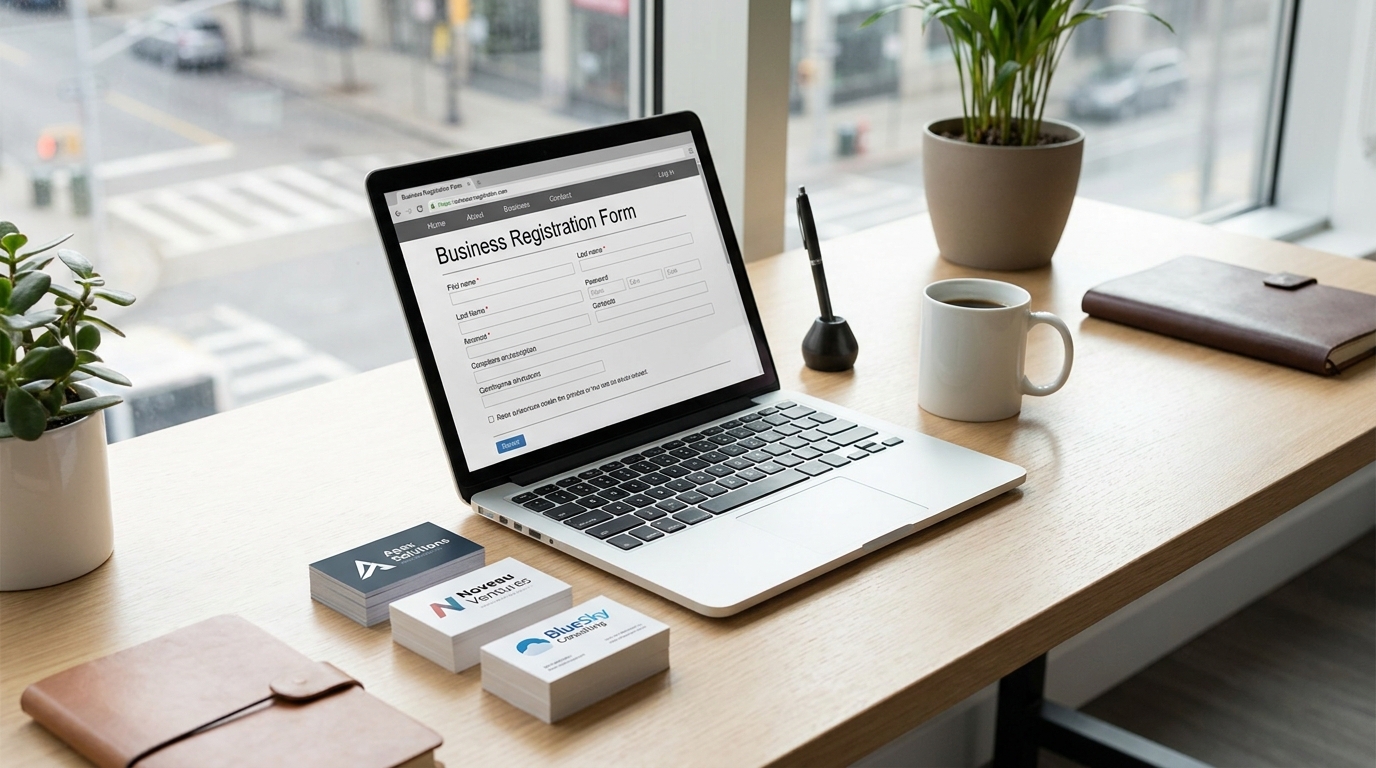
Once you've confirmed the name's availability, you'll need to prepare the necessary forms. These are usually called 'Fictitious Business Name Statement,' 'Assumed Name Certificate,' or simply 'DBA Registration Form.' The form will require basic information about your business, including its legal name, address, the type of business entity (sole proprietorship, LLC, etc.), and the fictitious name you intend to use. For example, in Texas, you'd file an 'Assumed Name Certificate' with the Secretary of State, providing your business's legal name, address, and the assumed name. The filing fee in Texas for a state-level assumed name is currently $25.
After completing the form, you'll submit it to the appropriate government office—this could be the Secretary of State, county clerk, or city clerk, depending on your location and business structure. Some jurisdictions, like California, also require a publication step, where you must publish notice of your DBA in a local newspaper for a set period. This ensures public awareness of the business operating under the fictitious name. Upon successful filing and any required publication, you'll receive a certified copy or confirmation of your DBA registration, which you can then use for opening bank accounts, marketing, and other business activities. While Lovie focuses on establishing your foundational LLC or C-Corp, understanding the DBA process empowers you to expand your brand effectively once your core entity is formed.
Maintaining Your DBA: Renewals and Changes
Registering a DBA is not a one-time event; it often requires ongoing maintenance to remain valid. Most jurisdictions set an expiration date for DBA registrations, typically ranging from two to ten years. For example, in Florida, a fictitious name registration is valid for five years and must be renewed before its expiration date. California's Fictitious Business Name Statements are also valid for five years. Failing to renew your DBA can lead to a lapse in your ability to legally operate under that name, potentially causing issues with banking, contracts, and legal compliance. It’s critical to mark your calendar and initiate the renewal process well in advance of the expiration.
Renewing Your DBA
The renewal process usually involves filing a new application or a specific renewal form with the same government office where you originally registered. You'll typically need to provide updated business information and pay another filing fee. Some states may require you to re-publish the DBA notice in a newspaper, particularly if the original publication was a requirement. Always check the specific renewal procedures for your state and county to ensure continuous compliance.
Making Changes to Your DBA
Changes to your business, such as a new business address, a change in ownership (especially for sole proprietorships or partnerships), or even a desire to change the DBA name itself, will require amendments or a new filing. For instance, if 'Jane's Bakery' (a DBA for sole proprietor Jane Doe) moves to a new county, Jane might need to file a new DBA in the new county and potentially cancel the old one. If 'Innovate Holdings LLC' changes its primary business address, it might need to amend its existing DBA filing. In many cases, a significant change might necessitate filing a completely new DBA and withdrawing the old one. Understanding these maintenance requirements is essential for long-term legal operation under your chosen assumed name. Neglecting these steps can lead to legal complications and operational disruptions. Lovie's $499 one-time fee covers the state filing fee, a year of registered agent service, your EIN application, five scanned mailpieces a year, and one domain name for a year. It is the same price in every state.
DBA and Your Business Branding
A DBA is a powerful tool for branding, offering businesses the flexibility to create distinct identities without the overhead of forming multiple legal entities. For many entrepreneurs, especially sole proprietors or small partnerships, a DBA is the first step in establishing a professional brand presence. Instead of operating under a personal name, which might not resonate with customers or convey the business's purpose, a DBA allows for a memorable and descriptive brand name. For example, 'Maria Rodriguez Photography' sounds more professional and focused than simply 'Maria Rodriguez.' This branding extends to marketing materials, websites, social media, and even physical signage, creating a cohesive and compelling public image.
For existing LLCs or corporations, DBAs enable diversification. A single legal entity can launch and operate several different brands or product lines, each with its own distinct DBA. 'Global Holdings LLC' could run 'Eco-Friendly Cleaning Services' and 'Urban Garden Supplies' as separate brands, each with its own marketing strategy and customer base, all while operating under the same underlying LLC. This strategy is particularly useful for companies looking to test new markets or cater to diverse customer segments without the administrative burden and costs of forming a new legal entity for each brand.
However, it's important to remember that a DBA does not provide exclusive rights to a name like a trademark does. While registering a DBA prevents others from using that exact name within the same jurisdiction for certain business types, it doesn't offer nationwide protection or prevent someone from trademarking a similar name in a different state or industry. Therefore, while a DBA is excellent for operational branding, consider pursuing trademark registration for your primary brand names if nationwide exclusivity and strong brand protection are critical to your long-term strategy. The combination of a strong legal entity (like an LLC or C-Corp), strategic DBAs for branding, and potential trademark protection creates a robust framework for your business's identity and growth.
Frequently asked questions
Can I open a bank account with a DBA name?
Yes, one of the primary reasons businesses register a DBA is to legally open a business bank account under that assumed name. Banks typically require proof of your DBA registration (such as a certified copy of the filing) along with your EIN (if applicable) and identification, to open an account in the fictitious name. This allows you to separate your business finances from personal finances, even if you are a sole proprietor, which is crucial for accounting, tax purposes, and professionalism.
Explore Formation Guides
State-specific formation guides, cost breakdowns, compliance checklists, and expert comparisons — updated for 2026.
Popular Guides
- DBA Name Registration | Lovie — US Company Formation
- DBA Name — US Company Formation Guide (2026) | Lovie
- DBA Nevada | Lovie — US Company Formation
- DBA New Hampshire | Lovie — US Company Formation
- DBA New York State | Lovie — US Company Formation
- DBA North Carolina | Lovie — US Company Formation
- DBA Number Meaning | Lovie — US Company Formation
- DBA Office | Lovie — US Company Formation Experts
- DBA Oklahoma | Lovie — US Company Formation
- DBA Online Registration | Lovie — US Company Formation
- DBA OR EIN First — US Company Formation Guide
- DBA or LLC | Lovie — US Company Formation
- DBA Pros and Cons | Lovie — US Company Formation
- DBA Registration Georgia | Lovie — US Company Formation
- DBA Registration | Lovie — US Company Formation

Lovie is not a government agency, law firm, or professional advisory organization. Lovie is a private business-formation service that prepares and submits filings to the appropriate state agencies on your behalf — we do not issue government documents, and state approval times are not controlled by Lovie. Information on this page is general and not legal, tax, or financial advice.