
On this page · 8 sections
- Why Delaware for Your Corporation?
- C-Corporation vs. S-Corporation in Delaware
- Step-by-Step Delaware Incorporation Process
- The Delaware Registered Agent Requirement
- Ongoing Compliance for Delaware Corporations
- Delaware Corporation Tax Implications
- Operating Outside Delaware: Foreign Qualification
- Simplifying Your Delaware Incorporation with Lovie
Why Delaware for Your Corporation?
Delaware stands as a premier jurisdiction for corporate formation, largely due to its sophisticated and predictable legal framework. The state's General Corporation Law (DGCL) is widely regarded as the most advanced and comprehensive corporate statute in the United States, offering clarity and flexibility for businesses. This legal environment is further bolstered by the Delaware Court of Chancery, a unique court specializing exclusively in corporate law. Its judges, who are experts in corporate governance, resolve disputes quickly and efficiently, creating a substantial body of case law that provides founders and investors with a high degree of certainty and predictability. Over one million businesses, including more than 67% of Fortune 500 companies, are incorporated in Delaware. This preference stems from several key advantages. The DGCL offers flexibility in corporate structure and governance, allowing companies to tailor their bylaws and management arrangements to fit their specific needs. Delaware also maintains a business-friendly state government and a Division of Corporations known for its efficiency in processing filings. For startups seeking venture capital or private equity funding, investors often prefer or even require Delaware incorporation because of this robust legal infrastructure and the established precedents that protect both founders and investors. This makes Delaware an attractive choice for those looking to scale rapidly and attract significant investment. ## Key Advantages of Delaware Incorporation
- Our resource on setting up your Delaware LLC breaks this down further. Established Legal Precedent: Decades of case law from the Court of Chancery provide clear guidance on corporate disputes. 2. Flexible Corporate Laws: The DGCL allows for significant customization of corporate governance. 3. Reputation and Credibility: Delaware incorporation is often seen as a mark of seriousness by investors and partners. 4. Efficient State Services: The Delaware Division of Corporations is known for its streamlined filing processes. 5. Privacy: While not absolute, Delaware offers some privacy advantages compared to other states, as director and officer names are not always publicly listed on the initial Certificate of Incorporation.
C-Corporation vs. S-Corporation in Delaware
When forming a corporation in Delaware, one of the foundational decisions you'll make is whether to establish a C-Corporation (C-Corp) or an S-Corporation (S-Corp). This choice primarily impacts your tax treatment and ownership structure. Both are legal corporations formed under Delaware law, but they differ significantly in how profits and losses are handled for federal income tax purposes. A C-Corporation is the default corporate structure and is taxed separately from its owners. This means the corporation pays taxes on its profits, and then shareholders pay taxes again on any dividends they receive (known as 'double taxation'). While this might sound disadvantageous, C-Corps offer unlimited growth potential, can have an unlimited number of shareholders, and can issue different classes of stock. This structure is particularly attractive to startups aiming for venture capital funding, as investors typically prefer C-Corps for their flexibility in ownership and ease of future equity rounds. A Delaware C-Corp is often the preferred entity for high-growth tech companies and international founders. An S-Corporation, by contrast, is a pass-through entity for federal income tax purposes. If you're exploring this further, our guide on how to register an LLC in Delaware is a helpful next step. This means profits and losses are passed directly to the owners' personal income without being taxed at the corporate level. To qualify as an S-Corp, a corporation must meet specific IRS criteria, including having no more than 100 shareholders, all of whom must be U.S. citizens or residents, and only issuing one class of stock. While S-Corps avoid double taxation, they come with more restrictions on ownership and capital structure, making them less suitable for companies seeking institutional investment. Many small businesses and professional service firms find the S-Corp structure appealing for its tax benefits. Choosing between a C-Corp and an S-Corp requires careful consideration of your business's long-term goals, funding strategy, and ownership structure. It's often advisable to consult with a tax professional to determine the most beneficial structure for your specific situation. Lovie assists with both C-Corp and S-Corp formation, simplifying the initial setup regardless of your choice.
Step-by-Step Delaware Incorporation Process
Forming a corporation in Delaware involves several critical steps, each requiring precision to ensure legal compliance. The process begins with selecting a unique name for your corporation. This name must not be deceptively similar to any existing entity in Delaware. You can check name availability through the Delaware Division of Corporations website. Once confirmed, you might consider reserving the name for up to 120 days for a fee of $75 to secure it while you complete other preparations. Next, you'll need to appoint a Delaware Registered Agent. This is a mandatory requirement for all Delaware corporations. The registered agent must have a physical street address in Delaware (not a P.O. Box) and be available during normal business hours to accept legal documents and official correspondence on behalf of your corporation. Lovie's $29 one-time fee covers formation preparation and filing, with compliance reminders included; state filing fees are paid directly to your state, and registered agent service is priced separately at $79/year ($49/year in Wyoming). The core of the incorporation process is filing the Certificate of Incorporation with the Delaware Division of Corporations. For a deeper dive, see our resource on starting a business in Delaware. This document, often called the 'charter,' outlines fundamental information about your corporation, including its name, the name and address of its registered agent, and the number of shares the corporation is authorized to issue. The filing fee for a Certificate of Incorporation is typically $89, plus additional fees for expedited processing if needed. Once filed and approved, your corporation officially exists. After your Certificate of Incorporation is approved, the next crucial step is to obtain an Employer Identification Number (EIN) from the IRS. An EIN is essentially a social security number for your business, required for opening bank accounts, filing federal taxes, and hiring employees. This can be done online through the IRS website and is usually a quick process. Lovie's $29 one-time fee covers formation preparation and filing, with compliance reminders included; state filing fees are paid directly to your state, and registered agent service is priced separately at $79/year ($49/year in Wyoming). Finally, the initial organizational meeting of the board of directors is vital. At this meeting, directors adopt bylaws, elect officers, authorize the issuance of stock, establish a corporate bank account, and address other foundational corporate matters. These steps lay the groundwork for your corporation's legal and operational framework, ensuring it's ready to conduct business.

The Delaware Registered Agent Requirement
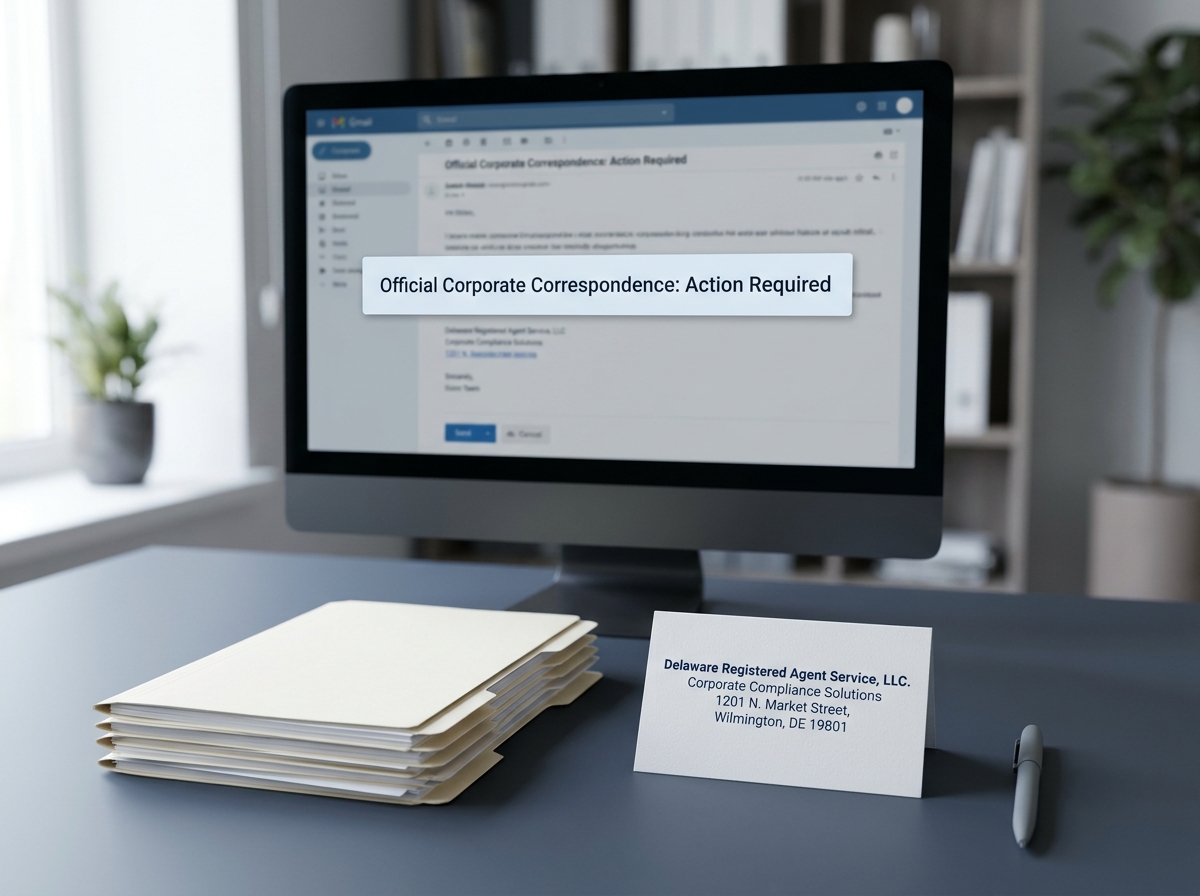
Every corporation formed in Delaware, regardless of its size or operational status, is legally mandated to maintain a Registered Agent within the state. This isn't merely a suggestion; it's a cornerstone of Delaware's corporate law, ensuring that the state and general public always have a reliable point of contact for your business. The Registered Agent's primary role is to receive service of process (legal documents like summons and subpoenas), official government correspondence, and annual franchise tax notices on behalf of your corporation.
The Registered Agent must be an individual resident of Delaware or a business entity authorized to transact business in Delaware, with a physical street address in the state. Post office boxes are not acceptable. This agent must be available during regular business hours to receive critical documents. Failing to maintain a registered agent in good standing can lead to serious consequences, including the loss of your corporation's good standing status, administrative dissolution by the state, and potentially the inability to defend against legal actions because you didn't receive notice.
For many founders, particularly those operating outside of Delaware or those with distributed teams, using a professional registered agent service is the most practical and compliant solution. These services not only fulfill the statutory requirement but also offer additional benefits, such as digital mail scanning and timely alerts for important compliance deadlines. Registered agent service is required in every state and is priced separately at $79/year ($49/year in Wyoming). This service acts as a crucial layer of protection, keeping your corporation compliant and informed without the burden of managing a physical presence in Delaware yourself.
Choosing the right registered agent is an important decision that impacts your corporation's ongoing compliance. A reliable agent ensures that you are promptly informed of any legal or governmental communications, allowing you to respond appropriately and maintain your corporation's legal standing.
Ongoing Compliance for Delaware Corporations
Forming your corporation in Delaware is just the first step; maintaining its good standing requires adherence to ongoing compliance obligations. The most significant of these for Delaware corporations is the annual Franchise Tax. Every Delaware corporation, regardless of whether it conducts business in the state, must pay an annual franchise tax. The minimum tax is $175, with a maximum of $200,000 for corporations using the Authorized Shares Method. Alternatively, the Assumed Par Value Capital Method can result in a tax as low as $400. This tax is due by March 1st each year. Failure to pay on time incurs a $125 penalty plus 1.5% interest per month.
Beyond the annual tax, Delaware corporations must also file an Annual Report with the Delaware Division of Corporations. This report, also due by March 1st, confirms the corporation's registered agent and registered office address. It's a straightforward filing but essential for maintaining compliance. While Delaware does not require corporations to file an annual list of directors or officers publicly, the corporation itself must maintain accurate internal records, including minutes of board and shareholder meetings, and a stock ledger.
Federal compliance involves obtaining an Employer Identification Number (EIN) and fulfilling federal tax obligations, which vary based on your C-Corp or S-Corp election. This includes filing Form 1120 (U.S. Corporation Income Tax Return) for C-Corps or Form 1120-S (U.S. Income Tax Return for an S Corporation) for S-Corps. Additionally, if your corporation conducts business in states other than Delaware, you will likely need to register as a 'foreign corporation' in those states, which entails its own set of compliance requirements and often additional annual reports and fees. Maintaining meticulous records and staying informed about these deadlines is crucial for avoiding penalties and ensuring your corporation remains in good standing.
Lovie's $29 one-time fee covers formation preparation and filing, with compliance reminders included; state filing fees are paid directly to your state, and registered agent service is priced separately at $79/year ($49/year in Wyoming). This proactive approach minimizes the risk of non-compliance, allowing you to focus on your business's growth rather than administrative burdens.
Delaware Corporation Tax Implications
Understanding the tax implications of a Delaware corporation is crucial for effective financial planning. While Delaware is famous for its corporate-friendly laws, it’s important to distinguish between state-level and federal-level taxation. Delaware does not impose state income tax on corporations that do not conduct business within the state. This is a significant advantage for companies incorporated in Delaware but operating entirely elsewhere. However, if your Delaware corporation has a physical presence or conducts business activity within Delaware, it will be subject to the state's corporate income tax, which is currently 8.7% of taxable income.
The primary state-level tax for all Delaware corporations, regardless of where they operate, is the Annual Franchise Tax. As previously mentioned, this tax is due by March 1st each year and can range from $175 to $200,000, depending on the calculation method (Authorized Shares Method or Assumed Par Value Capital Method). Most small to medium-sized corporations will pay the minimum $175. It is crucial to file and pay this on time to avoid penalties and maintain good standing.
At the federal level, the tax implications depend on your corporation's classification as a C-Corp or S-Corp. C-Corporations are subject to corporate income tax at the federal rate (currently 21%), and then shareholders are taxed again on dividends, leading to 'double taxation.' S-Corporations, on the other hand, are pass-through entities, meaning profits and losses are reported on the owners' personal tax returns, avoiding federal corporate income tax. However, S-Corps are still responsible for payroll taxes if they have employees, and owners who are also employees must pay themselves a reasonable salary subject to FICA taxes.
Founders must also consider sales tax, property tax, and employment taxes, which are generally levied by the state and local jurisdictions where the business physically operates or has employees, not necessarily where it is incorporated. For example, if your Delaware C-Corp sells goods in California, it will likely need to collect and remit California sales tax. Consulting with a tax advisor is highly recommended to navigate these complexities and optimize your tax strategy.
Operating Outside Delaware: Foreign Qualification
While Delaware is an excellent state for incorporation, most businesses will conduct their primary operations in a different state. When your Delaware corporation intends to transact business in any other U.S. state, it generally needs to register as a 'foreign corporation' in that state. This process is known as 'foreign qualification.' This is distinct from forming your corporation; it's an additional registration that allows your Delaware entity to legally operate and gain recognition in another jurisdiction.
Each state has its own definition of what constitutes 'transacting business,' but it typically includes having a physical office, employees, significant sales activity, or owning property in that state. Merely having a website accessible from a state or shipping goods into a state from out-of-state might not trigger foreign qualification requirements, but it's important to understand the nuances of each state's laws. For example, owning rental properties in Florida with a Delaware corporation would almost certainly require foreign qualification in Florida.
The foreign qualification process usually involves filing a Certificate of Authority or similar document with the Secretary of State in the target state. You will also need to appoint a registered agent in that specific state, as your Delaware registered agent's authority only extends to Delaware. Failure to foreign qualify when required can lead to severe penalties, including fines, inability to enforce contracts in the non-qualified state, and being barred from using the state's court system. Many states also charge back taxes and fees for periods during which the corporation was transacting business without proper registration.
Lovie’s comprehensive platform simplifies multi-state compliance. If your Delaware corporation needs to expand its operations, Lovie can assist with foreign qualification in other states, ensuring you remain compliant across all jurisdictions where you do business. This proactive approach helps avoid costly penalties and legal complications, allowing your business to grow seamlessly.

Simplifying Your Delaware Incorporation with Lovie
Navigating the complexities of forming a corporation in Delaware can be a daunting task for even experienced founders, let alone those new to the entrepreneurial landscape. From understanding the nuances of the Delaware General Corporation Law to ensuring all necessary documents are filed correctly and on time, the process is fraught with potential pitfalls. This is where Lovie steps in, transforming a traditionally intricate process into a streamlined, AI-powered experience designed for the modern founder.
Lovie is an AI-powered platform that handles C-Corp formation in all 50 US states, including Delaware. We simplify the entire lifecycle of your company formation, from initial filing to ongoing compliance. Registered agent service is required in every state and is priced separately at $79/year ($49/year in Wyoming). Unlike traditional services that often surprise you with upsells, Lovie's pricing is transparent and inclusive, ensuring you know exactly what you're paying for from day one.
For founders, particularly those in the tech space, Lovie offers unique differentiators. You can interact with our platform directly from your IDE via our MCP server, integrating company formation into your existing workflow. Our conversational UI makes the process intuitive, guiding you through each step with clear, actionable prompts. Furthermore, Lovie provides instant filing status visibility, so you're always aware of where your application stands. We also include essential resources like operating agreement templates and AI-driven compliance monitoring, helping you maintain good standing and avoid common compliance traps.
Lovie is designed to be a private business-formation service that prepares and submits filings on your behalf. We are not a law firm and do not issue government documents, but we act as your expert guide and administrative partner. By automating the bureaucratic hurdles, Lovie empowers you to focus on what truly matters: building and growing your business. Let Lovie handle the legal legwork so you can concentrate on innovation and execution. Start your Delaware corporation with confidence, knowing you have a powerful AI partner by your side.
Frequently asked questions
What is the primary advantage of incorporating in Delaware?
The primary advantage is Delaware's highly developed and predictable corporate law, specifically the Delaware General Corporation Law (DGCL), and its specialized Court of Chancery. This legal environment provides clarity, flexibility, and a substantial body of case law, offering predictability and fairness for businesses and investors. This makes Delaware a preferred choice for startups seeking venture capital and large corporations alike.
Is a physical office in Delaware required for incorporation?
No, a physical office in Delaware is not required for incorporation. However, your Delaware corporation must maintain a physical street address in Delaware through a Registered Agent. This agent is responsible for receiving official legal and government correspondence on behalf of your company. Many companies choose to use a professional registered agent service to fulfill this requirement.
What is the annual cost to maintain a Delaware corporation?
The main annual cost is the Delaware Annual Franchise Tax, which is due by March 1st each year. The minimum tax is $175, but it can be higher depending on the number of authorized shares or the assumed par value capital. There is also a $50 Annual Report filing fee. Lovie's $29 one-time fee covers formation preparation and filing, with compliance reminders included; state filing fees are paid directly to your state, and registered agent service is priced separately at $79/year ($49/year in Wyoming).
Can I form an S-Corp in Delaware?
Yes, you can form an S-Corporation in Delaware. The S-Corp election is a federal tax designation, not a state formation type. You first form a C-Corporation under Delaware law and then file Form 2553 with the IRS to elect S-Corp status. This allows your corporation to be taxed as a pass-through entity for federal income tax purposes, avoiding double taxation.
What is an EIN and why do I need one for my Delaware corporation?
An EIN (Employer Identification Number) is a nine-digit tax ID assigned by the IRS to businesses, similar to a Social Security Number for individuals. You need an EIN for your Delaware corporation to open a business bank account, file federal and state tax returns, and hire employees. It's a mandatory step after your Certificate of Incorporation is approved.
Do I need a Delaware Registered Agent if I operate in another state?
Yes, regardless of where your business operates, if it's incorporated in Delaware, you are legally required to maintain a Registered Agent with a physical street address in Delaware. If you also transact business in another state, you will likely need to foreign qualify in that state and appoint a separate Registered Agent there as well.
How long does it take to form a corporation in Delaware?
Standard processing for a Certificate of Incorporation by the Delaware Division of Corporations typically takes 2-3 business days. Expedited services are available for additional fees, which can reduce the processing time to 24 hours, same-day, or even one-hour. After state approval, obtaining an EIN from the IRS can be instant online, but other post-incorporation steps will take additional time.
Related Formation Guides
Also relevant for Delaware Corporation owners: Delaware Incorporation.
Before finalizing your Delaware Corporation, review Delaware Corporation Name Change — US Company Formation.
Delaware Formation Data Insights
| State Filing Fee | $90 |
| Annual Fee | $300 |
| First Year Total | $690 |
| Processing Time | 6.3 days avg (official: 5-10 days) |
| Corporate Tax Rate | 8.7% |
Key Insights
- Delaware'de LLC kurulum maliyeti ulusal ortalamanın $466 üzerinde — toplam ilk yıl maliyeti $690.
- Lovie platformu üzerinden Delaware LLC başvuruları ortalama 6.3 iş gününde onaylanmaktadır (eyalet resmi süresi: 5-10 gün).
- Delaware merkezli işletmeler için EIN onay süresi ortalama 3.8 gündür.
- Delaware kurumlar vergisi oranı %8.7 ile ulusal ortalamanın (%6.57) üzerindedir.
Data sources: State Secretary of State offices, IRS, Tax Foundation (2026). Platform metrics based on anonymized Lovie user data.
Key Concepts: Business Formation
US Business Formation guides entrepreneurs through the business formation process with actionable steps. Key components include LLC formation, entity registration, and state filing, each playing a critical role in the business formation process. Understanding liability protection and tax optimization is essential, as these factors directly impact legal compliance.
When evaluating business formation options, factors such as business entity types and formation process should inform your decision-making process.
Entity Relationships
- Business Formation requires LLC formation
- Business Formation includes entity registration
- Business Formation establishes state filing
- Business Formation defines business structure selection
Quick answers
What do I need to know about Florida Llc Cost for my business?
Understanding Florida Llc Cost is essential for business compliance and operational success. The specific requirements vary by state and industry.
How does Florida Llc Cost affect my business formation?
This aspect of business formation directly impacts your legal standing, tax obligations, and operational flexibility.
Explore Formation Guides
State-specific formation guides, cost breakdowns, compliance checklists, and expert comparisons — updated for 2026.
LLC Formation Guides
- How to Form an LLC for Virtual Assistant Hawaii
- How to Form an LLC for Web Developer West Virginia
- How to Form an LLC for Drone Services Wyoming
- How to Form an LLC for Freelancing California
Popular Guides
Cost by Entity & State
- Sole Proprietorship Cost Alabama Formation Costs
- Nonprofit Cost Michigan Formation Costs (2026) | Lovie
- C Corp Cost South Carolina Formation Costs (2026) | Lovie

Lovie is not a government agency, law firm, or professional advisory organization. Lovie is a private business-formation service that prepares and submits filings to the appropriate state agencies on your behalf — we do not issue government documents, and state approval times are not controlled by Lovie. Information on this page is general and not legal, tax, or financial advice.