
On this page · 8 sections
Understanding LLC Relocation: What Founders Need to Know
Relocating your Limited Liability Company (LLC) to a new state is a significant undertaking that demands meticulous planning and strict adherence to legal procedures. This process, often broadly termed 'transferring' an LLC, is critical for maintaining your business's legal standing and operational continuity in its new jurisdiction. It's not merely about changing an address; it involves a formal legal transition that can take several forms depending on the states involved and your business structure goals. Founders must understand that an LLC is a creature of the state in which it was initially formed. This means its legal existence and governance are tied to that original state’s statutes. When you move your operations, you are essentially asking another state to recognize and accept your existing entity, or you are creating an entirely new one. For related guidance, see our article on setting up your Arkansas LLC. The primary goal is to avoid operating illegally in your new state, which can lead to severe penalties, loss of limited liability protection, and potential legal disputes. Understanding the nuances of domestication, foreign qualification, and dissolution is crucial for any founder contemplating an interstate move. Each method carries distinct implications for your legal entity, tax obligations, and administrative burden. This initial overview sets the stage for a deeper dive into the specific mechanisms available to you, ensuring you select the most appropriate path for your business while maintaining full compliance. Ignoring these foundational principles can lead to significant headaches down the line, so a clear understanding from the outset is paramount for a smooth transition.
Exploring Methods for Transferring Your LLC Across States
When faced with the need to move your LLC to a new state, founders generally have three primary methods to consider: domestication, foreign qualification combined with dissolution, or forming a new LLC and merging the old one into it. The optimal choice hinges on several factors, including the laws of both your current and new states, your desire to maintain the same legal entity, and the complexity you are willing to navigate. ## Domestication: The Ideal Scenario Domestication is often the most straightforward and desirable method. It allows your existing LLC to legally change its state of formation without forming a new entity. This means your LLC retains its original EIN, bank accounts, contracts, and operational history. However, not all states permit domestication, and even those that do have specific requirements. For instance, states like Delaware, Nevada, and Florida are known for offering clear domestication statutes, making transitions smoother for businesses moving to or from these jurisdictions. For more details, see our guide on setting up your California LLC. ## Foreign Qualification and Dissolution If domestication isn't an option, the most common alternative is a two-step process: foreign qualifying your existing LLC in the new state, and then dissolving it in the original state. This essentially means registering your 'foreign' LLC (foreign because it was formed elsewhere) to operate in the new state, then formally closing it in the old. ## Forming a New LLC and Merging Less common, but sometimes necessary, is forming an entirely new LLC in the target state and then merging your existing LLC into this new entity. This method can be complex and typically requires a formal plan of merger approved by both states and your LLC members. Each of these paths has distinct legal, administrative, and financial implications that founders must carefully evaluate.
Domestication: The Seamless Path for LLC State Transfer
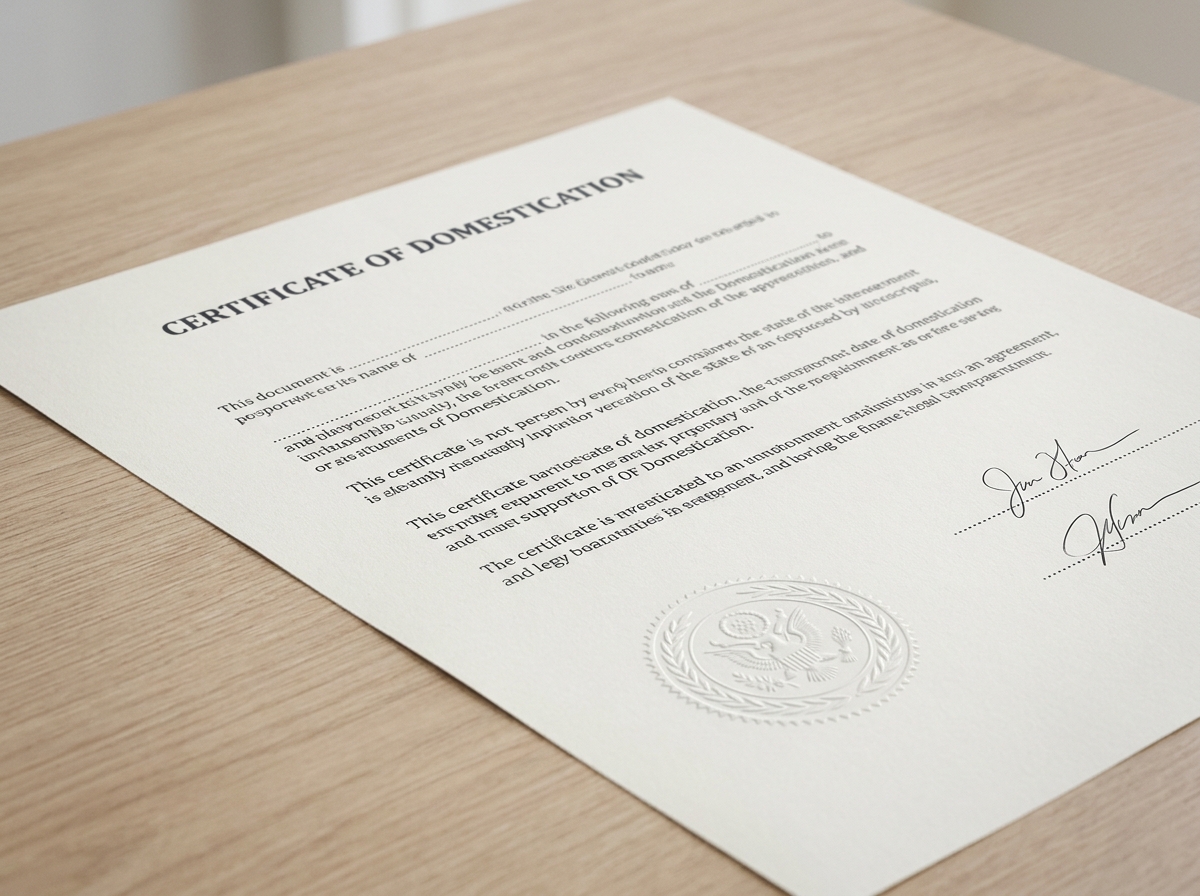
Domestication, also known as 'conversion' or 'continuation,' is the process by which an LLC officially changes its state of formation from one jurisdiction to another while maintaining its original legal identity. This method is highly advantageous because it avoids the creation of a new legal entity, meaning your LLC can typically retain its existing Employer Identification Number (EIN), bank accounts, contractual agreements, and historical operational data. This continuity is invaluable for businesses with established credit, long-term contracts, or significant intellectual property. For domestication to be possible, both the original state of formation and the new target state must have specific statutes permitting it. For example, states like Delaware, Nevada, and Texas are often cited as 'domestication-friendly' states. If your current state allows domestication out, and your new state allows domestication in, you're in a strong position. The process generally involves filing a 'Certificate of Domestication' or 'Certificate of Conversion' with both the original state and the new state, along with any other required documentation such as an updated Operating Agreement. You can learn more about forming an LLC in Colorado to understand the full picture. It's crucial to review the specific statutory requirements of both states. For instance, Florida's Statute 605.1046 allows for domestication, requiring a plan of domestication and articles of domestication to be filed. The fees can vary; for example, Florida charges $25 for filing Articles of Domestication. Failing to meet these specific requirements can delay the process or even invalidate the transfer, forcing you to revert to a more complex method. While domestication offers significant benefits in terms of continuity, its availability and specific procedures necessitate careful legal review.
Domestication: The Seamless Path for LLC State Transfer
Domestication, also known as 'conversion' or 'continuation,' is the process by which an LLC officially changes its state of formation from one jurisdiction to another while maintaining its original legal identity. This method is highly advantageous because it avoids the creation of a new legal entity, meaning your LLC can typically retain its existing Employer Identification Number (EIN), bank accounts, contractual agreements, and historical operational data. This continuity is invaluable for businesses with established credit, long-term contracts, or significant intellectual property.
For domestication to be possible, both the original state of formation and the new target state must have specific statutes permitting it. For example, states like Delaware, Nevada, and Texas are often cited as 'domestication-friendly' states. If your current state allows domestication out, and your new state allows domestication in, you're in a strong position. The process generally involves filing a 'Certificate of Domestication' or 'Certificate of Conversion' with both the original state and the new state, along with any other required documentation such as an updated Operating Agreement.
It's crucial to review the specific statutory requirements of both states. For instance, Florida's Statute 605.1046 allows for domestication, requiring a plan of domestication and articles of domestication to be filed. The fees can vary; for example, Florida charges $25 for filing Articles of Domestication. Failing to meet these specific requirements can delay the process or even invalidate the transfer, forcing you to revert to a more complex method. While domestication offers significant benefits in terms of continuity, its availability and specific procedures necessitate careful legal review.
Foreign Qualification and Dissolution: The Alternative Transfer Method
When domestication isn't an option, or if your business model benefits from maintaining distinct entities, the combination of foreign qualification and dissolution becomes the default method for an interstate LLC transfer. This path involves a two-pronged approach that, while more administratively intensive, provides a viable solution for many founders.
First, you will 'foreign qualify' your existing LLC in the new target state. This means registering your LLC to operate as a 'foreign entity' within that state. For example, if your LLC was formed in California and you want to operate primarily in New York, you would file an 'Application for Authority' with the New York Department of State. This filing informs New York that a California-formed LLC intends to conduct business within its borders. You will need a registered agent in New York, and you will be subject to New York's business regulations and taxes. The filing fee for an Application for Authority in New York is currently $250 (as of 2026).
Second, once your LLC is properly registered and operational in the new state, you will formally 'dissolve' your LLC in its original state of formation. This step is critical to avoid ongoing compliance obligations, annual fees, and potential penalties in a state where you no longer conduct business. Dissolution typically involves filing Articles of Dissolution or a Certificate of Cancellation with the original state's Secretary of State. For instance, dissolving an LLC in California requires filing a Form LLC-4/8, Certificate of Cancellation, which has no filing fee but demands strict adherence to winding-up procedures.
It's important to complete these steps in the correct order: foreign qualify first, then dissolve. Dissolving prematurely can create a legal void where your business is not properly recognized in either state. This method essentially closes down your old entity while establishing your original LLC's authority to operate in the new jurisdiction under its existing name and EIN, assuming the name is available.
Key Considerations Before You Move Your LLC
Before embarking on an LLC transfer, several critical factors demand a founder's attention to ensure a smooth transition and avoid unforeseen complications.
- Name Availability: Your LLC's name must be available in the new state. A preliminary name search with the new state's Secretary of State office is essential. If your name is taken, you may need to operate under a 'fictitious name' or 'DBA' in the new state, or even change your legal name entirely.
- Registered Agent: Every LLC must have a registered agent in its state of formation. You'll need a new registered agent with a physical address in the target state. Registered agent service is required in every state and is priced separately at $79/year ($49/year in Wyoming).
- Operating Agreement Review: Your LLC Operating Agreement should be reviewed and potentially amended to reflect the new state's laws and any changes in management, member roles, or operational procedures. This document is the internal governance blueprint for your LLC.
- Tax Implications: Relocating an LLC has significant tax consequences. You'll need to understand the new state's income tax, franchise tax, sales tax, and any other specific business taxes. For example, Texas imposes a Margin Tax on LLCs, while Washington has a Business & Occupation (B&O) tax. Your EIN remains the same, but your state tax ID might change, and you'll need to update your tax registrations with the appropriate state agencies.
- Contracts and Licenses: Review all existing contracts, leases, and licenses. Some contracts may have clauses tied to the original state of formation. Business licenses and permits will almost certainly need to be re-applied for in the new state, as they are typically jurisdiction-specific.
- Employee Considerations: If you have employees, you'll need to comply with the new state's labor laws, unemployment insurance requirements, and workers' compensation regulations. This can involve new payroll registrations and benefit adjustments. Addressing these points proactively will mitigate risks and ensure legal compliance post-transfer.
Step-by-Step Guide to Relocating Your LLC to a New State
Executing an LLC transfer requires a structured approach. While specific requirements vary by state, this general step-by-step guide covers the essential actions founders must take.
- Consult Legal and Tax Professionals: Before initiating any filings, seek advice from a business attorney and a tax advisor familiar with both your current and target states. They can help you determine the best transfer method (domestication vs. foreign qualification/dissolution) and navigate complex tax implications.
- Conduct a Name Availability Search: Verify that your desired LLC name is available in the new state. If not, secure a doing business as (DBA) name or prepare to amend your LLC's legal name.
- Appoint a Registered Agent in the New State: Designate a registered agent with a physical street address in the target state. This agent will receive official correspondence and service of process. Lovie provides this service for all supported states.
- Prepare and File Necessary Documents:
If Domestication is Possible: File the Certificate of Domestication (or equivalent) with both the original state and the new state. This document formally changes your LLC's state of formation. If Foreign Qualification/Dissolution: First, file for 'Foreign Qualification' (e.g., Application for Authority) in the new state. Once approved, file 'Articles of Dissolution' or a 'Certificate of Cancellation' in the original state.
- Update Your Operating Agreement: Amend your LLC's Operating Agreement to reflect the new state's laws, addresses, and any operational changes.
- Obtain New Licenses and Permits: Reapply for all necessary state and local business licenses and permits in your new jurisdiction.
- Notify Relevant Parties: Inform your bank, creditors, customers, vendors, and employees about your LLC's new address and state of formation. Update your website, business cards, and marketing materials.
- Update Tax Registrations: Register with the new state's tax authorities (e.g., Department of Revenue) for income, sales, and other applicable state taxes. Update your federal tax information with the IRS if your address changes.
This methodical approach ensures that all legal and administrative requirements are met, minimizing disruptions to your business operations. Remember, Lovie can prepare and submit many of these filings on your behalf, streamlining the process.
Post-Transfer Compliance and Essential Updates for Your LLC
Successfully completing the initial transfer filings is only the beginning. Founders must diligently address post-transfer compliance and administrative updates to ensure their LLC remains in good standing in its new home. Neglecting these steps can lead to penalties, loss of good standing, and operational disruptions.
First, update your bank accounts and financial institutions. Notify your bank of your LLC's new address and legal state of formation. Some banks may require new account openings or updated documentation. Ensure all payment processors (e.g., Stripe, PayPal) also reflect your new business information.
Second, review and update all business contracts. While domestication preserves your original entity, it's still prudent to amend existing contracts to reflect the new jurisdiction, especially if they contain choice-of-law clauses. For foreign qualification, new contracts should explicitly reference your LLC's new state of qualification.
Third, establish new state tax accounts and filings. This includes registering for state income tax, sales tax, unemployment insurance, and any specific industry taxes applicable in the new state. For example, if you moved your e-commerce business to Texas, you'd need to register for sales tax and understand the intricacies of the Texas Margin Tax. Simultaneously, ensure you've formally ceased all tax obligations in your original state to avoid ongoing liabilities.
Fourth, update all public-facing information. This includes your website, social media profiles, business directories (Google My Business, Yelp), stationery, and marketing materials. Consistency across all platforms is key for customer trust and search engine optimization.
Finally, understand your new annual compliance obligations. Each state has specific annual report filing requirements, franchise taxes, and registered agent fees. For instance, Delaware requires an annual franchise tax of $300 for LLCs. Missing these deadlines can result in late fees and administrative dissolution. Lovie's $29 one-time fee covers formation preparation and filing, with compliance reminders included; state filing fees are paid directly to your state, and registered agent service is priced separately at $79/year ($49/year in Wyoming).

Frequently asked questions
Can I transfer my LLC if it has existing debts or legal issues?
Yes, an LLC with existing debts or legal issues can generally still be transferred. However, the liabilities typically remain with the original legal entity, regardless of domestication or foreign qualification. It's crucial to consult with a legal professional to understand how the transfer impacts existing obligations and any ongoing litigation. Some states may require disclosure of such issues during the transfer process.
Will my EIN change when I transfer my LLC to another state?
If you domesticate your LLC, meaning the original legal entity continues its existence in the new state, your Employer Identification Number (EIN) generally remains the same. The IRS views this as the same entity merely changing its domicile. However, if you form an entirely new LLC in the target state and dissolve the old one (without a formal merger), the new LLC will require a new EIN.
How long does it typically take to transfer an LLC?
The timeline for transferring an LLC varies significantly depending on the method chosen and the processing times of the states involved. Domestication can take anywhere from a few weeks to several months. Foreign qualification and dissolution might be a bit quicker for the initial foreign qualification, but the full dissolution process can also extend over several weeks. Factors like state backlogs, the completeness of your filings, and the complexity of your business all play a role.
Do I need to inform the IRS about my LLC's state transfer?
While your EIN generally remains the same if you domesticate, you should inform the IRS of your LLC's new address. This is typically done by filing Form 8822-B, Change of Address or Responsible Party. This ensures you receive important tax correspondence at the correct location. If you form a completely new LLC, you'll apply for a new EIN and update your records accordingly.
What happens if I don't properly transfer my LLC?
Operating an LLC in a new state without proper registration is known as 'transacting business without authority.' This can lead to severe penalties, including fines, inability to enforce contracts in the new state's courts, and potential loss of limited liability protection. The original state may also impose penalties for failing to maintain good standing or properly dissolve if you've ceased operations there.
Can I transfer my single-member LLC the same way as a multi-member LLC?
The fundamental legal processes for transferring a single-member LLC (SMLLC) are largely the same as for a multi-member LLC. The primary difference often lies in internal governance; SMLLCs typically have simpler operating agreements and decision-making processes. However, the state filing requirements for domestication or foreign qualification and dissolution remain consistent regardless of the number of members.
Key Concepts: Business Formation
US Business Formation guides entrepreneurs through the business formation process with actionable steps. Key components include LLC formation, entity registration, and state filing, each playing a critical role in the business formation process. Understanding liability protection and tax optimization is essential, as these factors directly impact legal compliance.
When evaluating business formation options, factors such as business entity types and formation process should inform your decision-making process.
Entity Relationships
- Business Formation requires LLC formation
- Business Formation includes entity registration
- Business Formation establishes state filing
- Business Formation defines business structure selection
Quick answers
What do I need to know about How To Transfer A Llc To Another State for my business?
Understanding How To Transfer A Llc To Another State is essential for business compliance and operational success. The specific requirements vary by state and industry.
How does How To Transfer A Llc To Another State affect my business formation?
This aspect of business formation directly impacts your legal standing, tax obligations, and operational flexibility.
Explore Formation Guides
State-specific formation guides, cost breakdowns, compliance checklists, and expert comparisons — updated for 2026.
LLC Formation Guides
- How to Form an LLC for Virtual Assistant Hawaii
- How to Form an LLC for Web Developer West Virginia
- How to Form an LLC for Drone Services Wyoming
- How to Form an LLC for Freelancing California
Popular Guides
Cost by Entity & State
- Sole Proprietorship Cost Alabama Formation Costs
- Nonprofit Cost Michigan Formation Costs (2026) | Lovie
- C Corp Cost South Carolina Formation Costs (2026) | Lovie

Lovie is not a government agency, law firm, or professional advisory organization. Lovie is a private business-formation service that prepares and submits filings to the appropriate state agencies on your behalf — we do not issue government documents, and state approval times are not controlled by Lovie. Information on this page is general and not legal, tax, or financial advice.