
On this page · 8 sections
- Initial California C-Corp Filing Fees
- Registered Agent Requirements and Costs
- Employer Identification Number (EIN) and Its Cost
- California C-Corp Annual Franchise Tax
- Additional Ongoing Compliance Costs
- Professional Service Fees and Software
- Comparing DIY vs. Formation Services
- Total Estimated C-Corp Cost Summary
Initial California C-Corp Filing Fees
Starting a C-Corporation in California begins with filing your Articles of Incorporation with the California Secretary of State. This foundational document officially establishes your corporation as a legal entity. As of 2026, the filing fee for Articles of Incorporation is $100. While this might seem straightforward, it's crucial to ensure your filing is accurate and complete to avoid delays. Any errors can lead to rejections, consuming valuable time and potentially incurring additional costs if you need expedited services. California offers various expedited filing options if you need your C-Corp established quickly. For an additional $350, you can request 24-hour expedited processing. A $750 fee provides same-day processing, and for critical situations, a $500 fee allows for preclearance review of your documents prior to submission. These options are particularly relevant for startups with tight deadlines, such as those needing to open bank accounts, sign contracts, or close funding rounds swiftly. If you're exploring this further, our guide on how to register an LLC in California is a helpful next step. Understanding these fees upfront allows you to budget accordingly and select the service level that matches your timeline. The state also requires the submission of a Statement of Information (Form SI-200C) within 90 days of filing your Articles of Incorporation, with a $25 fee. This statement provides the state with current information about your corporation's officers, directors, and registered agent. Failure to file this on time can result in penalties. Remember, these are state-mandated fees. When working with a service like Lovie, these initial filing fees are typically included in your overall package, simplifying the process and ensuring all necessary documents are filed correctly and on schedule. Our AI-driven platform minimizes the risk of errors that could delay your formation.
Registered Agent Requirements and Costs
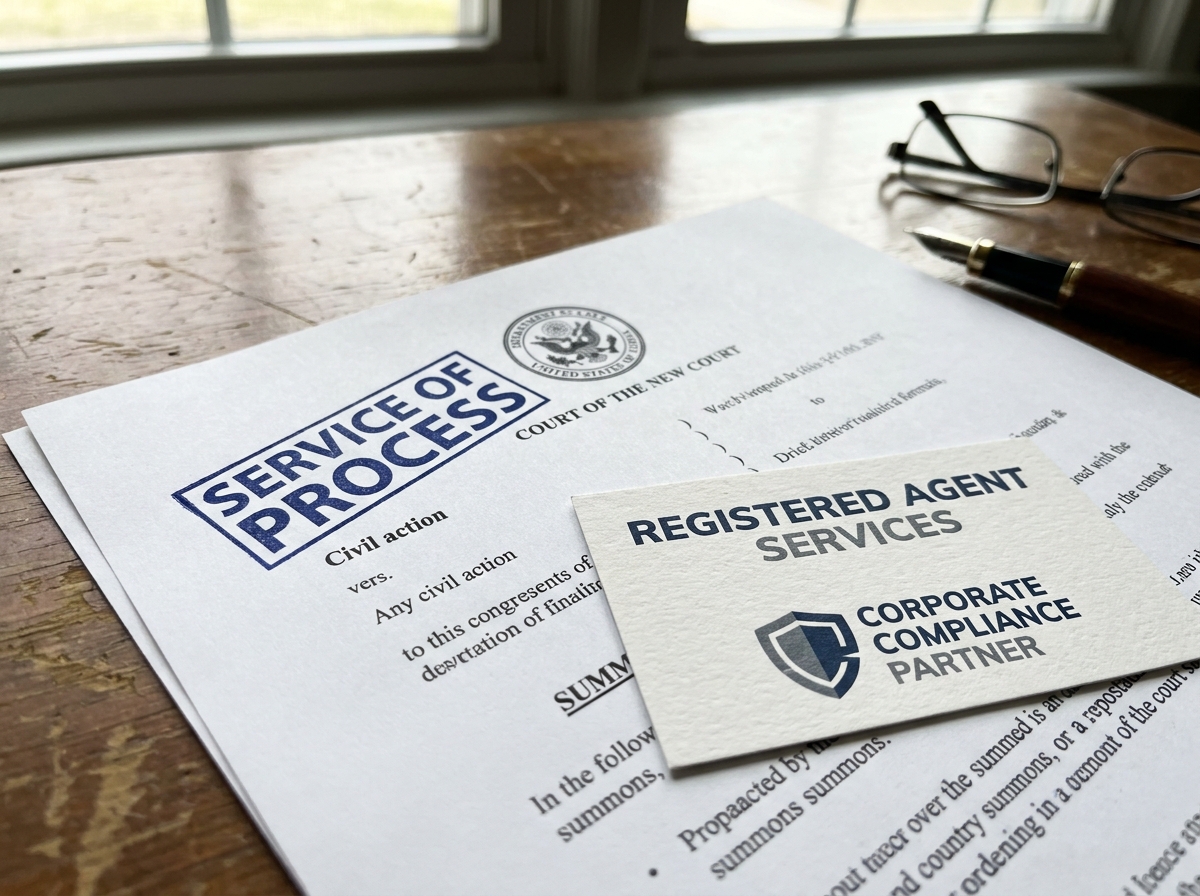
Every C-Corporation in California is legally required to maintain a registered agent within the state. This individual or entity acts as your corporation's official point of contact for receiving important legal documents, tax notices, and service of process. The registered agent must have a physical street address in California, not a P.O. Box, and be available during normal business hours. You can designate an individual within your company, such as an officer or director, to serve as the registered agent. However, this comes with several considerations. The individual's address will become public record, which many founders prefer to avoid for privacy reasons. Additionally, the registered agent must be consistently available at that address during business hours, which can be challenging for busy entrepreneurs who travel frequently or work remotely. For a deeper dive, see our resource on setting up your California LLC. Missing a critical legal notice can have severe consequences, including default judgments against your corporation. For these reasons, most C-Corps opt for a professional registered agent service. These services typically charge an annual fee, which can range from $100 to $300 per year in California. Registered agent service is required in every state and is priced separately at $79/year ($49/year in Wyoming). A professional service ensures consistent availability, protects your privacy by using their address, and provides a reliable system for promptly forwarding all official correspondence. This can be particularly beneficial for international founders who may not have a physical presence in California or for those who simply want to streamline their administrative burden. Selecting a reputable registered agent service is a critical decision for your corporation's ongoing compliance.
Employer Identification Number (EIN) and Its Cost
An Employer Identification Number (EIN), also known as a Federal Tax Identification Number, is essential for nearly every C-Corporation in the United States, including those formed in California. Think of it as your business's Social Security Number. The IRS uses the EIN to identify businesses for tax purposes. You'll need an EIN to open a business bank account, file federal and state tax returns, hire employees, and apply for business licenses and permits. The good news for founders is that obtaining an EIN from the IRS is completely free. You can apply directly through the IRS website, and the process is relatively quick, often providing the EIN instantly if you apply online during business hours. However, the application process requires accurate information about your corporation and its responsible party. Errors on the SS-4 form can lead to delays or rejections, which can be frustrating when you're trying to get your business operational. You might also find our guide on forming an LLC in California useful here. While the EIN itself costs nothing, many founders choose to have a formation service handle the application on their behalf. This is especially beneficial for international founders who may not have a U.S. Social Security Number or Taxpayer Identification Number, as the application process for them is more complex and requires mailing or faxing the form. Lovie's $29 one-time fee covers formation preparation and filing, with compliance reminders included; state filing fees are paid directly to your state, and registered agent service is priced separately at $79/year ($49/year in Wyoming). This saves founders time and minimizes the potential for errors, allowing them to focus on launching their core business activities without getting bogged down in administrative details. Having your EIN in hand promptly is a critical step towards operationalizing your California C-Corp.
California C-Corp Annual Franchise Tax
California is unique among states for its significant annual franchise tax, a cost that catches many new founders off guard. Unlike many other states that have minimal or no annual fees for corporations, California imposes a minimum franchise tax of $800 on all corporations, including C-Corps, doing business in the state. This tax is not based on your corporation's income or activity; it's a flat fee that must be paid annually to the California Franchise Tax Board (FTB).
This $800 minimum franchise tax is due by the 15th day of the fourth month after your corporation files its Articles of Incorporation. For subsequent years, it's due by April 15th (or the next business day if April 15th falls on a weekend or holiday). Even if your C-Corp generates no revenue in its first year, or operates at a loss, this $800 tax is still mandatory. This makes careful financial planning crucial for California-based startups, particularly during their initial lean years.
There is a limited exception for the first year. For taxable years beginning on or after January 1, 2000, and before January 1, 2029, newly incorporated businesses are exempt from the minimum franchise tax for their first taxable year. This means your first $800 payment isn't due until your second year of operation, providing a small window of relief. However, the tax applies in full for every year thereafter. It's vital to factor this substantial recurring cost into your long-term budget, as failure to pay can result in penalties, interest charges, and ultimately, the suspension or forfeiture of your corporate status, which can have severe legal and operational repercussions.
Additional Ongoing Compliance Costs
Beyond the annual franchise tax, California C-Corps face several other ongoing compliance requirements, each carrying potential costs. The most prominent is the annual Statement of Information (Form SI-200C), which must be filed every year with the California Secretary of State. The filing fee for this is $25, and it updates the state with your corporation's current information, including its principal executive office address, the names and addresses of its directors and officers, and the name and address of its registered agent. Failure to file this on time can lead to a penalty of $250 and potential suspension of your corporate status.
Another significant area of cost is corporate record-keeping. C-Corps are legally required to maintain certain internal records, including corporate bylaws, minutes of shareholder and director meetings, stock ledgers, and resolutions. While these don't always have direct filing fees, the cost comes in the form of time and potential professional fees if you engage legal counsel to ensure proper maintenance. Diligent record-keeping is crucial for demonstrating corporate formalities, which can protect personal liability and prove essential during due diligence for fundraising or acquisition.
Depending on your industry and business activities, your C-Corp may also need various state and local business licenses and permits. These can range from general business licenses required by your city or county to specific professional licenses (e.g., for healthcare, construction, or food service). The fees for these licenses vary widely based on location and industry, from tens to hundreds of dollars annually or biennially. Researching and obtaining all necessary licenses is a critical compliance step, as operating without them can lead to fines and operational shutdowns. Lovie's $29 one-time fee covers formation preparation and filing, with compliance reminders included; state filing fees are paid directly to your state, and registered agent service is priced separately at $79/year ($49/year in Wyoming).

Professional Service Fees and Software
Beyond state fees, professional services and specialized software represent a significant category of costs for a California C-Corp. These services are often indispensable for maintaining compliance, managing finances, and making informed business decisions. Legal counsel, for instance, is frequently engaged for drafting initial bylaws, shareholder agreements, intellectual property protection, and reviewing contracts. Hourly rates for experienced business attorneys in California can range from $300 to $800 or more, making this a substantial, though often necessary, investment, particularly for startups raising capital or dealing with complex legal matters.
Accounting services are another critical expense. A certified public accountant (CPA) will be needed for tax preparation, financial reporting, and advice on tax strategy. Given California's complex state tax laws, a knowledgeable CPA is invaluable. Annual CPA fees for C-Corps can range from $2,000 to $10,000 or more, depending on the complexity of your business and the volume of transactions. Bookkeeping services, which handle day-to-day financial record-keeping, might cost an additional $500 to $2,000 per month, or you might invest in accounting software like QuickBooks or Xero, which typically cost $30-$70 per month for business editions.
Payroll services, if you plan to hire employees, are also a recurring cost. Platforms like Gusto or ADP streamline payroll processing, tax filings, and compliance with employment laws. These services usually charge a base fee plus a per-employee fee, often totaling $50-$200 per month for a small team. Furthermore, specialized compliance software or legal tech tools can help manage corporate governance, intellectual property, or specific regulatory requirements for your industry. While these services add to the overall cost, they provide expertise, efficiency, and risk mitigation that can save your C-Corp from much larger expenses or legal issues down the line. Investing in the right professional support is a strategic decision for any serious founder.
Comparing DIY vs. Formation Services
When forming a C-Corp in California, founders face a fundamental choice: handle the process themselves (DIY) or engage a professional company formation service. Each path has distinct cost implications and trade-offs in terms of time, effort, and risk.
DIY Approach: If you choose the DIY route, your direct costs will primarily be the state filing fees: $100 for Articles of Incorporation and $25 for the initial Statement of Information. You'll also pay the $800 annual franchise tax starting from year two. While these direct costs are minimal, the 'hidden' costs can be substantial. You'll need to invest considerable time researching California's specific requirements, understanding the nuances of the forms, drafting bylaws, and ensuring all deadlines are met. Any mistakes can lead to rejections, delays, and potentially legal issues or penalties. For instance, incorrect registered agent information or a missed Statement of Information deadline can result in fines and even suspension of your corporate status. The learning curve is steep, and the time spent on administrative tasks is time not spent on building your core product or acquiring customers.
Company Formation Services: Professional services like Lovie simplify the entire process. Lovie's $29 one-time fee covers formation preparation and filing, with compliance reminders included; state filing fees are paid directly to your state, and registered agent service is priced separately at $79/year ($49/year in Wyoming). This means the $100 filing fee, $25 Statement of Information fee, and annual registered agent fees are all covered. While you still need to account for the $800 annual franchise tax (starting from year two), the service consolidates many other costs and administrative burdens.
The value proposition of a service like Lovie extends beyond just covering fees. It provides expertise, ensuring documents are filed correctly and on time, minimizing the risk of errors and delays. For founders who are focused on rapid product development, fundraising, or market entry, offloading the administrative complexities to an automated, reliable platform is a strategic investment. It frees up precious founder time and provides peace of mind, knowing that critical compliance tasks are being handled professionally. The cost savings in avoided penalties, reduced legal fees due to errors, and more importantly, the opportunity cost of founder time, often far outweigh the monthly service fee. This is especially true for founders who are not legal or compliance experts and prefer to leverage technology to streamline their back-office operations. Lovie's integrated AI-powered platform is designed to make corporate governance as seamless as possible, allowing founders to concentrate on what they do best: innovating and growing their business.
Total Estimated C-Corp Cost Summary
Bringing all these elements together, let's summarize the estimated costs for forming and maintaining a C-Corporation in California. These figures are estimates for 2026 and can vary based on your specific business needs and chosen service providers.
First-Year Costs:
- Articles of Incorporation Filing Fee (California Secretary of State): $100 (if DIY, often included in formation service packages).
- Statement of Information Initial Filing Fee (California Secretary of State): $25 (due within 90 days of formation, if DIY, often included in formation service packages).
- Registered Agent Service: $100 - $300 (annual fee, if using a professional service. Lovie includes 3 years in its plan).
- EIN Registration: $0 (if DIY, assistance often included in formation service packages).
- California Minimum Franchise Tax: $0 (exempt for the first taxable year).
- Professional Services (Legal, Accounting): Highly variable, but anticipate $2,000 - $10,000+ for initial setup, bylaws, basic tax advice.
- Business Licenses & Permits: $50 - $500+ (highly variable by industry and location).
Estimated First-Year Total (excluding advanced legal/accounting): Approximately $2,300 - $11,000+ (if using a professional registered agent and minimal professional services). With Lovie's plan, which covers many of the initial administrative fees, your out-of-pocket for these core setup items would be significantly lower, allowing you to focus on professional service engagement.
Ongoing Annual Costs (from Year Two Onwards):
- California Minimum Franchise Tax: $800.
- Statement of Information Annual Filing Fee: $25.
- Registered Agent Service: $100 - $300 (annual fee).
- Professional Services (Annual CPA, Bookkeeping, Payroll): $3,000 - $15,000+ (depending on business complexity).
- Business Licenses & Permits (Renewals): $50 - $500+.
Estimated Annual Total (from Year Two, excluding advanced legal/accounting): Approximately $4,000 - $16,625+. These figures highlight that while the initial state filing fees for a California C-Corp are modest, the ongoing compliance and professional service costs represent the most significant financial commitment. Budgeting accurately for these expenses is critical for the long-term viability and compliance of your California C-Corporation. Lovie's comprehensive platform aims to reduce the burden and uncertainty associated with many of these administrative and compliance tasks, providing a predictable, all-inclusive solution for founders.
Frequently asked questions
What is the minimum annual cost to keep a C-Corp active in California?
From the second year of operation onwards, the absolute minimum annual cost to keep a C-Corp active in California is $825. This includes the mandatory $800 annual minimum franchise tax and the $25 annual Statement of Information filing fee. This figure does not include any registered agent fees, business licenses, or professional services like accounting or legal advice, which are typically necessary for ongoing operation and compliance.
Is the $800 California franchise tax due in the first year for a new C-Corp?
No, for taxable years beginning on or after January 1, 2000, and before January 1, 2029, newly incorporated businesses in California are exempt from the minimum franchise tax for their first taxable year. This means your first $800 payment is not due until your second year of operation. However, this exemption applies only to the minimum tax; if your corporation has taxable income in its first year, it may still owe income-based taxes.
Do I need a lawyer to form a C-Corp in California?
While it's not legally required to have a lawyer form your C-Corp, it is highly recommended, especially for startups planning to raise capital or with complex ownership structures. A lawyer can help draft robust bylaws, shareholder agreements, and address intellectual property issues. Services like Lovie can handle the basic filing and compliance, but a lawyer provides crucial legal advice tailored to your specific business needs.
Can I be my own registered agent in California?
Yes, you can be your own registered agent in California if you meet the requirements: you must be an individual residing in California, be available at a physical street address during normal business hours, and be at least 18 years old. However, using a professional registered agent service is often preferred to protect personal privacy and ensure constant availability for legal notices.
How long does it take to form a C-Corp in California?
The standard processing time for Articles of Incorporation with the California Secretary of State can vary, typically ranging from a few days to several weeks, depending on their current workload. Expedited filing options are available for additional fees (e.g., 24-hour, same-day) if you need faster processing. Services like Lovie can help ensure your documents are filed efficiently, though state approval times are not controlled by us.
What happens if I don't file my Statement of Information on time?
If you fail to file your annual Statement of Information (Form SI-200C) within the required timeframe (90 days initially, then annually), the California Secretary of State can assess a penalty of $250. Additionally, your corporation's legal status can be suspended or forfeited, which means you lose the ability to transact business, defend lawsuits, and maintain your limited liability protection in California.
What is the difference between an S-Corp and a C-Corp for tax purposes in California?
The primary difference lies in how profits are taxed. A C-Corp is subject to 'double taxation': the corporation pays taxes on its profits, and shareholders pay taxes again on dividends received. An S-Corp, however, is a pass-through entity where profits and losses are passed directly to the owners' personal income without being subject to corporate tax rates, avoiding the double taxation. While California recognizes the federal S-Corp election, S-Corps in California are still subject to a 1.5% state corporate income tax, with a minimum $800 annual franchise tax, unlike federal S-Corp treatment.
Related Formation Guides
California founders should also consider Sole Proprietorship Cost California Formation Costs as part of their formation process.
For a deeper understanding of C-Corp requirements in California, see our guide on S Corp Cost California Formation Costs.
California Formation Data Insights
| State Filing Fee | $75 |
| Annual Fee | $20 |
| First Year Total | $895 |
| Processing Time | 11.7 days avg (official: 10-15 days) |
| Corporate Tax Rate | 8.84% |
Key Insights
- California'de LLC kurulum maliyeti ulusal ortalamanın $671 üzerinde — toplam ilk yıl maliyeti $895.
- Lovie platformu üzerinden California LLC başvuruları ortalama 11.7 iş gününde onaylanmaktadır (eyalet resmi süresi: 10-15 gün).
- California merkezli işletmeler için EIN onay süresi ortalama 4.7 gündür.
- California kurumlar vergisi oranı %8.84 ile ulusal ortalamanın (%6.57) üzerindedir.
Data sources: State Secretary of State offices, IRS, Tax Foundation (2026). Platform metrics based on anonymized Lovie user data.
Key Concepts: Entity Formation Cost
Entity Formation Cost by State compares formation costs across entity types and states for informed budgeting decisions. Key components include state filing fee schedule, formation cost comparison matrix, and total startup cost estimate, each playing a critical role in the entity formation cost process. Understanding annual franchise tax obligation and expedited filing surcharge is essential, as these factors directly impact registered agent cost inclusion.
When evaluating entity formation cost options, factors such as publication cost requirement and multi-state registration fees should inform your decision-making process.
Entity Relationships
- Entity Formation Cost requires state filing fee schedule
- Entity Formation Cost includes formation cost comparison matrix
- Entity Formation Cost establishes total startup cost estimate
Quick answers
What is the total cost of forming an LLC in Illinois?
$300 - $1500+
How can I save money when forming an LLC in Illinois?
Act as your own registered agent if you have a physical address in Illinois.
File your Articles of Organization online for faster processing and potential cost savings. Write your own operating agreement or use a template to save on legal fees. Lovie AI can help with this.
Explore Formation Guides
State-specific formation guides, cost breakdowns, compliance checklists, and expert comparisons — updated for 2026.
Cost by Entity & State
- C Corp Cost Colorado Formation Costs (2026) | Lovie
- C Corp Cost Connecticut Formation Costs (2026) | Lovie
- C Corp Cost Delaware Formation Costs (2026) | Lovie
- C Corp Cost District Of Columbia Formation Costs
- How Much Does a C-Corp Cost in Florida? (2026 Guide)
- How Much Does a C-Corp Cost in Georgia? (2026 Guide)
- How Much Does a C-Corp Cost in Hawaii? (2026 Guide)
- How Much Does a C-Corp Cost in Idaho? (2026 Guide)
- C Corp Cost Illinois Formation Costs (2026) | Lovie
- How Much Does a C-Corp Cost in Indiana? (2026 Guide)
- How Much Does a C-Corp Cost in Iowa? (2026 Guide)
- How Much Does a C-Corp Cost in Kansas? (2026 Guide)
- C Corp Cost Kentucky Formation Costs (2026) | Lovie
- C Corp Cost Louisiana Formation Costs (2026) | Lovie
- How Much Does a C-Corp Cost in Maine? (2026 Guide)

Lovie is not a government agency, law firm, or professional advisory organization. Lovie is a private business-formation service that prepares and submits filings to the appropriate state agencies on your behalf — we do not issue government documents, and state approval times are not controlled by Lovie. Information on this page is general and not legal, tax, or financial advice.