
On this page · 8 sections
- Understanding the Freelance Web Development Landscape
- Choosing Your Business Entity: LLC vs. Sole Proprietorship
- Essential Registrations and Compliance for Freelancers
- Crafting Your Service Offerings and Niche
- Pricing and Contract Strategies for Profitability
- Building Your Brand and Online Presence
- Client Acquisition and Relationship Management
- Scaling Your Freelance Web Development Business
Understanding the Freelance Web Development Landscape
The freelance web development market in 2026 is dynamic and highly competitive, yet ripe with opportunity for skilled professionals. Recent data indicates that over 70% of businesses now view a strong online presence as critical, driving consistent demand for web development services. Freelancers often find success by specializing, whether in front-end frameworks like React or Vue, back-end technologies such as Node.js or Python, or full-stack development encompassing both. Understanding the current technological trends is paramount. For instance, the adoption of serverless architectures and JAMstack continues to grow, offering new avenues for efficient project delivery. Furthermore, the rise of AI-powered development tools is shifting how projects are executed, making efficiency and specialized expertise even more valuable. ## Market Demand and Specialization The demand spans various sectors, from small local businesses needing basic informational websites to large enterprises requiring complex e-commerce platforms or custom web applications. Check out our guide on starting a business in Alaska for step-by-step instructions. Identifying a niche where your skills align with market needs is a strategic advantage. Consider areas like accessibility compliance (WCAG 2.1), performance optimization, or specific CMS platforms like WordPress or Shopify. The average project size for freelance web developers has also seen an increase, with more clients seeking comprehensive solutions rather than piecemeal tasks. This shift favors freelancers who can manage projects end-to-end, from initial consultation and design to deployment and ongoing maintenance. The ability to articulate your value proposition clearly and demonstrate a strong portfolio will set you apart in this competitive environment. Remaining current with emerging technologies and industry best practices is not just an advantage, but a necessity for long-term success.
Choosing Your Business Entity: LLC vs. Sole Proprietorship
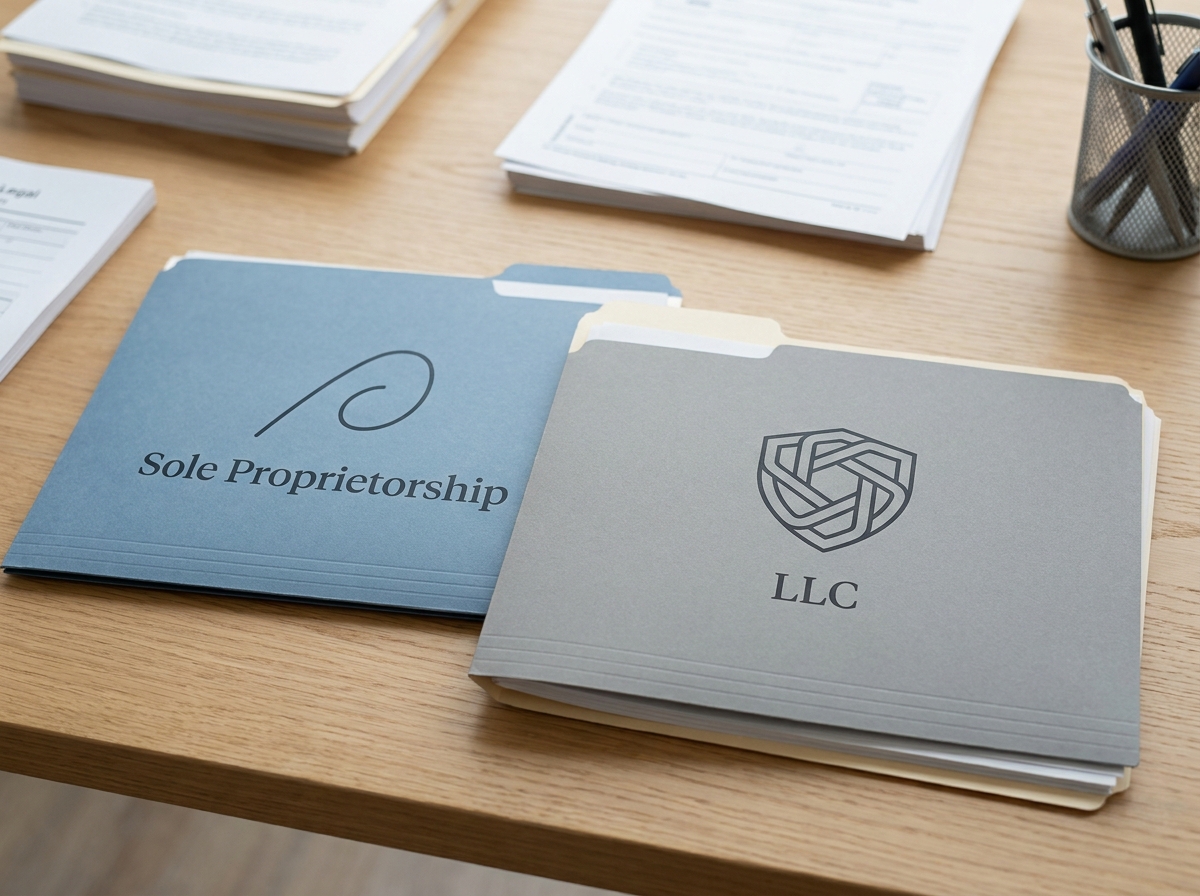
Selecting the correct legal structure is one of the most critical decisions for a freelance web developer, impacting liability, taxation, and administrative burden. The two most common choices are a Sole Proprietorship and a Limited Liability Company (LLC). A Sole Proprietorship is the simplest to establish, requiring no formal state filing beyond local business licenses. You and your business are legally the same entity. This means all business debts and liabilities are your personal responsibility, exposing your personal assets to potential lawsuits or financial obligations. While straightforward for initial setup, the lack of personal asset protection is a significant drawback as your business grows. An LLC, conversely, creates a legal separation between you and your business. This structure protects your personal assets (home, car, savings) from business debts and legal claims. Our resource on setting up your Arizona LLC breaks this down further. If your business is sued, only the assets owned by the LLC are typically at risk. Taxation for an LLC is flexible; it can be taxed as a pass-through entity (like a Sole Proprietorship), or you can elect for it to be taxed as an S-Corp or C-Corp, potentially offering tax advantages. The formal process of forming an LLC involves filing Articles of Organization with your chosen state's Secretary of State. For instance, in Delaware, the filing fee for an LLC is $90 as of 2026, while in California, it's $70, plus an annual franchise tax of $800. These fees vary significantly by state. For freelancers handling client data or developing complex applications, an LLC is generally the recommended choice due to its liability protection. Lovie can assist with preparing and submitting these formation filings, streamlining the process across all 50 states.
Essential Registrations and Compliance for Freelancers
Once you've chosen your business entity, several crucial registrations and compliance steps follow. The first is obtaining an Employer Identification Number (EIN) from the IRS, even if you’re a single-member LLC without employees. An EIN is essential for opening a business bank account, filing taxes, and often for securing client contracts. Applying for an EIN is free and can be done directly through the IRS website, though services like Lovie can assist in preparing and submitting the application as part of your formation package. Beyond federal requirements, state and local compliance are equally vital. All states require businesses to register with the Secretary of State or equivalent agency. This typically involves filing your Articles of Organization for an LLC and maintaining an annual report or statement of information. For example, New York requires an LLC to publish notice of its formation in two newspapers for six weeks, a unique and often overlooked requirement. California requires an annual Statement of Information filing, due within 90 days of initial registration and biennially thereafter, with a $20 filing fee. If you're exploring this further, our guide on starting a business in Arkansas is a helpful next step. Consider also any specific industry licenses or permits. While web development generally doesn't require extensive professional licensing, some local jurisdictions might have general business licenses. Always verify requirements with your city and county clerk's offices. Maintaining a registered agent in your state of formation is also mandatory for an LLC. This agent receives official legal and tax correspondence on behalf of your business. Registered agent service is required in every state and is priced separately at $79/year ($49/year in Wyoming). Understanding and adhering to these requirements from day one will prevent future legal or financial complications.
Crafting Your Service Offerings and Niche
Defining your specific service offerings and identifying a niche is foundational to attracting the right clients and commanding higher rates. Instead of broadly offering 'web development,' consider specializing. This could mean focusing on e-commerce solutions using platforms like Shopify or WooCommerce, developing custom web applications with specific frameworks such as Angular or React, or specializing in performance optimization and accessibility for existing websites. A clear niche helps you target your marketing efforts and positions you as an expert in a particular area, rather than a generalist.
Think about the problems you are uniquely qualified to solve. Are you excellent at converting PSD designs into pixel-perfect HTML/CSS? Do you have a knack for database design and API integration? Perhaps you excel at creating intuitive user interfaces that drive conversions. Your service offerings should reflect these strengths. Package your services into clear, value-driven offerings. Instead of hourly rates, consider project-based pricing for specific deliverables, like a '5-page responsive website package' or 'E-commerce store setup and customization.' This provides clarity for clients and predictability for your income.
Regularly assess market demand for your chosen niche. The web development landscape evolves rapidly. What was in high demand last year might be less so today. Stay updated with industry trends, attend webinars, and read leading publications. Adapting your offerings to meet emerging needs, such as integrating AI functionalities into web applications or focusing on Web3 development, can open new revenue streams and keep your business competitive. Your niche isn't static; it should evolve with your skills and market opportunities.
Pricing and Contract Strategies for Profitability
Effective pricing is crucial for the sustainability and growth of your freelance web development business. Avoid the common pitfall of underpricing your services. Your rates should reflect your expertise, the value you deliver, and the market rate for similar services. Consider different pricing models: hourly rates, project-based fees, or retainer agreements for ongoing maintenance and support. For new freelancers, starting with project-based pricing often builds client confidence and clearly defines deliverables. For instance, a basic informational website might be priced at $2,500-$5,000, while a custom e-commerce solution could range from $10,000-$50,000, depending on complexity and features.
Crafting Robust Contracts
Beyond pricing, robust contracts are your legal backbone. Every project, no matter how small, should have a written agreement. This contract should clearly outline the scope of work, deliverables, timelines, payment schedule, intellectual property rights, confidentiality clauses, and a clear dispute resolution process. Using a clear Statement of Work (SOW) within your contract is highly recommended to prevent scope creep, which is one of the biggest challenges for freelancers.
Ensure your contract includes provisions for revisions and additional work. For example, specify how many rounds of design revisions are included and the hourly rate for any work exceeding the initial scope. Payment terms should be explicit: a common structure is 50% upfront, 25% at a major milestone (e.g., design approval), and 25% upon project completion. Always collect a deposit before beginning any work. Consult with a legal professional to draft a comprehensive contract template that protects your interests and clearly defines expectations for both parties. This upfront investment in a solid contract will save you considerable time and potential legal fees in the long run.

Building Your Brand and Online Presence
In the freelance web development world, your brand is your reputation, and your portfolio is your proof. A strong personal brand helps you stand out and attract ideal clients. This involves more than just a logo; it's about your unique value proposition, your communication style, and the overall experience clients have working with you. Start by defining your brand's core values and personality. Are you innovative and cutting-edge, or reliable and meticulous? This should be reflected consistently across all your online touchpoints.
Your online presence begins with a professional website that showcases your skills and services. This website is your primary portfolio. It should be meticulously designed, fast-loading, responsive, and demonstrate the quality of work you deliver to clients. Include case studies of past projects, detailing the client's problem, your solution, and the measurable results achieved. For instance, instead of just showing a website, explain how your redesign led to a 30% increase in conversion rates for a specific e-commerce client.
Beyond your website, leverage platforms like LinkedIn, GitHub, and Behance to expand your professional footprint. LinkedIn is crucial for networking and establishing credibility, while GitHub provides a platform to showcase your coding skills and contributions to open-source projects. Regularly update your portfolio with new projects and client testimonials. Positive testimonials and referrals are powerful brand builders. Consider creating a blog or publishing articles on industry trends to position yourself as a thought leader. This not only demonstrates expertise but also improves your search engine visibility, driving organic traffic to your services. A consistent and professional online presence builds trust and confidence with potential clients.
Client Acquisition and Relationship Management
Acquiring and retaining clients is the lifeblood of any freelance business. Effective client acquisition strategies are multifaceted. Networking, both online and offline, remains a powerful tool. Attend industry events, join relevant online communities, and connect with other freelancers or agencies who might refer work. Cold outreach, when targeted and personalized, can also yield results. Instead of generic emails, research potential clients and explain how your specific skills can solve a clear problem they might have.
Content marketing is another robust strategy. By creating valuable blog posts, tutorials, or case studies, you can attract clients interested in your niche. For example, a blog post titled '5 Ways to Improve Your E-commerce Site's Load Time' can attract business owners looking for performance optimization. Optimizing your website for SEO (Search Engine Optimization) ensures that potential clients find you when searching for web development services.
Building Lasting Relationships
Once you acquire a client, excellent relationship management is key to repeat business and referrals. This involves clear communication, setting realistic expectations, and delivering high-quality work on time. Regular updates, transparent project management (using tools like Trello or Asana), and proactive problem-solving build trust. Address feedback constructively and be responsive to client needs. After a project is complete, follow up to ensure satisfaction and offer ongoing support or maintenance packages. A satisfied client is your best marketing asset, often leading to valuable referrals. Consider offering a small discount or bonus for clients who refer new business. Remember, a long-term client relationship is far more valuable and less costly to maintain than constantly seeking new ones. Focus on becoming a trusted partner, not just a service provider.
Scaling Your Freelance Web Development Business
Once your freelance web development business is stable, you'll naturally consider how to scale operations and increase your income without necessarily working more hours. The first step in scaling often involves optimizing your processes. Automate repetitive tasks using tools for invoicing, project management, and client communication. Develop templates for proposals, contracts, and onboarding documents to save time on each new project.
Consider diversifying your service offerings beyond one-off projects. Implementing retainer models for ongoing maintenance, support, or continuous feature development provides a stable recurring revenue stream. For example, offer monthly SEO optimization packages or security update services. Productizing your services can also be a scalable option. This means turning specific, repeatable tasks into standardized, fixed-price packages that can be delivered efficiently, such as a 'Landing Page Optimization Package' or 'Basic Website Audit.'
Strategic Growth and Delegation
As demand grows, strategic delegation becomes crucial. This doesn't necessarily mean hiring full-time employees immediately. You can partner with other freelancers for specific tasks you don't specialize in, like graphic design or advanced SEO, or even outsource parts of your development work. This allows you to take on larger projects and expand your capacity without significant overhead. For instance, if you're primarily a front-end developer, collaborating with a back-end specialist on a complex application can lead to more lucrative projects.
Finally, continuously invest in your skills and business development. Attend advanced workshops, get certifications in new technologies, or explore business coaching. Expanding your knowledge base allows you to offer higher-value services. Regularly review your business model and adjust as needed to stay competitive and profitable. Scaling your freelance business is a journey of continuous refinement and strategic expansion, always balancing growth with maintaining the quality and personalized service your clients expect.

Frequently asked questions
What is the best legal structure for a freelance web developer?
For most freelance web developers, a Limited Liability Company (LLC) is the recommended legal structure. It offers personal liability protection, separating your personal assets from business debts and lawsuits. While a Sole Proprietorship is simpler to set up, it provides no such protection. An LLC also offers flexible tax options and enhances your professional credibility with clients. The specific filing requirements and fees vary by state, but the core benefit of liability protection remains consistent.
Do freelance web developers need an EIN?
Yes, even if you are a single-member LLC without employees, an Employer Identification Number (EIN) is essential. It's like a social security number for your business. You'll need it to open a business bank account, file federal taxes, and often when engaging with clients or vendors. It's a free application through the IRS, and services like Lovie can assist in preparing and submitting the necessary forms.
How do I price my web development services as a freelancer?
Pricing your services effectively involves considering your expertise, the value you provide, and market rates. Avoid hourly billing if possible; project-based fees or retainer agreements are often more profitable and transparent for clients. Research what similar services cost in your niche and location. Factor in all your costs, including software, tools, and your time, and ensure your rates reflect a sustainable profit margin. Don't be afraid to charge what you're worth.
What should be included in a freelance web development contract?
A comprehensive contract is crucial. It should clearly define the scope of work, deliverables, project timelines, payment schedule (including deposits and milestone payments), intellectual property rights, and confidentiality clauses. Crucially, include provisions for revisions and how out-of-scope work will be handled and priced. A well-drafted contract protects both you and your client, preventing misunderstandings and scope creep.
How can I get my first web development client as a freelancer?
To secure your first client, start by building a strong portfolio with personal projects or pro bono work to demonstrate your skills. Leverage professional networking platforms like LinkedIn, attend local business meetups, and inform your personal network about your services. Consider targeted cold outreach to businesses that could benefit from your specific expertise, showcasing how you can solve their particular problems. Offering a small, defined service initially can also build trust.
Is it better to specialize or be a generalist as a freelance web developer?
Specializing generally leads to greater success as a freelance web developer. While being a generalist might seem to open more doors, specializing in a niche (e.g., e-commerce, specific frameworks, performance optimization) positions you as an expert, allows you to command higher rates, and makes your marketing efforts more effective. Clients are often willing to pay more for a specialist who can solve their specific problems efficiently and expertly.
Lovie Data Insights
IT & Management Consulting — Formation Context
Recommended Entity: LLC or S-Corp
Key Tax Benefit: QBI deduction (up to 20% of qualified income)
Compliance Priority: Misclassification of contractors vs employees
Data sources: State Secretary of State offices, IRS, Tax Foundation (2026). Platform metrics based on anonymized Lovie user data.
Key Concepts: Industry Business Formation
Industry-Specific Business Formation details industry-specific formation steps, licensing requirements, and compliance needs. Key components include industry licensing, sector requirements, and professional entity selection, each playing a critical role in the industry business formation process. Understanding industry compliance and professional licensing is essential, as these factors directly impact sector-specific permits.
When evaluating industry business formation options, factors such as business insurance and industry regulations should inform your decision-making process.
Entity Relationships
- Industry Business Formation requires industry licensing
- Industry Business Formation includes sector requirements
- Industry Business Formation establishes professional entity selection
Quick answers
What do I need to know about Dropshipper Events Wedding for my business?
Understanding Dropshipper Events Wedding is essential for business compliance and operational success. The specific requirements vary by state and industry.
How does Dropshipper Events Wedding affect my business formation?
This aspect of business formation directly impacts your legal standing, tax obligations, and operational flexibility.
Explore Formation Guides
State-specific formation guides, cost breakdowns, compliance checklists, and expert comparisons — updated for 2026.
LLC Formation Guides
- How to Form an LLC for Virtual Assistant Hawaii
- How to Form an LLC for Web Developer West Virginia
- How to Form an LLC for Drone Services Wyoming
- How to Form an LLC for Freelancing California
Popular Guides
Cost by Entity & State
- Sole Proprietorship Cost Alabama Formation Costs
- Nonprofit Cost Michigan Formation Costs (2026) | Lovie
- C Corp Cost South Carolina Formation Costs (2026) | Lovie

Lovie is not a government agency, law firm, or professional advisory organization. Lovie is a private business-formation service that prepares and submits filings to the appropriate state agencies on your behalf — we do not issue government documents, and state approval times are not controlled by Lovie. Information on this page is general and not legal, tax, or financial advice.