
On this page · 8 sections
What Is an LLC Filing Company and Why Use One?
An LLC filing company is a private service that specializes in preparing and submitting the necessary legal documents to a state to officially form your Limited Liability Company. Think of it as a specialized project manager for your business's birth certificate. While it's entirely possible to navigate the process yourself—directly through a Secretary of State's website—many founders choose to use a formation service for three key reasons: accuracy, efficiency, and peace of mind. ## The DIY vs. Service Provider Trade-off
Filing on your own means you are solely responsible for understanding the specific requirements of your chosen state. For example, to form an LLC in California, you must file Articles of Organization (Form LLC-1) and pay a $70 filing fee. You must also ensure the information is perfectly accurate, from your business name's compliance with state naming conventions to the details of your registered agent. A simple mistake could lead to rejection, delaying your launch and potentially creating compliance headaches. Check out our guide on how to register an LLC in Arkansas for step-by-step instructions. An LLC formation service mitigates this risk. These companies handle thousands of filings and are experts in the nuances of each state's bureaucracy. They ensure your paperwork is filled out correctly and submitted through the proper channels. This is their core competency, which frees you to focus on yours: building your product, finding customers, and planning your launch. The value isn't just in the paperwork itself, but in the hours of research and potential stress you save. For a busy founder, that time is often far more valuable than the service fee. They act as a buffer between you and the state, translating complex bureaucratic requirements into a simple, streamlined process.
Evaluating Core Features of Top LLC Formation Services
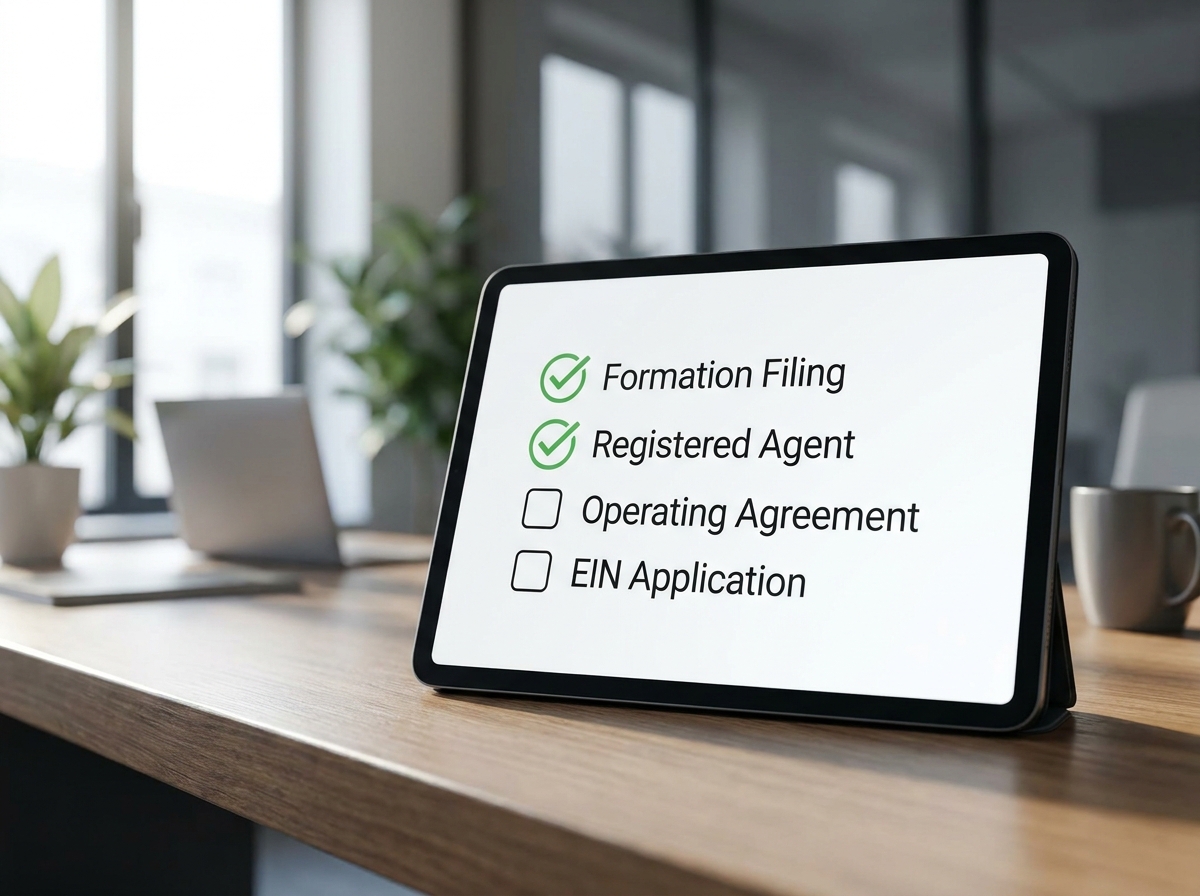
When comparing LLC filing companies, it's easy to get lost in marketing claims. To make an informed decision, focus on the substance of their offerings. Four core features form the foundation of any quality service. Look for clarity and transparency around each. ## 1. Formation Filing This is the absolute baseline: the preparation and submission of your Articles of Organization (or Certificate of Formation, depending on the state). The service should verify your chosen business name is available in your state's registry and handle the digital or physical submission of the documents. A good service provides clear visibility into the status of this filing from submission to state approval. ## 2. Registered Agent Service Every LLC in the US is legally required to have a registered agent (or statutory agent) in its state of formation. This is a person or entity designated to receive official legal and state correspondence on behalf of your business, such as lawsuits or tax notices. The agent must have a physical street address in the state and be available during business hours. While you can act as your own registered agent, it means your personal address may become public record. Formation services offer this as a key feature, providing a professional address for compliance and privacy. Our resource on how to register an LLC in California breaks this down further. Some offer it free for the first year, but be sure to check the renewal cost, which can be $100-$300 annually. ## 3. Operating Agreement An LLC Operating Agreement is an internal document that outlines the ownership structure and operating procedures of your company. It details member contributions, profit distribution, management roles, and what happens if a member leaves. While not legally required to be filed with the state in most jurisdictions (except California, Delaware, Maine, Missouri, and New York), it's a critical document for preventing internal disputes. Most formation services provide a template you can customize. For multi-member LLCs, this is non-negotiable. For single-member LLCs, it's still crucial for reinforcing your liability protection. ## 4. EIN Application An Employer Identification Number (EIN) is a nine-digit number issued by the IRS to identify your business for tax purposes. It's essentially a Social Security Number for your company. You'll need an EIN if you plan to hire employees, open a business bank account, or file certain business tax returns. The application (Form SS-4) can be filed directly with the IRS for free, but many formation services include this as part of their package to further streamline your setup.
Decoding Pricing Models: From Packages to Hidden Fees
The single biggest point of confusion when choosing an LLC filing company is the pricing. Most legacy providers use a tiered package model—think Basic, Gold, and Platinum—that can be misleading. The advertised entry-level price, often $0 plus state fees, is rarely the final cost. ## The Tiered Package Trap Typically, the 'Basic' package covers only the absolute minimum: filing the Articles of Organization. Critical services like EIN registration, an Operating Agreement, and even a full year of registered agent service are often reserved for higher-priced tiers. These upsells can quickly turn a 'free' filing into a several-hundred-dollar expense. Common hidden fees and upsells include:
- Registered Agent Fees: Many offer the first year free, but the renewal fee can be a surprise $199 or more in year two. - Expedited Filing: Companies will charge an extra fee to 'expedite' their internal processing, which does not speed up the state's actual approval time. - Document Delivery: Some services charge extra for digital and physical copies of your approved formation documents. - EIN Registration: A service that is free from the IRS is often bundled into premium packages for $50-$100. If you're exploring this further, our guide on starting a business in Colorado is a helpful next step. To properly evaluate cost, you must add up the price of the package and all the essential add-ons you'll need. For instance, forming an LLC in Texas involves a mandatory $300 state filing fee. A 'free' package might still result in a total cost of over $500 after you add a registered agent and an operating agreement. ## The All-Inclusive Alternative
An emerging model, championed by modern platforms like Lovie, is a single, all-inclusive plan. Instead of a maze of packages and upsells, you pay one flat monthly fee. Lovie's $29 one-time fee covers formation preparation and filing, with compliance reminders included; state filing fees are paid directly to your state, and registered agent service is priced separately at $79/year ($49/year in Wyoming). This transparent approach eliminates surprise costs and aligns the service with your long-term success, not a one-time transaction. When comparing, always calculate the total first-year cost, including state fees and all necessary services, to see the true price.
Turnaround Times vs. State Processing: What to Expect
After you've submitted your formation request, the waiting game begins. A common point of frustration for founders is understanding how long it will take for their LLC to be officially approved. It's critical to differentiate between two separate timelines: the filing company's internal processing time and the state's processing time.
Internal vs. State Timelines
- Internal Processing Time: This is how long it takes the formation service to review your information, prepare the documents, and submit them to the Secretary of State. Some companies promise same-day processing, while others might take several business days. This is the only part of the timeline they control. Be wary of services that charge a hefty 'expedited' fee, as this often only speeds up their internal queue and has no impact on the state's timeline.
- State Processing Time: This is the time the state government takes to review and approve your filing. This varies dramatically and is completely outside of your filing service's control. For example, in 2026, a state like Wyoming can often process an online LLC filing within one business day. In contrast, a state with a higher volume and more complex bureaucracy, like New York, might take several weeks to process the same filing. These times can also fluctuate based on staffing levels and backlog at the state office.
Getting Accurate Estimates
A reliable LLC filing company will provide clear, up-to-date estimates for each state's processing time and will not conflate it with their own internal speed. They should offer visibility into where your documents are in the process—from internal review to submission to pending state approval. Modern platforms like Lovie provide real-time status updates directly in your dashboard, so you're never left wondering. When planning your business launch, always budget for the state's timeline, not just the filing service's marketing promises. Check the Secretary of State's website directly for the most current processing time estimates before you begin.
Beyond the Filing: Assessing Customer Support and User Experience
Forming a company is more than a one-time transaction; it's the start of a long-term journey. The quality of customer support and the overall user experience of a filing service can be just as important as its features and pricing. When you have a question about a state notice or a compliance deadline, you need fast, accurate answers.
Evaluating Support Channels
Legacy formation services typically rely on traditional support channels like phone and email. While these can be effective, they often come with long wait times and generic, scripted responses. When evaluating support, consider these factors:
- Availability: Is support available 24/7, or only during limited business hours? For founders working late nights and weekends, round-the-clock access is invaluable.
- Expertise: Are the support agents knowledgeable about state-specific regulations, or are they just reading from a script? The ability to get a clear answer to a nuanced question is a huge differentiator.
- Accessibility: How easy is it to get help? Do you have to navigate complex phone trees, or can you get instant answers through a modern interface?
The Modern Founder Experience
Today's founders, especially those in tech, e-commerce, and AI, expect a seamless, digital-first experience. A clunky, outdated website is a red flag. A modern platform should provide a clean, intuitive dashboard where you can manage your company's documents, track compliance deadlines, and see the status of your filings in real time.
This is where services built for a new generation of entrepreneurs stand out. Lovie, for example, offers 24/7 support through a conversational AI backed by human experts. For technical founders, Lovie goes a step further by integrating with development environments via an MCP server. This allows operators to manage their company formation and compliance directly from tools like Cursor, Replit, or Claude Code, treating their company's legal infrastructure just like any other part of their tech stack. This level of integration reflects a deep understanding of the modern founder's workflow and is a key indicator of a service built for the future.

Advanced Services and Ongoing LLC Compliance Management
Your legal obligations as a business owner don't end once your LLC is formed. Staying in good standing with the state requires ongoing compliance, and a top-tier formation service should be your partner in this process, not just a one-time setup tool.
Key Ongoing Compliance Tasks
After formation, your LLC will face recurring filing requirements. The specifics vary by state, but common obligations include:
- Annual/Biennial Reports: Most states require LLCs to file a report each year or every two years. This report updates the state on basic information like your business address and registered agent. Missing a deadline can result in hefty fines or even administrative dissolution of your company. For example, Florida requires an Annual Report to be filed between January 1st and May 1st each year, with a filing fee of $138.75.
- Franchise Taxes: Some states, including California, Delaware, and Texas, impose a franchise tax or annual fee on LLCs simply for the privilege of existing in that state. California's is notorious: a minimum of $800 per year, due by the 15th day of the fourth month after formation.
- Statements of Information: In addition to annual reports, some states have other requirements. California, for instance, requires a Statement of Information (Form LLC-12) to be filed within 90 days of formation and every two years thereafter.
From Manual Reminders to AI Monitoring
Basic filing services might send you an email reminder when a deadline is approaching, leaving the actual filing up to you. This is better than nothing, but it still places the administrative burden on your shoulders. The best services offer a more integrated solution. They don't just remind you; they help you prepare and submit the necessary filings.
This is another area where technology is changing the game. An AI-powered platform like Lovie actively monitors your company's compliance status against state databases. It can proactively alert you to upcoming deadlines, help generate the required reports, and streamline the submission process. This transforms compliance from a stressful, manual task into a managed, automated part of your operations, preventing costly mistakes and allowing you to maintain focus on your core business.
Choosing the Right State: Delaware, Wyoming, or Your Home State?
A common question for new founders is where to form their LLC. You've likely heard about the benefits of 'business-friendly' states like Delaware, Wyoming, and Nevada. While these states do offer unique advantages, the best choice for most small businesses is often much simpler: your home state.
The Case for Your Home State
If you are running a physical business (like a restaurant or retail store) or primarily serving clients in the state where you live, forming your LLC in that state is almost always the most straightforward and cost-effective option. Doing so keeps your legal and operational footprint in one place. If you form an LLC in Delaware but operate your business in Oregon, you'll likely need to 'foreign qualify' your Delaware LLC to do business in Oregon. This involves a second set of registration paperwork, a second filing fee, and the need for a registered agent in both states, doubling your administrative burden and costs.
When to Consider Delaware or Wyoming
There are specific scenarios where forming outside your home state makes sense:
- Delaware: This is the gold standard for startups that plan to seek venture capital funding. Its main advantage is its highly developed and respected body of corporate law and the specialized Court of Chancery, which handles business disputes without juries. Investors are familiar and comfortable with Delaware entities, which can streamline the fundraising process. If you plan to issue stock options and raise multiple rounds of funding, a Delaware C-Corporation is often the preferred structure, though a Delaware LLC can also be a viable starting point.
- Wyoming: Wyoming has gained popularity for its strong privacy protections and low costs. It allows for anonymous LLCs where the owners' names are not part of the public record. It also has no state corporate or personal income tax and very low annual fees. This makes it an attractive option for online businesses, holding companies, or founders who place a high value on privacy.
For most founders, the simplicity and lower cost of forming in their home state outweigh the specialized benefits of Delaware or Wyoming. Analyze your business model and long-term goals before making a decision.

The Lovie Advantage: AI-Powered Formation for Modern Founders
Choosing the best LLC filing company in 2026 means looking beyond the legacy players and embracing a solution built for the way modern businesses operate. The old model of confusing tiered pricing, hidden fees, and manual processes is being replaced by transparent, technology-driven platforms. Lovie was designed from the ground up to be that platform.
Our approach is fundamentally different. We offer a single, transparent plan for $29 one-time. This isn't a 'basic' package; it's everything you need. That single fee includes:
- All State Filing Fees: We cover the state's mandatory fee, regardless of which state you choose. There are no surprises.
Registered agent service is required in every state and is priced separately at $79/year ($49/year in Wyoming). You get 36 months of registered agent service included, giving you long-term peace of mind and predictable costs.
- EIN Registration: We handle the IRS application for your Employer Identification Number at no extra charge.
- AI-Powered Compliance: Our platform monitors your company's standing with the state and uses AI to help you manage ongoing requirements like annual reports, ensuring you never miss a critical deadline.
Lovie is built for founders who live and breathe efficiency. For developers, our MCP server integration allows you to manage your company's legal framework from your code editor. For e-commerce sellers, consultants, and creators, our conversational UI and 24/7 support provide expert guidance whenever you need it. We streamline the entire process of incorporation, from preparing and submitting your initial formation documents to managing your compliance for years to come. Our goal is to make company formation as simple and transparent as every other part of your tech stack, so you can focus on what you do best: building your business.
Frequently asked questions
Can I file for an LLC myself without a service?
Yes, you can absolutely form an LLC on your own by filing the required documents directly with your state's Secretary of State office. The process typically involves choosing a unique name, filing Articles of Organization, and paying the state filing fee. The primary benefits of the DIY approach are cost savings. However, it requires careful research to ensure you meet all state-specific requirements. Any errors on your application can lead to rejection and delays. Using a service is a trade-off: you pay a fee for expertise, convenience, and the peace of mind that your filing is handled correctly.
What is a registered agent and do I really need one?
A registered agent is a person or entity appointed to receive official legal and government correspondence on behalf of your business. Yes, you absolutely need one. Every state legally requires LLCs and corporations to maintain a registered agent in their state of formation. This ensures there is a reliable, physical point of contact for service of process (lawsuits) and official notices. While you can serve as your own agent, it often means your personal address becomes public record and you must be available during all business hours. Using a commercial registered agent service enhances your privacy and ensures you never miss a critical notice.
How much does it actually cost to form an LLC in 2026?
The total cost has two components: the mandatory state filing fee and the service fee for any formation company you use. State fees vary widely, from around $50 in states like Arkansas to over $300 in Texas or Massachusetts. The service fees can range from $0 (for basic packages with many upsells) to several hundred dollars. To find the true cost, add the state fee to the service package price, plus the cost of essential add-ons like a registered agent service after the first year. A transparent, all-inclusive plan can often be more cost-effective in the long run.
How long does it take for my LLC to be approved?
The approval time depends almost entirely on the state where you file. It's a combination of the filing service's internal processing time (usually 1-2 business days) and the state's processing backlog. Some states, like Wyoming, can approve online filings in less than 24 hours. Others, like New York or California, can take several weeks. Most states offer expedited processing for an additional fee, which can reduce the timeline to a few days. A good filing service will provide you with an accurate, up-to-date estimate of your state's current turnaround time.
Do I need an EIN for my single-member LLC?
If you are a single-member LLC with no employees, you are not technically required by the IRS to have an EIN; you can use your personal Social Security Number for federal taxes. However, it is highly recommended that you get one anyway. Most banks require an EIN to open a business bank account, which is crucial for keeping your personal and business finances separate and maintaining your liability protection. You will also need an EIN if you ever decide to hire employees or change your tax election status.
What happens if I forget to file my LLC's annual report?
Forgetting to file your annual report can have serious consequences. States impose late fees, which can be significant. If you continue to be delinquent, the state will change your company's status from 'in good standing' to 'delinquent' or 'inactive.' This can prevent you from securing business loans or licenses. In the worst-case scenario, the state can administratively dissolve your LLC, which means it legally ceases to exist and you lose your personal liability protection. Using a service with compliance monitoring helps prevent this.
Key Concepts: Business Formation
US Business Formation guides entrepreneurs through the business formation process with actionable steps. Key components include LLC formation, entity registration, and state filing, each playing a critical role in the business formation process. Understanding liability protection and tax optimization is essential, as these factors directly impact legal compliance.
When evaluating business formation options, factors such as business entity types and formation process should inform your decision-making process.
Entity Relationships
- Business Formation requires LLC formation
- Business Formation includes entity registration
- Business Formation establishes state filing
- Business Formation defines business structure selection
Quick answers
What do I need to know about Best Llc Filing Company for my business?
Understanding Best Llc Filing Company is essential for business compliance and operational success. The specific requirements vary by state and industry.
How does Best Llc Filing Company affect my business formation?
This aspect of business formation directly impacts your legal standing, tax obligations, and operational flexibility.
Explore Formation Guides
State-specific formation guides, cost breakdowns, compliance checklists, and expert comparisons — updated for 2026.
LLC Formation Guides
- How to Form an LLC for Virtual Assistant Hawaii
- How to Form an LLC for Web Developer West Virginia
- How to Form an LLC for Drone Services Wyoming
- How to Form an LLC for Freelancing California
Popular Guides
Cost by Entity & State
- Sole Proprietorship Cost Alabama Formation Costs
- Nonprofit Cost Michigan Formation Costs (2026) | Lovie
- C Corp Cost South Carolina Formation Costs (2026) | Lovie

Lovie is not a government agency, law firm, or professional advisory organization. Lovie is a private business-formation service that prepares and submits filings to the appropriate state agencies on your behalf — we do not issue government documents, and state approval times are not controlled by Lovie. Information on this page is general and not legal, tax, or financial advice.