On this page · 8 sections
- Why Delaware Remains a Top Choice for Businesses
- Initial Filing Fees: LLCs vs. C-Corps
- The Indispensable Registered Agent: Costs and Requirements
- Annual Franchise Tax and Fees for Delaware LLCs
- Delaware C-Corp Franchise Tax: Understanding the Calculation
- Beyond the Basics: Additional Incorporation Expenses
- Delaware vs. Other States: A Cost Comparison
- Streamlining Incorporation with Lovie: A Transparent Approach
Why Delaware Remains a Top Choice for Businesses
Delaware has long cemented its reputation as the premier state for business incorporation in the United States. This isn't just anecdotal; over 68% of Fortune 500 companies and more than 1.9 million businesses choose Delaware for their legal home. The state's appeal stems from several critical factors. First, its highly developed and predictable corporate law, primarily through the Delaware General Corporation Law (DGCL), offers clarity and flexibility for businesses of all sizes. The state’s Court of Chancery, a dedicated business court with judges expert in corporate matters, provides efficient and well-reasoned legal precedents, which reduces litigation uncertainty. Furthermore, Delaware offers a high degree of privacy for business owners, especially for LLCs, as the names of members or managers are not required to be listed on public filings. Check out our guide on forming an LLC in Delaware for step-by-step instructions. This can be a significant advantage for founders seeking to protect their personal information. The flexibility in corporate governance, allowing for different classes of stock, various management structures, and clear rules for mergers and acquisitions, also makes Delaware particularly attractive to startups seeking venture capital funding. Investors often prefer Delaware entities due to the familiarity and predictability of its legal framework. While the initial costs might seem similar to other states, the long-term benefits in legal certainty and investor confidence often outweigh them, making Delaware a strategic choice for many founders, from solo entrepreneurs to rapidly scaling tech companies.
Initial Filing Fees: LLCs vs. C-Corps
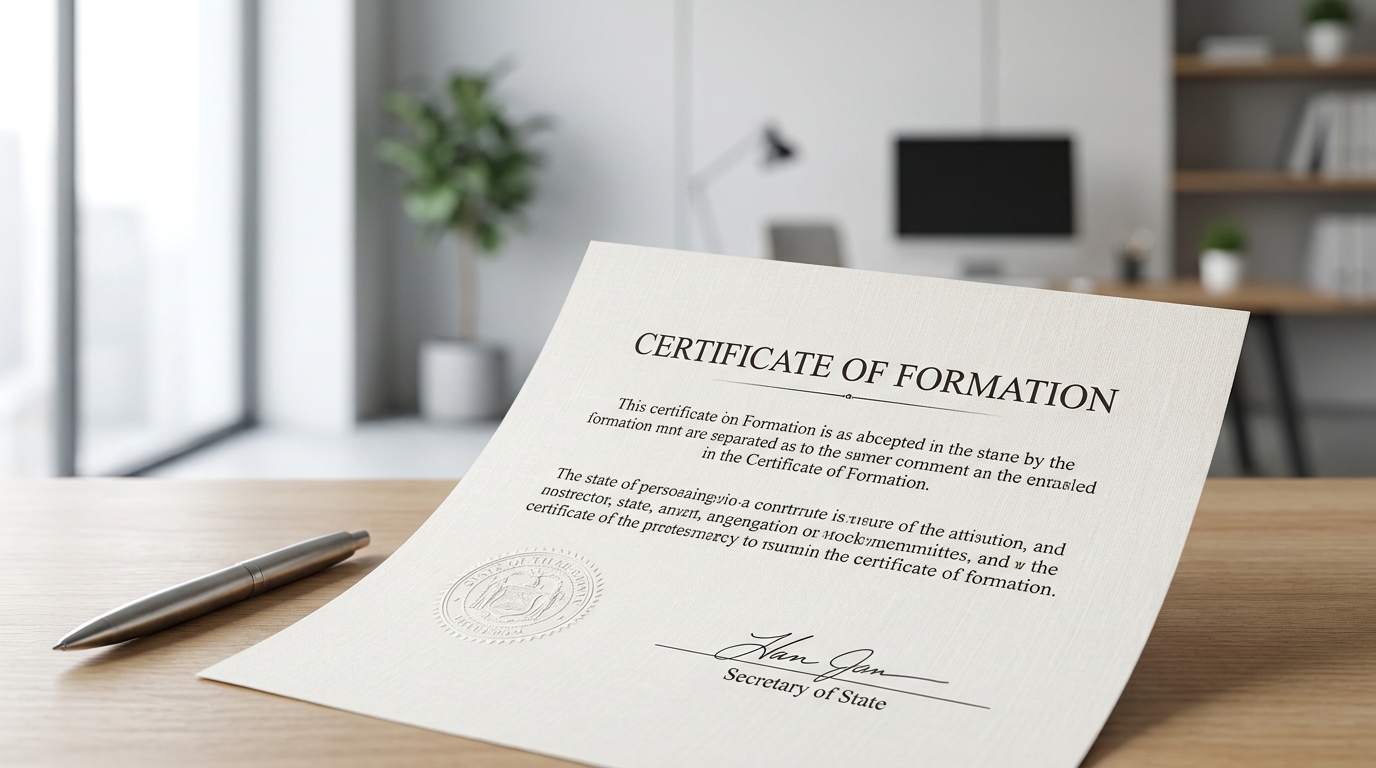
The first concrete cost you’ll encounter when incorporating in Delaware is the initial filing fee with the Delaware Secretary of State. This fee varies depending on your chosen entity type. For a Limited Liability Company (LLC), the fee to file a Certificate of Formation is currently $90. This is a straightforward, one-time payment to establish your LLC legally within the state. For a C-Corporation, the initial filing fee is more complex and depends on the number of authorized shares and their par value. The minimum fee for filing a Certificate of Incorporation for a C-Corp is $89, which covers entities with 1,500 authorized shares or less with no par value, or up to 1,500 shares of par value stock with an aggregate par value of $100,000 or less. If your corporation authorizes more shares or higher par value, the fee increases incrementally. Our resource on setting up your Delaware LLC breaks this down further. For example, a corporation authorizing 5,000 shares of no par value stock would incur a filing fee of $125. Corporations anticipating significant growth often start with a higher number of authorized shares to avoid future amendment fees, which can add complexity and cost. It's important to note that these fees are non-negotiable state charges. Whether you file yourself, use a legal firm, or leverage a service like Lovie, these are the base costs that go directly to the Delaware Secretary of State. These fees must be paid upfront before your entity can be officially recognized. Understanding these initial outlays is crucial for accurate budgeting when establishing your presence in Delaware, ensuring there are no surprises as you begin your entrepreneurial journey.
The Indispensable Registered Agent: Costs and Requirements
Every business entity formed in Delaware, whether an LLC or a C-Corp, is legally required to maintain a registered agent with a physical street address in Delaware. This isn't just a bureaucratic hurdle; the registered agent serves as the official point of contact for your business, responsible for receiving important legal and tax documents, service of process (should your company be sued), and official state correspondence. If you don't have a physical presence in Delaware, or even if you do, many businesses opt for a professional registered agent service to ensure compliance and reliability. Registered agent fees typically range from $50 to $300 per year, depending on the provider and the services included. Some providers offer basic mail forwarding, while others might include digital mail scanning, compliance alerts, and even a dedicated online portal for managing your documents. While it might seem like an additional expense, a reliable registered agent is critical. If you're exploring this further, our guide on LLC registration in Delaware is a helpful next step. Failing to maintain one can lead to severe consequences, including forfeiture of your entity's good standing, fines, and even administrative dissolution by the state. This can be a significant setback for your business, requiring costly reinstatement procedures. When evaluating providers, consider not just the price, but the reputation, responsiveness, and additional value they offer. Lovie's $29 one-time fee covers formation preparation and filing, with compliance reminders included; state filing fees are paid directly to your state, and registered agent service is priced separately at $79/year ($49/year in Wyoming).
Annual Franchise Tax and Fees for Delaware LLCs
Unlike C-Corporations, Delaware LLCs are not subject to a traditional franchise tax based on shares. Instead, they pay an annual flat fee. This fee, currently $300, is due every year on June 1st. It's a straightforward payment that all active Delaware LLCs must make to maintain their good standing with the state. This annual fee is non-negotiable and applies regardless of the LLC's revenue, profits, or activity level. Missing this deadline can lead to penalties and, ultimately, the forfeiture of your LLC's Certificate of Formation, meaning your entity would no longer be legally recognized in Delaware.
In addition to the annual fee, LLCs must also file an annual report, though this is a less complex process than for C-Corps. The annual report for an LLC primarily serves to confirm the registered agent and address information. There are no additional filing fees associated with the LLC annual report itself, beyond the $300 annual fee. It's crucial for LLC owners to mark the June 1st deadline in their calendars to avoid any late penalties. While the annual fee is higher than some other states for LLCs, the benefits of Delaware's legal system and privacy protections often justify this cost for many entrepreneurs. Services like Lovie help automate compliance reminders, ensuring you never miss these critical annual obligations.
Delaware C-Corp Franchise Tax: Understanding the Calculation
Delaware C-Corporations face a more intricate annual obligation: the Delaware Franchise Tax. This tax is due by March 1st each year and can range from a minimum of $175 to potentially hundreds of thousands of dollars, depending on the corporation’s structure. There are two primary methods for calculating the Franchise Tax: the Authorized Shares Method and the Assumed Par Value Capital Method. Corporations are required to calculate their tax using both methods and pay the lesser of the two.
- Authorized Shares Method: This is often simpler for corporations with a relatively low number of authorized shares. The tax is calculated based on the number of authorized shares as follows:
- 5,000 shares or less: $175
- 5,001 to 10,000 shares: $250
- Each additional 10,000 shares or portion thereof: $85 (with a maximum tax of $200,000)
- Assumed Par Value Capital Method: This method is typically more beneficial for corporations with a large number of authorized shares but a low total gross assets value. It involves a calculation based on total gross assets and total issued shares, converting them to an 'assumed par value' to determine the tax. This method often requires more detailed financial information.
Many startups and small businesses with a reasonable number of authorized shares find the Authorized Shares Method results in the minimum $175 tax. However, larger corporations or those with complex capital structures must carefully calculate both to minimize their tax burden. A key difference from LLCs is that C-Corps must also file an annual report along with their franchise tax payment. This report includes information about the corporation's officers, directors, and registered agent. Failure to file the annual report and pay the franchise tax by the March 1st deadline will result in a $125 penalty, plus interest on the unpaid tax, and can lead to the corporation losing its good standing.
Beyond the Basics: Additional Incorporation Expenses
While initial filing fees, registered agent costs, and annual taxes form the core expenses, several other potential costs can arise when incorporating in Delaware. These might not be mandatory for all businesses but are important considerations for comprehensive budgeting.
EIN Application
Every new business with employees or operating as a corporation (including single-member LLCs electing to be taxed as corporations) needs an Employer Identification Number (EIN) from the IRS. While you can apply for an EIN yourself for free directly through the IRS, many formation services, including Lovie, assist with this process as part of their package to ensure it's done correctly and efficiently. If you opt for a paid service to handle this, expect a fee of $50-$150.
Business Licenses and Permits
Incorporating in Delaware doesn't automatically grant you the right to operate your business. You may need specific federal, state, and local business licenses and permits depending on your industry and location of operation. For example, a restaurant will need health permits, while a consulting firm might only need a general business license in its operating city. These fees vary widely, from a few dollars to several hundred annually, and typically apply in the state and locality where your business physically conducts operations, not necessarily Delaware.
Legal and Accounting Advice
While Lovie simplifies the filing process, it’s not a law firm and doesn't provide legal or tax advice. Many founders opt to consult with attorneys for custom operating agreements, shareholder agreements, or intellectual property protection, and with accountants for tax planning and compliance. These professional services can range from hundreds to thousands of dollars, depending on the complexity of your business and the extent of the advice needed. It's an investment in ensuring your business is structured optimally and legally sound from the outset.
Foreign Qualification (If Operating Outside Delaware)
If your Delaware entity conducts business in another state (e.g., has employees, a physical office, or significant revenue generation there), you will likely need to
Delaware vs. Other States: A Cost Comparison
When considering the cost to incorporate, it's natural to compare Delaware with other popular states like Wyoming, Nevada, or your home state. While Delaware’s initial filing fees are competitive, its annual franchise tax structure, particularly for C-Corps, can be higher than some alternatives. For instance, Wyoming LLCs have an initial filing fee of $100 and an annual report fee of just $60, making it a very low-cost option for basic maintenance. Nevada also offers low initial fees ($75 for LLCs, $75 for corporations) and relatively modest annual fees, but its privacy protections are not as robust as Delaware's.
However, focusing solely on the lowest fees can be a shortsighted approach. The 'true cost' of incorporation extends beyond just the state fees. Consider the benefits: Delaware's well-established legal system and Court of Chancery provide predictability and a wealth of case law, which can significantly reduce legal costs and risks in the long run, especially for complex transactions or disputes. The state’s reputation also carries weight with investors, often streamlining the fundraising process for startups. For C-Corps specifically, the familiarity of Delaware corporate law among venture capitalists is a significant intangible benefit that can translate into easier access to funding. While a Wyoming LLC might be cheaper to maintain annually, a high-growth tech startup looking for Series A funding will almost invariably be advised to incorporate as a Delaware C-Corp.
Ultimately, the choice of state should align with your business goals, anticipated growth, and risk tolerance. If you prioritize minimal annual fees and maximum privacy, a state like Wyoming might be attractive for an LLC. But if you're building a scalable company aiming for investor funding or anticipate complex legal scenarios, Delaware's higher long-term value often justifies its costs. The cheapest option isn't always the best, and a holistic view of both direct and indirect costs is essential for an informed decision.
Streamlining Incorporation with Lovie: A Transparent Approach
Navigating the complexities and varied costs of incorporating in Delaware can be a daunting task for founders, especially when trying to decipher state fees, registered agent services, and annual compliance requirements. This is precisely where Lovie aims to simplify the entire process, offering a transparent, all-inclusive solution for forming your Delaware LLC or C-Corp.
Lovie’s single $29 one-time fee is designed to consolidate all the essential services and state fees into one predictable cost, eliminating hidden charges and confusing upsells. This includes the initial filing fee with the Delaware Secretary of State, ensuring your Certificate of Formation or Incorporation is correctly prepared and submitted. Registered agent service is required in every state and is priced separately at $79/year ($49/year in Wyoming). Beyond these foundational elements, Lovie assists with securing your Employer Identification Number (EIN) from the IRS, provides essential operating agreement templates, and even includes digital mail scanning for all official correspondence received by your registered agent.
For ongoing compliance, Lovie offers AI-driven monitoring to help you stay ahead of annual report deadlines and franchise tax obligations, reducing the risk of penalties or loss of good standing. This comprehensive approach means you don't have to manage multiple vendors or worry about unexpected fees. Instead, you get a clear, consistent cost structure and a powerful platform that helps manage your company’s legal health from day one. By choosing Lovie, founders can focus on building their business, confident that their Delaware entity is professionally established and maintained without the usual administrative headaches and cost ambiguities. It's a modern solution built for modern entrepreneurs, providing peace of mind and predictable budgeting for your Delaware incorporation.
Frequently asked questions
Can I incorporate in Delaware if I don't live there?
Yes, you absolutely can. Delaware does not require business owners, members, or officers to be residents of the state. You will, however, need to maintain a registered agent with a physical street address in Delaware to receive official documents on your company's behalf. This is a common practice, and many non-Delaware residents choose to incorporate there for its business-friendly laws and legal system.
What is the difference between an LLC and a C-Corp in terms of cost?
The main cost differences are in the initial filing and annual fees. Delaware LLCs have a flat $90 initial filing fee and a flat $300 annual fee. Delaware C-Corps have a minimum $89 initial filing fee (which can increase with more authorized shares) and an annual franchise tax that starts at $175 but can be significantly higher depending on the number of authorized shares and capital structure. C-Corps also require an annual report filing by March 1st.
What happens if I miss my annual franchise tax payment in Delaware?
Missing the March 1st deadline for C-Corps or the June 1st deadline for LLCs will result in penalties. For C-Corps, a $125 penalty plus interest on the unpaid tax applies, and the corporation will lose its good standing. For LLCs, a $200 penalty applies, and the LLC will lose its good standing, potentially leading to forfeiture of its Certificate of Formation. Reinstatement can be costly and involve additional fees and paperwork.
Is a Delaware registered agent mandatory?
Yes, a Delaware registered agent is a legal requirement for all business entities formed in the state, including LLCs and C-Corps. The registered agent must have a physical street address in Delaware where they can receive legal documents, service of process, and official state correspondence during normal business hours. You cannot use a P.O. Box for this purpose.
Are there any hidden fees when incorporating in Delaware?
While the state fees are transparent, some services may have 'hidden' fees through upsells or by not including essential services. For example, some registered agent services might charge extra for digital mail scanning or compliance alerts. Other potential costs like business licenses, legal advice, or foreign qualification fees (if you operate in other states) are not state fees but are crucial for full compliance and often overlooked. Lovie aims to minimize these by bundling key services.
How long does it take to incorporate in Delaware?
Standard processing times for the Delaware Secretary of State typically range from 2-3 weeks. However, expedited services are available for additional fees: 24-hour processing costs an extra $100, same-day processing (received by 7 PM ET) is an additional $500, and two-hour processing is an extra $1,000. These expedited fees are paid directly to the state and are separate from any service provider's fees.
Delaware Formation Data Insights
| State Filing Fee | $90 |
| Annual Fee | $300 |
| First Year Total | $690 |
| Processing Time | 6.3 days avg (official: 5-10 days) |
| Corporate Tax Rate | 8.7% |
Key Insights
- Delaware'de LLC kurulum maliyeti ulusal ortalamanın $466 üzerinde — toplam ilk yıl maliyeti $690.
- Lovie platformu üzerinden Delaware LLC başvuruları ortalama 6.3 iş gününde onaylanmaktadır (eyalet resmi süresi: 5-10 gün).
- Delaware merkezli işletmeler için EIN onay süresi ortalama 3.8 gündür.
- Delaware kurumlar vergisi oranı %8.7 ile ulusal ortalamanın (%6.57) üzerindedir.
Data sources: State Secretary of State offices, IRS, Tax Foundation (2026). Platform metrics based on anonymized Lovie user data.
Key Concepts: Business Formation
US Business Formation guides entrepreneurs through the business formation process with actionable steps. Key components include LLC formation, entity registration, and state filing, each playing a critical role in the business formation process. Understanding liability protection and tax optimization is essential, as these factors directly impact legal compliance.
When evaluating business formation options, factors such as business entity types and formation process should inform your decision-making process.
Entity Relationships
- Business Formation requires LLC formation
- Business Formation includes entity registration
- Business Formation establishes state filing
- Business Formation defines business structure selection
Quick answers
What do I need to know about How Much To Incorporate In for my business?
Understanding How Much To Incorporate In is essential for business compliance and operational success. The specific requirements vary by state and industry.
How does How Much To Incorporate In affect my business formation?
This aspect of business formation directly impacts your legal standing, tax obligations, and operational flexibility.
Explore Formation Guides
State-specific formation guides, cost breakdowns, compliance checklists, and expert comparisons — updated for 2026.
LLC Formation Guides
- How to Form an LLC for Virtual Assistant Hawaii
- How to Form an LLC for Web Developer West Virginia
- How to Form an LLC for Drone Services Wyoming
- How to Form an LLC for Freelancing California
Popular Guides
Cost by Entity & State
- Sole Proprietorship Cost Alabama Formation Costs
- Nonprofit Cost Michigan Formation Costs (2026) | Lovie
- C Corp Cost South Carolina Formation Costs (2026) | Lovie

Lovie is not a government agency, law firm, or professional advisory organization. Lovie is a private business-formation service that prepares and submits filings to the appropriate state agencies on your behalf — we do not issue government documents, and state approval times are not controlled by Lovie. Information on this page is general and not legal, tax, or financial advice.