
On this page · 8 sections
- What Exactly is an EIN?
- Who Needs an EIN and Why It's Crucial
- Eligibility: Who Can Apply for an EIN?
- Understanding EIN Application Methods
- Step-by-Step: Applying Online with the IRS
- Alternative Application: Fax or Mail (Form SS-4)
- Avoiding Common EIN Application Mistakes
- Post-Application: Managing Your EIN
What Exactly is an EIN?
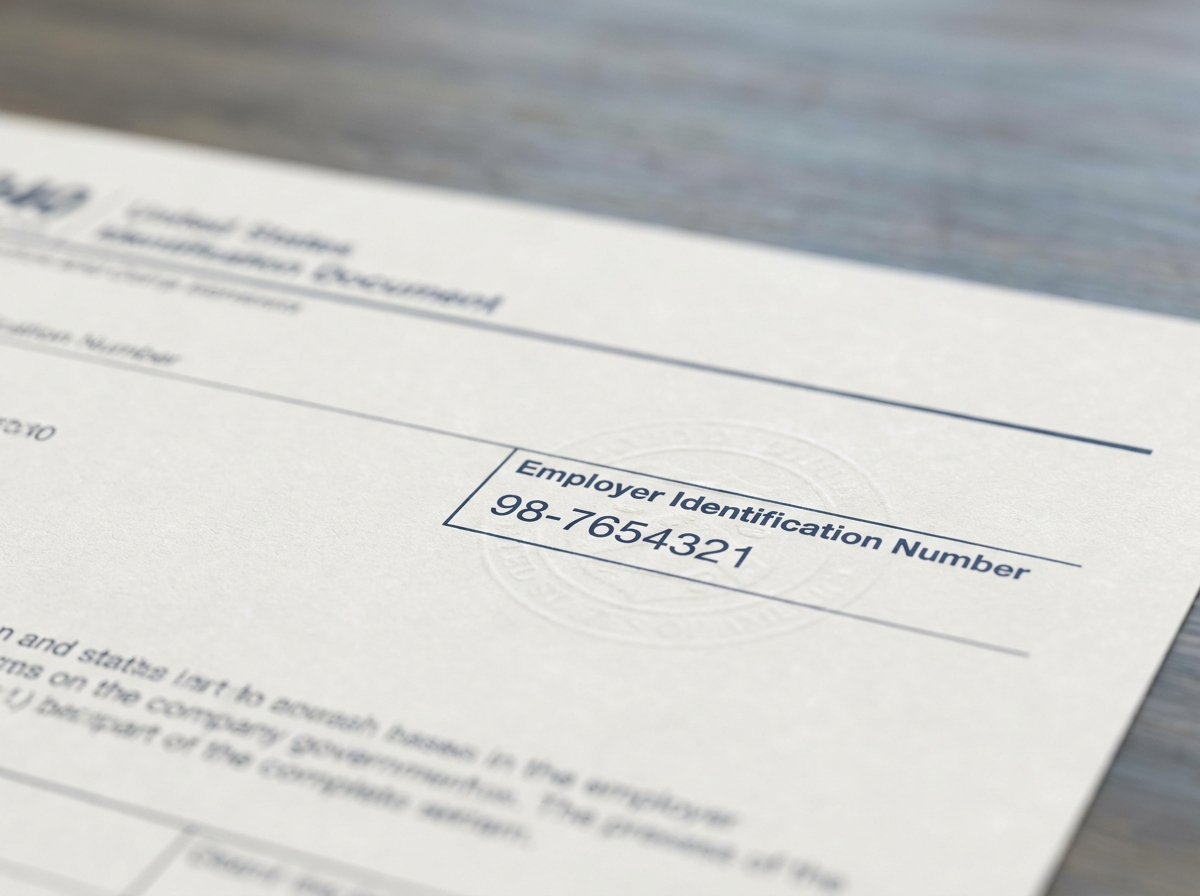
An Employer Identification Number (EIN), often referred to as a Federal Tax Identification Number, is a unique nine-digit identifier assigned by the Internal Revenue Service (IRS) to business entities operating within the United States. Think of it as your business's social security number, crucial for almost every interaction with the federal and state governments concerning your business. This number is formatted as XX-XXXXXXX, making it distinct from individual Social Security Numbers (SSNs) or Individual Taxpayer Identification Numbers (ITINs). The primary purpose of an EIN is for tax administration. It allows the IRS to identify businesses for tax purposes, ensuring proper reporting and compliance. Beyond taxes, an EIN is a foundational requirement for numerous critical business activities. If you're exploring this further, our guide on LLC registration in Arkansas is a helpful next step. For instance, without an EIN, you cannot open a dedicated business bank account, which is essential for separating personal and business finances and maintaining financial clarity. It's also required for obtaining various business licenses and permits, processing payroll if you plan to hire employees, and applying for business loans or lines of credit. Even if you're a sole proprietor without employees, an EIN can offer a layer of separation, allowing you to use it instead of your personal SSN for some business dealings, thus protecting your personal identity. Understanding the EIN's role is the first step in establishing a compliant and functional business entity in the U.S.
Who Needs an EIN and Why It's Crucial
Determining whether your business requires an EIN is a fundamental step in establishing legal and tax compliance. Generally, most business entities in the U.S. will need one. The IRS outlines specific criteria, and if your business falls into any of these categories, an EIN is mandatory. This includes corporations (C-Corps and S-Corps), partnerships, and multi-member LLCs. These structures are legally distinct from their owners and, by definition, require an EIN for tax filing and operational purposes. Even if your business structure doesn't strictly mandate an EIN, obtaining one can still be highly beneficial. For instance, sole proprietors or single-member LLCs, which are often disregarded as separate entities for tax purposes (meaning their income and expenses are reported on the owner's personal tax return, Form 1040, Schedule C), can opt to get an EIN. Doing so allows them to use the EIN instead of their personal Social Security Number (SSN) for business operations, such as opening a business bank account or dealing with vendors. This separation can enhance personal identity protection and create a more professional image. Furthermore, if a sole proprietor or single-member LLC decides to hire employees, they are immediately required to obtain an EIN, irrespective of their initial tax structure. For a deeper dive, see our resource on setting up your California LLC. The IRS uses the EIN to track payroll taxes, unemployment taxes, and other employment-related tax obligations. Therefore, even if not immediately required, it's often a forward-thinking decision to secure an EIN as your business grows or changes its operational scope. ## Specific Scenarios Requiring an EIN:
- Hiring Employees: Any business that pays wages or salaries to employees. This includes household employees if certain thresholds are met. - Operating as a Corporation or Partnership: All corporations and partnerships must have an EIN. - Multi-Member LLCs: LLCs with more than one member are taxed as partnerships by default and require an EIN. - Filing Certain Tax Returns: This includes excise, employment, or alcohol, tobacco, and firearms taxes. - Withholding Taxes on Income: If you withhold taxes on income, other than wages, paid to a non-resident alien. - Specific Organization Types: Trusts (except certain grantor trusts), IRAs, non-profit organizations, farmer's cooperatives, and real estate mortgage investment conduits (REMICs).
Eligibility: Who Can Apply for an EIN?
Before you can apply for an EIN, it's crucial to understand the eligibility criteria set forth by the IRS. The fundamental requirement is that the applicant must have a legitimate business purpose for needing the EIN. This isn't just a formality; it ensures that EINs are issued for genuine business operations and not for fraudulent activities or personal use. The IRS specifies that to apply for an EIN, you must first have an existing business entity or be in the process of forming one. This includes entities like sole proprietorships, partnerships, corporations, or limited liability companies (LLCs). Another critical eligibility factor is the Responsible Party. The Responsible Party is the individual or entity who ultimately controls, manages, or directs the applicant entity and the disposition of its funds and assets. For most small businesses, this will be the owner, a partner, or a principal officer. This individual must have a valid U.S. Taxpayer Identification Number (TIN), which can be an SSN, ITIN, or an existing EIN if the responsible party is another business entity. If the responsible party is an international founder without an SSN or ITIN, there are specific procedures, primarily involving applying by fax or mail, as the online application generally requires a U.S. TIN. You might also find our guide on starting a business in Colorado useful here. Lovie assists international founders with this complexity by guiding them through the correct application method. ## Responsible Party Guidelines:
- Sole Proprietorship: The sole proprietor. - Partnership: Any partner. - Corporation: A principal officer. - LLC (Single-Member): The owner. - LLC (Multi-Member): Any member or principal officer. It's important to note that a single individual can only be the Responsible Party for a limited number of entities within a 12-month period if applying online. If you're establishing multiple businesses, this is a point to consider. The IRS may also request additional documentation to verify the responsible party's identity or the legitimacy of the business purpose. Ensuring you meet these criteria before initiating the application process will prevent delays and potential rejections, streamlining your path to obtaining this essential business identifier.
Understanding EIN Application Methods
The IRS offers several distinct methods for applying for an Employer Identification Number, each with its own set of requirements and processing times. The most common and often preferred method for eligible applicants is the online application, primarily due to its speed and efficiency. However, depending on your specific circumstances, other methods like fax, mail, or even telephone might be necessary.
Online Application (IRS EIN Assistant):
The IRS's online application is available through their 'EIN Assistant' and is generally the quickest way to obtain an EIN. It's designed for applicants who have a U.S. Taxpayer Identification Number (SSN, ITIN, or existing EIN) and can complete the application in a single session. The system issues the EIN immediately upon successful completion. This method is ideal for most domestic businesses, including LLCs, corporations, and sole proprietorships, provided the responsible party has a U.S. TIN.
Fax Application:
If you're an international applicant without a U.S. SSN or ITIN, or if you prefer a paper application but want a faster response than mail, applying by fax is a viable option. You'll need to complete Form SS-4, 'Application for Employer Identification Number,' and fax it to the IRS. Processing times for faxed applications typically range from 4 business days to a few weeks, depending on IRS workload. You must provide a return fax number to receive your EIN confirmation.
Mail Application:
Similar to faxing, applying by mail involves completing Form SS-4 and sending it to the appropriate IRS address. This method is the slowest, with processing times often taking several weeks. It's generally recommended only if other methods are not feasible or if you don't require your EIN urgently. International applicants without a U.S. TIN can use this method.
Telephone Application (for International Applicants Only):
Under specific circumstances, international applicants who do not have a U.S. SSN or ITIN may be able to apply for an EIN by telephone. This method is usually reserved for those with an urgent need and involves calling the IRS at +1-267-941-1099 (this is not a toll-free number). The IRS representative will complete Form SS-4 over the phone with you, and the EIN will be provided immediately. This is a complex option and typically requires careful preparation.
Choosing the right application method is critical. For most U.S.-based founders, the online application is the clear winner. For international founders, Lovie streamlines the process by guiding you through the correct forms and submission methods, ensuring compliance and efficiency.

Step-by-Step: Applying Online with the IRS
The online application through the IRS website is the fastest and most common method for obtaining an EIN for most eligible businesses. This process is designed to be completed in a single session, and upon successful submission, your EIN is issued immediately. Before you begin, ensure you have all necessary information readily available to avoid being timed out of the system.
Prepare Your Information:
- Business Legal Name and Address: This must match your formation documents exactly.
- Type of Entity: Select from Sole Proprietor, Partnership, Corporation, LLC, etc.
- Reason for Applying: Common reasons include 'Started a new business,' 'Hired employees,' or 'Banking purposes.'
- Responsible Party Information: Full name, title, and SSN/ITIN of the individual who controls the business. This is a crucial detail for security and verification.
- Start Date of Business: The month and year your business began or will begin operations.
Navigating the Online Application:
- Access the IRS EIN Assistant: Go to the IRS website and search for 'Apply for an Employer Identification Number (EIN) Online.' Click the link to begin.
- Read Instructions and Begin: Carefully read the introductory pages. There will be prompts to ensure you understand the requirements and implications.
- Answer Questions Accurately: The application will ask a series of questions about your business type, reason for applying, and the responsible party. Be precise and avoid errors. Any discrepancy could lead to delays or rejection.
- Verify Information: Before final submission, you'll have an opportunity to review all your entered information. Double-check everything, especially names, addresses, and tax ID numbers.
- Receive Your EIN: Once submitted, if all information is correct and eligible, your EIN will be displayed on the screen. Print or save this confirmation immediately. This is your official EIN confirmation letter (CP 575).
Remember, the online application requires a U.S. Taxpayer Identification Number (SSN or ITIN) for the responsible party. If you are an international founder without one, you will need to apply via fax or mail. Lovie streamlines this entire process for you by preparing all necessary forms and guiding you through the correct submission path, ensuring a seamless experience, especially for international founders navigating U.S. federal requirements.
Alternative Application: Fax or Mail (Form SS-4)
While the online application is the fastest method, there are specific scenarios where applying for an EIN via fax or mail using Form SS-4, 'Application for Employer Identification Number,' is necessary. This is particularly true for international applicants who do not have a U.S. Social Security Number (SSN) or Individual Taxpayer Identification Number (ITIN), as the online system requires one for the responsible party. These methods, while slower, are equally valid and effective.
Form SS-4: What You Need to Know
Form SS-4 is a comprehensive document that collects all the information the IRS needs to assign an EIN. It requires details about your business entity, its primary activities, the reason for applying, and the responsible party's information. It's critical to fill out this form accurately and completely to avoid processing delays.
Key Sections of Form SS-4:
- Line 1-4b: Applicant Information: Legal name, trade name (if different), mailing address, and county/state.
- Line 5: Trust/Estate/LLC Name: If applicable, the name of the LLC. For multi-member LLCs, indicate how it's taxed (partnership, corporation).
- Line 6: Type of Entity: Check the box that best describes your legal structure.
- Line 7a-7b: Responsible Party Information: Name and SSN/ITIN/EIN of the individual or entity responsible for the business.
- Line 8a-8c: Reason for Applying: Select the primary reason (e.g., 'Started new business,' 'Hired employees').
- Line 9-17: Business Information: Details about your business activities, number of employees (if any), and first date wages were paid (if applicable).
Submission via Fax:
Once Form SS-4 is completed, you can fax it to the IRS. For businesses located in the 50 states or D.C., the fax number is 855-641-6935. For international applicants, use +1-855-215-1627 or +1-801-620-7670 if applying from outside the U.S. Include a return fax number so the IRS can send your EIN confirmation. Processing typically takes 4 business days to several weeks.
Submission via Mail:
For mail applications, send the completed Form SS-4 to the appropriate IRS address. For businesses in the 50 states or D.C., mail to: Internal Revenue Service, Attn: EIN Operation, Cincinnati, OH 45999. International applicants mail to: Internal Revenue Service, Attn: EIN International Operation, Cincinnati, OH 45999. Expect processing times of several weeks to a month. While slower, this method is reliable. Lovie can prepare your Form SS-4 with precision, ensuring all details are correctly presented for a smooth submission, especially for those who must use these manual methods.
Avoiding Common EIN Application Mistakes
Even though the EIN application process seems straightforward, certain common mistakes can lead to significant delays or even rejection. Being aware of these pitfalls beforehand can save you time and frustration, ensuring your business gets its essential tax ID without unnecessary hurdles.
Incorrect Responsible Party Information:
One of the most frequent errors is providing incorrect or inconsistent information for the Responsible Party. This individual's name and SSN/ITIN must exactly match IRS records. Discrepancies, even minor ones like a misspelled name or an incorrect digit in the SSN, will cause the application to be flagged and delayed. Ensure the Responsible Party's identity can be verified through their U.S. Taxpayer Identification Number.
Applying for Multiple EINs Unnecessarily:
Some founders mistakenly believe they need a new EIN for every new business venture or for different aspects of a single business. Generally, a business entity only needs one EIN for its lifetime. While there are exceptions (e.g., changing from a sole proprietorship to a corporation, or a significant change in ownership for an LLC), most changes do not warrant a new EIN. Applying for a second EIN when not required can create confusion with the IRS and complicate your tax filings.
Inaccurate Business Entity Type:
Selecting the wrong business entity type on Form SS-4 or the online application is another common error. For example, incorrectly identifying a multi-member LLC as a sole proprietorship, or vice-versa, can lead to tax misclassifications. Always ensure the entity type selected aligns with your official formation documents filed with the state. This is especially critical for LLCs, which have flexible tax classifications.
Incomplete or Inconsistent Information:
Leaving fields blank, providing conflicting dates, or giving an address that doesn't match other official records can all trigger IRS scrutiny. Every piece of information requested on Form SS-4 or the online assistant serves a purpose. Take the time to review your answers thoroughly before submission. For example, the 'date business started' should be consistent with your state formation date or the date of first business activity.
Applying When Not Eligible:
Only entities with a legitimate business purpose are eligible for an EIN. Applying for an EIN for personal reasons, or without an active intent to form a business, will result in rejection. The IRS is vigilant about preventing misuse of EINs. Lovie's platform meticulously reviews your information before submission, helping you avoid these common pitfalls and ensuring your application is accurate and compliant from the outset.
Post-Application: Managing Your EIN
Obtaining your EIN is a critical milestone, but it's just the beginning of responsibly managing this vital business identifier. Proper management of your EIN ensures ongoing compliance, smooth financial operations, and protects your business from potential issues with the IRS.
Keep Your EIN Secure:
Your EIN is sensitive information. Treat it with the same level of security as you would your personal SSN. Only share it with trusted entities that legitimately require it, such as your bank, payroll provider, state tax agencies, and government licensing bodies. Avoid listing it publicly on websites or business cards, as this could expose your business to identity theft.
Notify the IRS of Changes:
While your EIN generally remains with your business for its lifetime, certain significant changes may require you to notify the IRS or even obtain a new EIN. These situations are rare but important to understand:
- Change in Business Structure: If a sole proprietorship incorporates, or an LLC elects to be taxed as a corporation, a new EIN may be required. However, if a multi-member LLC converts to a single-member LLC and retains its original EIN, it typically does not need a new one.
- Significant Ownership Change: For partnerships, a change in partners that results in a new partnership typically requires a new EIN. For corporations, a change in ownership through stock purchase generally does not require a new EIN.
- Mergers and Acquisitions: These complex events often necessitate a new EIN for the resulting entity.
Always consult IRS Publication 1635, 'Employer ID Numbers (EINs) – An Overview,' or a tax professional if you're unsure whether a change in your business structure or ownership requires a new EIN. The general rule is to err on the side of caution and seek expert advice.
Lost or Forgotten EIN:
If you lose or forget your EIN, don't panic. The IRS provides several ways to retrieve it:
- Look on Previous Documents: Check old tax returns, official IRS correspondence, or even your business bank account statements.
- Contact Third Parties: Your bank, state tax agency, or payroll provider may have your EIN on file.
- Call the IRS: The Business & Specialty Tax Line at 800-829-4933 can assist you. You'll need to verify your identity as the Responsible Party. This service is available Monday through Friday, 7 a.m. to 7 p.m. local time.
By proactively managing your EIN and understanding when to seek guidance, you ensure your business remains compliant and avoids unnecessary complications. Lovie assists with the initial EIN registration and provides ongoing support to help you navigate these critical post-formation compliance requirements.
Frequently asked questions
How long does it take to get an EIN?
If you apply online through the IRS EIN Assistant and are eligible (e.g., have a U.S. SSN or ITIN as the Responsible Party), your EIN is issued immediately upon successful completion of the application. For fax applications, it typically takes 4 business days to several weeks. Mail applications are the slowest, usually taking several weeks to a month for processing and receipt.
Can I use my Social Security Number (SSN) instead of an EIN for my business?
For sole proprietors and single-member LLCs without employees, you can generally use your SSN for tax purposes. However, if you plan to hire employees, operate as a corporation or partnership, or want to open a business bank account, an EIN is required. Many businesses, even sole proprietors, prefer to obtain an EIN for professional credibility and to protect their personal SSN.
Is there a fee to obtain an EIN?
No, applying for an EIN directly through the IRS is completely free, regardless of the application method (online, fax, mail, or phone). Be wary of third-party services that charge a fee solely for obtaining an EIN, as this is a service you can perform yourself at no cost. Lovie's $29 one-time fee covers formation preparation and filing, with compliance reminders included; state filing fees are paid directly to your state, and registered agent service is priced separately at $79/year ($49/year in Wyoming).
What is a 'Responsible Party' for an EIN application?
The Responsible Party is the individual or entity who ultimately controls, manages, or directs the applicant entity and the disposition of its funds and assets. For most small businesses, this is the owner, a partner, or a principal officer. This individual must have a valid U.S. Taxpayer Identification Number (SSN, ITIN, or existing EIN).
Do I need a new EIN if I change my business name or address?
Generally, no. Changing your business name or address does not typically require a new EIN. Your existing EIN remains valid for your business entity. You should, however, notify the IRS of any address changes using Form 8822-B, Change of Address or Responsible Party, or by writing to them. For name changes, update your records with the IRS.
Can an international founder obtain an EIN without a U.S. SSN or ITIN?
Yes, international founders without a U.S. SSN or ITIN can obtain an EIN. However, they cannot use the IRS's online application. Instead, they must apply by fax or mail using Form SS-4, or in urgent cases, by calling the IRS international line. Lovie specializes in assisting international founders through these specific application processes.
What if I already have an EIN but need another one?
Most business entities only need one EIN for their lifetime. You typically only need a new EIN if your business structure changes significantly (e.g., from a sole proprietorship to a corporation) or if there's a major change in ownership. If you believe you need another EIN, consult IRS Publication 1635 or a tax professional to confirm your eligibility and avoid unnecessary applications.
Lovie Data Insights
Technology & SaaS — Formation Context
Recommended Entity: C-Corp
Key Tax Benefit: R&D Tax Credit (up to $500K for startups)
Compliance Priority: IP assignment agreements, 83(b) elections
Data sources: State Secretary of State offices, IRS, Tax Foundation (2026). Platform metrics based on anonymized Lovie user data.
Key Concepts: Business Formation
US Business Formation guides entrepreneurs through the business formation process with actionable steps. Key components include LLC formation, entity registration, and state filing, each playing a critical role in the business formation process. Understanding liability protection and tax optimization is essential, as these factors directly impact legal compliance.
When evaluating business formation options, factors such as business entity types and formation process should inform your decision-making process.
Entity Relationships
- Business Formation requires LLC formation
- Business Formation includes entity registration
- Business Formation establishes state filing
- Business Formation defines business structure selection
Quick answers
What do I need to know about How To Make An Llc In for my business?
Understanding How To Make An Llc In is essential for business compliance and operational success. The specific requirements vary by state and industry.
How does How To Make An Llc In affect my business formation?
This aspect of business formation directly impacts your legal standing, tax obligations, and operational flexibility.
Explore Formation Guides
State-specific formation guides, cost breakdowns, compliance checklists, and expert comparisons — updated for 2026.
LLC Formation Guides
- How to Form an LLC for Virtual Assistant Hawaii
- How to Form an LLC for Web Developer West Virginia
- How to Form an LLC for Drone Services Wyoming
- How to Form an LLC for Freelancing California
Popular Guides
Cost by Entity & State
- Sole Proprietorship Cost Alabama Formation Costs
- Nonprofit Cost Michigan Formation Costs (2026) | Lovie
- C Corp Cost South Carolina Formation Costs (2026) | Lovie

Lovie is not a government agency, law firm, or professional advisory organization. Lovie is a private business-formation service that prepares and submits filings to the appropriate state agencies on your behalf — we do not issue government documents, and state approval times are not controlled by Lovie. Information on this page is general and not legal, tax, or financial advice.