
On this page · 8 sections
Why Nevada: Unpacking the Silver State's Business Appeal
Nevada stands out as a premier destination for entrepreneurs, largely due to its highly favorable tax environment and pro-business policies. The state boasts no corporate income tax, no personal income tax, and no franchise tax, which can significantly boost a company's bottom line compared to states with heavier tax burdens. This fiscal advantage alone attracts a diverse range of industries, from technology startups in Reno to hospitality giants in Las Vegas, and e-commerce ventures operating from anywhere within the state. Beyond taxes, Nevada offers a streamlined regulatory environment designed to foster growth and innovation. The state’s commitment to minimal bureaucratic hurdles makes it easier for new businesses to get off the ground and scale efficiently. This supportive ecosystem is further enhanced by robust infrastructure, including advanced data centers and a well-connected transportation network, particularly beneficial for logistics and distribution businesses. Our resource on how to register an LLC in Nevada breaks this down further. Furthermore, Nevada provides a degree of privacy for business owners, especially for LLCs, where member information is not publicly disclosed in the same way as in some other states. This can be a significant draw for founders seeking to protect their personal details while operating their business. The state also offers strong asset protection laws, which can safeguard business assets from personal liabilities. Understanding these fundamental advantages is the first step in leveraging Nevada's unique position in the national business landscape. It’s not just about what you save, but the entire supportive framework the state provides for entrepreneurial success.
Selecting the Optimal Business Structure for Your Nevada Venture
The choice of business structure is a foundational decision with long-term implications for liability, taxation, and administrative burden. In Nevada, the most common structures are the Sole Proprietorship, Partnership, Limited Liability Company (LLC), and Corporation (S-Corp or C-Corp). Each offers distinct advantages and disadvantages tailored to different business models and founder objectives. A Sole Proprietorship is the simplest to form, blending the owner and business for tax and liability purposes, but offers no personal liability protection. Partnerships, while also straightforward, involve shared liability among partners. For many startups and small businesses, the Limited Liability Company (LLC) is often the preferred choice. It combines the personal liability protection of a corporation with the pass-through taxation benefits of a partnership or sole proprietorship. This means the business's debts and legal issues are separate from the owner's personal assets. If you're exploring this further, our guide on setting up your Nevada LLC is a helpful next step. Nevada LLCs also benefit from greater privacy protections, as member names are not required on public filings. Corporations, both S-Corp and C-Corp, are suitable for businesses planning to raise significant capital, issue stock, or eventually go public. C-Corps are subject to double taxation (corporate profits and shareholder dividends), while S-Corps offer pass-through taxation, avoiding the corporate tax level. The decision should align with your business goals, risk tolerance, and future growth projections. For instance, a tech startup seeking venture capital will likely lean towards a C-Corp, while a small consulting firm might find an LLC more appropriate for its flexibility and protection. Lovie can help you navigate these choices, preparing and submitting filings for both LLCs and C-Corps across all 50 states.
Registering Your Nevada Business Name: Rules and Availability
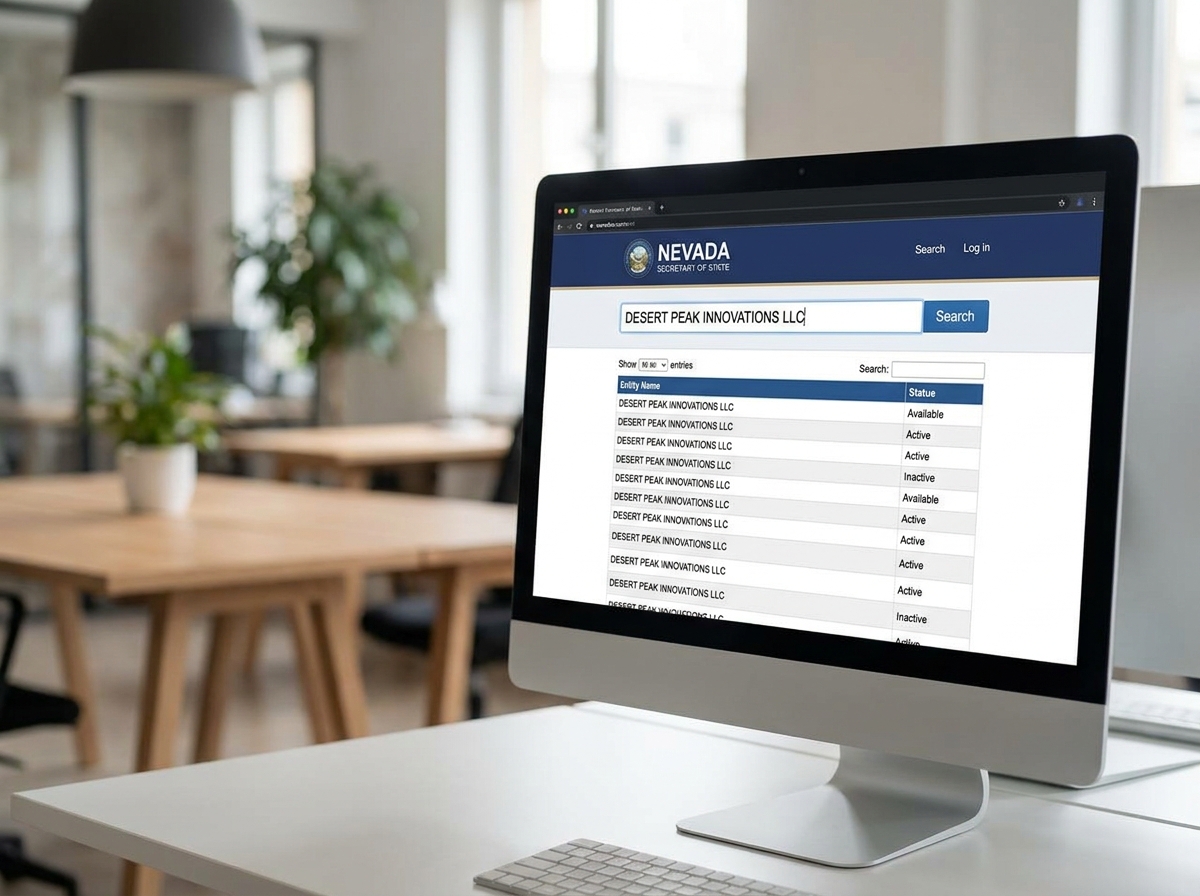
Selecting and registering your business name is a critical step that defines your brand identity and ensures legal compliance. In Nevada, your chosen name must be distinguishable from other registered entities with the Nevada Secretary of State. This means it cannot be identical or deceptively similar to an existing business name. Before you commit, it's essential to conduct a thorough name availability search through the Nevada Secretary of State's official website. For a deeper dive, see our resource on forming an LLC in Nevada. This search tool allows you to check if your desired name is already in use or too similar to one that is. For an LLC, your name must include
Understanding the Role of a Nevada Registered Agent
Every business entity in Nevada, whether an LLC or a corporation, is legally required to appoint a registered agent. This individual or entity acts as your business's official point of contact for receiving legal documents, state correspondence, and service of process. The registered agent must have a physical street address in Nevada (not a P.O. Box) and be available during normal business hours. Their primary responsibility is to ensure that your business promptly receives all critical legal and tax notices, helping you avoid missed deadlines or legal complications. Choosing a reliable registered agent is paramount. While you can technically act as your own registered agent, it often proves impractical for several reasons. First, it requires you to be physically present at a specific Nevada address during business hours, which can be challenging for remote founders or those who travel frequently. Second, it exposes your personal address to public records. Third, receiving service of process at your place of business can be disruptive and potentially embarrassing. Lovie's $29 one-time fee covers formation preparation and filing, with compliance reminders included; state filing fees are paid directly to your state, and registered agent service is priced separately at $79/year ($49/year in Wyoming). They ensure that all official communications are handled professionally and forwarded to you promptly, regardless of your location. This allows you to focus on running your business without worrying about compliance with this specific state requirement. Registered agent service is required in every state and is priced separately at $79/year ($49/year in Wyoming).
Submitting Your Formation Documents to the Nevada Secretary of State
Once you've chosen your business structure, selected a name, and appointed a registered agent, the next critical step is to formally register your entity with the Nevada Secretary of State. For an LLC, this involves filing the 'Articles of Organization.' For a corporation, you will file 'Articles of Incorporation.' These documents are the legal bedrock of your business, officially creating the entity and establishing its key details. The Articles of Organization for an LLC typically require information such as the name of your LLC, the name and address of your registered agent, and whether the LLC will be member-managed or manager-managed. For a corporation, the Articles of Incorporation generally include the corporate name, registered agent information, the number of authorized shares, and the names and addresses of the incorporators. As of 2026, the filing fee for both Articles of Organization (LLC) and Articles of Incorporation (Corporation) with the Nevada Secretary of State is $75. It's crucial to ensure all information is accurate and complete to avoid delays. Errors can lead to rejection and require refiling, pushing back your business's official start date. While the process can be handled directly through the Secretary of State's website, many founders opt for a service like Lovie to ensure accuracy and efficiency. Lovie’s AI-powered platform prepares and submits these filings on your behalf, streamlining the process and providing real-time status updates, so you always know where your formation stands. Remember, state approval times vary, and Lovie assists with the preparation and submission, but does not control the state's processing timeline.
Securing Your EIN and Navigating Federal Tax Requirements
After your business is officially registered with the Nevada Secretary of State, the next crucial federal step is to obtain an Employer Identification Number (EIN) from the Internal Revenue Service (IRS). An EIN is essentially a Social Security number for your business, a unique nine-digit identifier required for most business activities. You'll need an EIN if your business has employees, operates as a corporation or partnership, files excise taxes, or withholds taxes on income (other than wages) paid to a non-resident alien. Even sole proprietorships may need an EIN if they plan to hire employees. The EIN is indispensable for opening a business bank account, filing federal and state tax returns, applying for business licenses and permits, and hiring employees. Applying for an EIN is a free process and can be done online directly through the IRS website. While straightforward, it requires accurate information about your business and its responsible party. Missteps here can lead to delays in obtaining this vital identification number. Beyond the EIN, certain specialized businesses might require additional federal identification numbers or registrations, particularly those operating in highly regulated industries like finance, transportation, or alcohol and tobacco. It's essential to research specific federal agency requirements relevant to your industry. Lovie simplifies the EIN application process by preparing and submitting the necessary forms to the IRS on your behalf, ensuring accuracy and saving you time. Lovie's $29 one-time fee covers formation preparation and filing, with compliance reminders included; state filing fees are paid directly to your state, and registered agent service is priced separately at $79/year ($49/year in Wyoming).
Navigating Nevada's State and Local Business Licensing
Beyond state registration and federal IDs, most businesses in Nevada will need to obtain various state and local licenses and permits to operate legally. The specific licenses required depend heavily on your industry, business activities, and geographic location within Nevada. At the state level, virtually all businesses must obtain a Nevada State Business License (sometimes referred to as a basic business license or privilege license) from the Nevada Secretary of State. As of 2026, the initial application fee for this license is $200 for an LLC or corporation, and $50 for a sole proprietorship or partnership. This license must be renewed annually. Additionally, certain professions or industries, such as contractors, real estate agents, doctors, or those handling food, will require specific professional or occupational licenses issued by relevant state boards or agencies. For example, a restaurant in Las Vegas would need health permits from the Southern Nevada Health District, while a construction company in Reno would need a contractor's license from the Nevada State Contractors Board. At the local level, you'll need to investigate requirements set by your specific city and county. This often includes general business licenses, zoning permits, fire department inspections, and potentially specialized permits for signage, advertising, or specific types of operations. For instance, a retail store in Henderson would need a city business license in addition to its state license. It's crucial to research these requirements thoroughly for your specific location and industry. The Nevada Business Portal and your local city/county clerk's office are excellent starting points. Failing to obtain the necessary licenses can result in fines, legal penalties, and even forced closure of your business. Lovie's $29 one-time fee covers formation preparation and filing, with compliance reminders included; state filing fees are paid directly to your state, and registered agent service is priced separately at $79/year ($49/year in Wyoming).

Maintaining Compliance and Navigating Ongoing Reporting in Nevada
Establishing your business in Nevada is just the first step; ongoing compliance is crucial for its long-term health and legal standing. Nevada has specific annual requirements that all registered entities must meet. For both LLCs and corporations, this typically includes filing an Annual List of Managers or Managing Members (for LLCs) or Officers and Directors (for corporations) with the Nevada Secretary of State. As of 2026, the filing fee for this annual list is $150. Additionally, businesses must renew their Nevada State Business License annually, which carries a separate renewal fee of $200 for LLCs and corporations, and $50 for sole proprietorships or partnerships. Missing these deadlines can result in late fees and, eventually, administrative dissolution of your business, meaning you lose your legal protection and good standing. Beyond state filings, businesses must also adhere to federal tax obligations, including income tax filings (even for pass-through entities), payroll taxes if you have employees, and potentially excise taxes. Staying on top of these dates and requirements can be complex, especially as your business grows. Lovie's $29 one-time fee covers formation preparation and filing, with compliance reminders included; state filing fees are paid directly to your state, and registered agent service is priced separately at $79/year ($49/year in Wyoming). It tracks key deadlines and alerts you to upcoming requirements, helping you avoid costly penalties and maintain good standing with both state and federal authorities. Furthermore, depending on your industry, you might have specific regulatory compliance requirements from various agencies. For instance, a fintech startup will have different compliance needs than a restaurant. Regularly reviewing state and federal regulations applicable to your niche is vital. While Lovie assists with monitoring, it's always prudent to consult with legal and tax professionals to ensure comprehensive compliance specific to your unique business operations. Proactive management of these ongoing obligations ensures your Nevada business remains legally sound and ready for growth.
Frequently asked questions
What are the primary tax advantages of starting a business in Nevada?
Nevada offers significant tax advantages, including no state corporate income tax, no personal income tax, and no franchise tax. This means businesses can retain more of their earnings, and owners are not subject to state income tax on their share of profits from pass-through entities like LLCs. This favorable environment makes Nevada particularly attractive for businesses focused on profitability and growth.
Can I start a business in Nevada if I don't live there?
Yes, you can absolutely start a business in Nevada even if you don't reside in the state. However, Nevada law requires all registered business entities (LLCs, corporations) to have a registered agent with a physical street address in Nevada. This registered agent serves as the official point of contact for legal and tax correspondence. Services like Lovie provide this essential registered agent service.
What is the difference between an LLC and a Corporation in Nevada?
An LLC (Limited Liability Company) offers personal liability protection and pass-through taxation, meaning profits and losses are reported on the owners' personal tax returns. A Corporation (C-Corp or S-Corp) also provides liability protection but has a more complex structure suitable for raising capital and issuing stock. C-Corps face double taxation, while S-Corps offer pass-through taxation similar to an LLC but with more stringent operational requirements.
How much does it cost to register an LLC in Nevada?
As of 2026, the initial filing fee for Articles of Organization for an LLC with the Nevada Secretary of State is $75. Additionally, you will need to pay an initial Nevada State Business License fee of $200. There are also annual fees for maintaining your LLC's good standing.
Do I need a business license for my Nevada business?
Yes, almost all businesses operating in Nevada are required to obtain a Nevada State Business License from the Secretary of State. Furthermore, depending on your industry and specific location (city/county), you will likely need to acquire additional local business licenses and permits. It's crucial to research all applicable state and local requirements.
What is a Nevada Registered Agent and why do I need one?
A Nevada Registered Agent is a designated individual or entity with a physical street address in Nevada (not a P.O. Box) who is available during business hours to receive legal documents, state correspondence, and service of process on behalf of your business. It's a legal requirement for all registered entities to ensure official communications are always received reliably.
How long does it take to form a business in Nevada?
The time it takes to form a business in Nevada can vary. Online filings with the Nevada Secretary of State are generally processed faster than mail-in submissions. Typically, it can take a few business days to a couple of weeks for your Articles of Organization or Incorporation to be approved. Expedited processing options are sometimes available for an additional fee. Obtaining an EIN usually takes just a few minutes online.
Nevada Formation Data Insights
| State Filing Fee | $75 |
| Annual Fee | $350 |
| First Year Total | $425 |
| Processing Time | 2.6 days avg (official: 1-2 days) |
| Corporate Tax Rate | No corporate income tax |
Key Insights
- Nevada'de LLC kurulum maliyeti ulusal ortalamanın $201 üzerinde — toplam ilk yıl maliyeti $425.
- Lovie platformu üzerinden Nevada LLC başvuruları ortalama 2.6 iş gününde onaylanmaktadır (eyalet resmi süresi: 1-2 gün).
- Nevada merkezli işletmeler için EIN onay süresi ortalama 3.5 gündür.
- Nevada kurumlar vergisi uygulamaz — bu durum özellikle yüksek kâr marjlı işletmeler için önemli bir avantaj sağlar.
Creative & Media — Formation Context
Recommended Entity: LLC
Key Tax Benefit: Home office, equipment, software subscriptions
Compliance Priority: Copyright/IP protection, contract terms
Data sources: State Secretary of State offices, IRS, Tax Foundation (2026). Platform metrics based on anonymized Lovie user data.
Key Concepts: Business Formation
US Business Formation guides entrepreneurs through the business formation process with actionable steps. Key components include LLC formation, entity registration, and state filing, each playing a critical role in the business formation process. Understanding liability protection and tax optimization is essential, as these factors directly impact legal compliance.
When evaluating business formation options, factors such as business entity types and formation process should inform your decision-making process.
Entity Relationships
- Business Formation requires LLC formation
- Business Formation includes entity registration
- Business Formation establishes state filing
- Business Formation defines business structure selection
Quick answers
What do I need to know about How To Start A Business Ein Number for my business?
Understanding How To Start A Business Ein Number is essential for business compliance and operational success. The specific requirements vary by state and industry.
How does How To Start A Business Ein Number affect my business formation?
This aspect of business formation directly impacts your legal standing, tax obligations, and operational flexibility.
Explore Formation Guides
State-specific formation guides, cost breakdowns, compliance checklists, and expert comparisons — updated for 2026.
LLC Formation Guides
- How to Form an LLC for Virtual Assistant Hawaii
- How to Form an LLC for Web Developer West Virginia
- How to Form an LLC for Drone Services Wyoming
- How to Form an LLC for Freelancing California
Popular Guides
Cost by Entity & State
- Sole Proprietorship Cost Alabama Formation Costs
- Nonprofit Cost Michigan Formation Costs (2026) | Lovie
- C Corp Cost South Carolina Formation Costs (2026) | Lovie

Lovie is not a government agency, law firm, or professional advisory organization. Lovie is a private business-formation service that prepares and submits filings to the appropriate state agencies on your behalf — we do not issue government documents, and state approval times are not controlled by Lovie. Information on this page is general and not legal, tax, or financial advice.