On this page · 8 sections
- Understanding US LLCs for Bangladeshi Founders
- Why Form a US LLC from Bangladesh?
- Key Steps to US LLC Formation from Bangladesh
- Choosing the Right US State for Your LLC
- Tax Implications for Non-Resident LLC Owners
- Obtaining an EIN for Your US LLC
- US Bank Account Setup from Bangladesh
- Ongoing Compliance for Your US LLC
Understanding US LLCs for Bangladeshi Founders
A Limited Liability Company (LLC) in the United States offers a flexible business structure that combines the pass-through taxation of a partnership or sole proprietorship with the limited liability of a corporation. For founders in Bangladesh, this means your personal assets are protected from business debts and liabilities, which is a significant advantage. Unlike a C-Corp, an LLC typically avoids double taxation, where profits are taxed at both the corporate and individual levels. Instead, profits and losses are 'passed through' directly to the owners' personal income without being taxed at the company level. This structure is particularly appealing for small to medium-sized businesses, startups, and international entrepreneurs due to its simplicity and adaptability. This connects to our resource on starting a business in Alaska, which covers the details. The specific rules governing LLCs can vary slightly from state to state, but the core principles of liability protection and pass-through taxation remain consistent across the US. Understanding these foundational aspects is the first step toward a successful US venture. Lovie can assist with navigating these state-specific nuances to ensure your formation is compliant and optimized for your business goals.
Why Form a US LLC from Bangladesh?
Bangladeshi entrepreneurs choose to form US LLCs for a variety of strategic reasons. Primarily, a US entity lends significant credibility and prestige in the global marketplace. Operating under a US business name can open doors to international clients, investors, and payment processors that might otherwise be inaccessible. Many global platforms, such as Amazon, Stripe, and PayPal, often prefer or require a US-registered business for full functionality and easier integration. Furthermore, the US legal system is known for its stability and predictability, offering a secure environment for business operations. For related guidance, see our article on starting a business in Arizona. This can be especially attractive for tech startups, e-commerce businesses, and consultants looking to scale internationally. Access to the vast US market, with its robust consumer base and advanced infrastructure, is another compelling factor. While the initial setup may seem daunting, the long-term benefits in terms of market access, perceived reliability, and operational ease often outweigh the complexities. For instance, a US LLC simplifies receiving payments from US customers and vendors, streamlining financial operations considerably.
Key Steps to US LLC Formation from Bangladesh
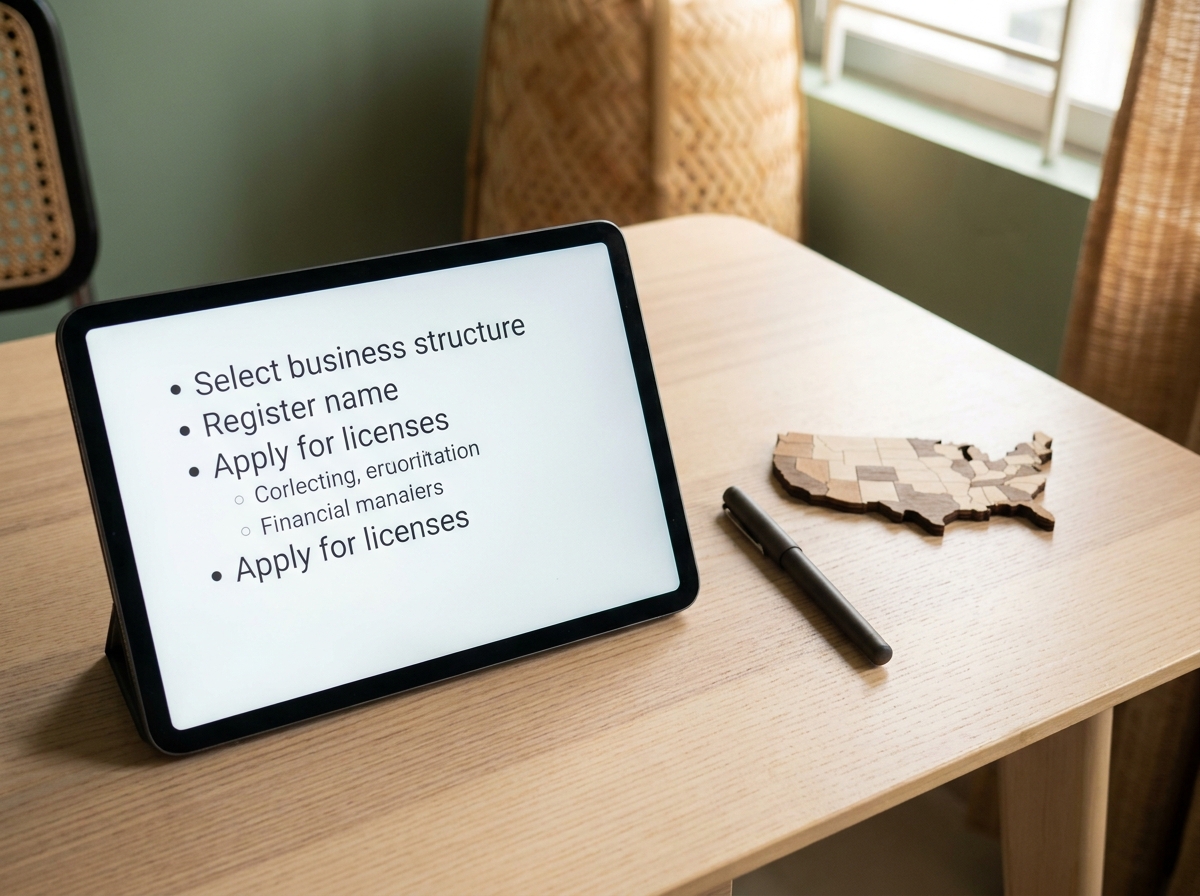
Forming a US LLC from Bangladesh involves several critical steps. First, you'll need to choose a state for your LLC, which will dictate specific filing requirements and ongoing fees. Next, you must select a unique business name that complies with that state's naming conventions. An essential requirement is appointing a Registered Agent with a physical address in the state of formation, who will receive official legal and tax documents on your behalf. After preparing and filing your Articles of Organization (or Certificate of Formation, depending on the state) with the Secretary of State, you'll need to obtain an Employer Identification Number (EIN) from the IRS, which is crucial for banking and tax purposes. For more details, see our guide on how to register an LLC in Arkansas. Finally, drafting an Operating Agreement, even if you are a sole member, is highly recommended to outline ownership, management, and operational procedures. This document, while often not filed with the state, provides internal governance. Lovie's $29 one-time fee covers formation preparation and filing, with compliance reminders included; state filing fees are paid directly to your state, and registered agent service is priced separately at $79/year ($49/year in Wyoming).
Choosing the Right US State for Your LLC
The choice of state for your US LLC is a strategic decision, not just a formality. States like Wyoming, Delaware, and Nevada are often cited for their business-friendly laws, strong privacy protections, and lack of state income tax for LLCs that don't conduct business within their borders. For example, Wyoming has a very low annual report fee (currently $60) and does not require owners' names to be listed on public records. Delaware is popular for its well-established corporate law and court system, making it a favorite for venture-backed startups, though its annual franchise tax is higher, starting at $300. Nevada offers similar privacy and no state income tax but has a higher initial filing fee and annual business license fee. If your primary business operations or customer base will be concentrated in a specific state, such as California or New York, forming there might make more sense to avoid foreign qualification requirements. However, for most Bangladeshi founders operating remotely, a state with low fees, strong privacy, and no state income tax on out-of-state income is often preferred. Lovie can provide insights into which state aligns best with your business model and long-term goals.
Tax Implications for Non-Resident LLC Owners
Understanding the tax landscape is crucial for Bangladeshi non-resident owners of US LLCs. By default, a single-member LLC is treated as a 'disregarded entity' for US federal income tax purposes, meaning the IRS treats it as a branch of the owner. If the LLC has no 'effectively connected income' (ECI) with a US trade or business, then the LLC itself may not owe federal income tax. However, if your LLC does have ECI, you, as the individual owner, would be responsible for filing a Form 1040-NR and paying US income tax on that income. For multi-member LLCs, the entity is generally treated as a partnership, requiring Form 1065 to be filed, with K-1s issued to partners who then report their share of income on their respective tax returns. It's important to note that state income taxes vary; states like Wyoming, Texas, Florida, and Washington have no state income tax, which can be a significant advantage. Bangladesh also has a tax treaty with the US, which might offer some relief from double taxation, but consulting with a tax professional experienced in international taxation is highly recommended to ensure full compliance and optimize your tax strategy. Lovie focuses on formation but can connect you with trusted tax advisors.
Obtaining an EIN for Your US LLC
An Employer Identification Number (EIN), also known as a Federal Tax Identification Number, is a unique nine-digit number assigned by the Internal Revenue Service (IRS) to identify a business entity. It's essential for virtually all US businesses, including LLCs formed by non-residents. You'll need an EIN to open a US business bank account, file federal and state tax returns, and hire employees if applicable. For non-US residents without a Social Security Number (SSN) or Individual Taxpayer Identification Number (ITIN), obtaining an EIN typically involves submitting Form SS-4 (Application for Employer Identification Number) via fax or mail to the IRS. The process can take several weeks if done manually, especially when faxing from outside the US. It's critical to accurately complete the form, especially sections regarding the responsible party and business activity. While you can apply yourself, many international founders find it more efficient to use a service like Lovie, which can prepare and submit your EIN application on your behalf, significantly streamlining this critical step and reducing potential delays. Having an EIN is a prerequisite for much of your subsequent business setup.
US Bank Account Setup from Bangladesh
Opening a US business bank account from Bangladesh without physically traveling to the US can be challenging but is entirely feasible with the right approach. Most traditional banks require in-person verification. However, several modern fintech solutions and challenger banks cater specifically to international founders. Companies like Mercury, Wise Business (formerly TransferWise), and Payoneer offer digital onboarding processes that allow non-residents to open US dollar accounts with features like ACH transfers, wire transfers, and virtual debit cards. To qualify, you will typically need your US LLC formation documents (Articles of Organization), your EIN, and a valid passport. Some banks may also request an Operating Agreement or proof of a US mailing address (which your Registered Agent can often provide). It's crucial to research each platform's specific requirements, fees, and services to find one that best suits your operational needs. Having a US bank account is indispensable for managing transactions with US clients, processing payments through platforms like Stripe, and handling US tax obligations. Lovie integrates seamlessly with many of these digital banking providers, simplifying your financial infrastructure. You'll need to prepare digital copies of all your formation documents for this step.
Ongoing Compliance for Your US LLC
Forming your US LLC is just the first step; maintaining compliance is equally important to keep your business in good standing. The primary ongoing requirements include filing an annual report or statement of information with the Secretary of State in your formation state and paying any associated annual fees. For example, Delaware requires an annual franchise tax of $300, while Wyoming has a $60 annual report fee. Failure to file these can lead to penalties, loss of good standing, and even administrative dissolution of your LLC. Lovie's $29 one-time fee covers formation preparation and filing, with compliance reminders included; state filing fees are paid directly to your state, and registered agent service is priced separately at $79/year ($49/year in Wyoming). Beyond state-level compliance, federal tax obligations include filing Form 5472 (Information Return of a 25% Foreign-Owned US Corporation or Foreign Corporation Engaged in a US Trade or Business) along with a pro-forma Form 1120 if your LLC is treated as a disregarded entity with effectively connected income. Even without ECI, reporting may still be necessary. Lovie's $29 one-time fee covers formation preparation and filing, with compliance reminders included; state filing fees are paid directly to your state, and registered agent service is priced separately at $79/year ($49/year in Wyoming).
Frequently asked questions
Do I need a US address to form an LLC from Bangladesh?
Yes, you need a physical US address for your Registered Agent, who will receive official documents. This address doesn't have to be your personal address; it's typically provided by a registered agent service like Lovie. For business correspondence, a virtual mailbox service can provide a US mailing address that scans your mail digitally.
Can I use my Bangladeshi address for my US LLC?
No, you cannot use your Bangladeshi address as the Registered Agent address for your US LLC. US state laws require a physical street address within the state of formation for your Registered Agent. You can, however, use your Bangladeshi address as the mailing address for the LLC's principal office if permitted by the state, but the Registered Agent address must be US-based.
How long does it take to form a US LLC from Bangladesh?
The formation timeline varies by state and IRS processing. State filing can range from a few days to several weeks, depending on the state's backlog and whether you opt for expedited services. Obtaining an EIN for non-residents typically takes 3-6 weeks after filing Form SS-4 by fax or mail. Overall, expect the entire process, including banking, to take 6-10 weeks.
What is a Registered Agent, and why do I need one?
A Registered Agent is a designated individual or entity with a physical address in the state of your LLC's formation. They are legally responsible for receiving official correspondence, legal documents, and service of process on behalf of your business. All US states require an LLC to have a Registered Agent to ensure the business can always be officially contacted. Lovie includes Registered Agent service for 3 years.
Are there any annual fees for a US LLC?
Yes, most US states impose annual fees for LLCs. These can include annual report filing fees, franchise taxes, or other administrative charges. For example, Delaware has a $300 annual franchise tax, while California has an $800 annual minimum franchise tax for LLCs. These fees are separate from federal taxes and vary significantly by state.
Can a Bangladeshi citizen be the sole owner of a US LLC?
Absolutely. A Bangladeshi citizen can be the sole owner and member of a US Limited Liability Company. There are no US citizenship or residency requirements to form or own an LLC. This flexibility makes the LLC structure highly attractive to international entrepreneurs.
Key Concepts: International Business Formation
US Business Formation for International Founders enables non-US residents to legally form and operate US business entities with full compliance. Key components include foreign founder requirements, non-US resident formation path, and ITIN application process, each playing a critical role in the international business formation process. Understanding foreign-owned LLC structure and FIRPTA compliance is essential, as these factors directly impact EIN without SSN procedure.
When evaluating international business formation options, factors such as international banking setup and US tax treaty advantages should inform your decision-making process.
Entity Relationships
- International Business Formation requires foreign founder requirements
- International Business Formation includes non-US resident formation path
- International Business Formation establishes ITIN application process
- International Business Formation defines treaty benefit eligibility
Quick answers
How do I start a Web Development business in Wisconsin?
Analyze the Web Development market in Wisconsin — competition, demand, and pricing.
Most Web Development businesses in Wisconsin form as LLCs for liability protection and tax flexibility. File with the Wisconsin Secretary of State. Lovie handles this for $29 one-time + state fees.
What licenses do I need for Web Development in Wisconsin?
Analyze the Web Development market in Wisconsin — competition, demand, and pricing.
Most Web Development businesses in Wisconsin form as LLCs for liability protection and tax flexibility. File with the Wisconsin Secretary of State. Lovie handles this for $29 one-time + state fees.
Explore Formation Guides
State-specific formation guides, cost breakdowns, compliance checklists, and expert comparisons — updated for 2026.
LLC Formation Guides
- How to Form an LLC for Virtual Assistant Hawaii
- How to Form an LLC for Web Developer West Virginia
- How to Form an LLC for Drone Services Wyoming
- How to Form an LLC for Freelancing California
Popular Guides
Cost by Entity & State
- Sole Proprietorship Cost Alabama Formation Costs
- Nonprofit Cost Michigan Formation Costs (2026) | Lovie
- C Corp Cost South Carolina Formation Costs (2026) | Lovie

Lovie is not a government agency, law firm, or professional advisory organization. Lovie is a private business-formation service that prepares and submits filings to the appropriate state agencies on your behalf — we do not issue government documents, and state approval times are not controlled by Lovie. Information on this page is general and not legal, tax, or financial advice.