Cap tables, dilution, and equity — explained for Day 1.
62 posts and counting — the questions Carta and Pulley write for growing companies, answered for founders who are just getting started.
Pulley vs Carta vs Lovie: Which Cap Table Platform Should You Choose?
Compare Pulley, Carta, and Lovie on service status, pricing model, migration support, compliance scope, modeling, and AI access before you move your cap table.
Sep 22, 2026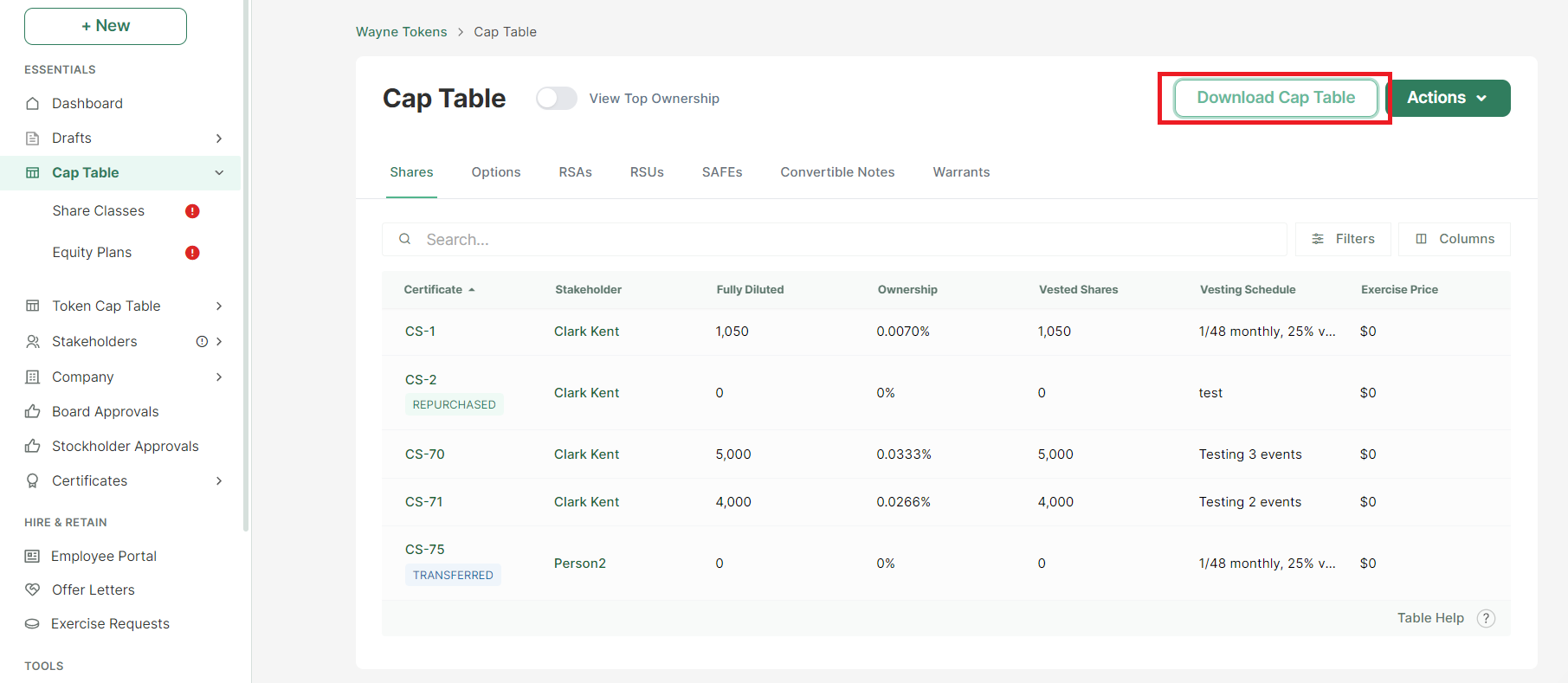
How to Export Your Cap Table Data from Pulley Before It Shuts Down
Export Pulley’s latest cap table workbook, archive the supporting records, convert CSV or XLSX locally, and reconcile the data before importing it into Lovie.
Sep 22, 2026
Opening Your Cap Table: Why Founder Transparency Builds Culture
Should I share my cap table with my employees and investors? What are the benefits and risks of cap table transparency? Here's exactly how it works.
Aug 30, 2026
Building an Equity Culture: How Great Founders Align Team Around Ownership
How can I build an equity culture at my startup? How do I get my team focused on long-term ownership and success? Here's exactly how it works.
Aug 30, 2026
Transfer Agent + Cap Table: How They Work Together (Pre-IPO Prep)
What is a transfer agent and how do they relate to my cap table? Do I need a transfer agent for my startup? Here's exactly how it works.
Aug 29, 2026
Cap Table Documentation: Building an Audit-Ready Paper Trail
What cap table documentation do I need to keep? How do I maintain an audit trail for my equity grants? Here's exactly how it works.
Aug 29, 2026
From Day 1 Cap Table to Exit: Tracking Founder Ownership Through Growth
How much will I make in a startup exit based on my cap table ownership? What is a typical founder payout at exit? Here's exactly how it works.
Aug 28, 2026
IPO-Ready Cap Table: The Compliance Checklist for Going Public
What cap table requirements do IPOs have? How do I prepare my cap table for going public? We break down exactly how it works, step by step.
Aug 28, 2026
Founder Equity Mistakes: 5 Real Stories (And How Much They Cost)
What are the biggest equity mistakes founders make? What are real examples of founder equity errors and their costs? Here's exactly how it works.
Aug 27, 2026Which cap table topic should founders read first?
Start with whatever decision is closest. Founders setting up equity read dilution and option pools first; anyone holding a signed offer starts with vesting and tax; a live fundraise or an exit pulls in term sheets and waterfalls. The archive below is grouped so you can jump straight to your stage.
- Setting up: founder splits, option pool sizing, and what a first round does to ownership.
- Holding equity: vesting, exercise windows, and the tax that lands when you exercise or sell.
- Raising or exiting: term sheet protections, down rounds, diligence packages, and payout modelling.
If you would rather work through a decision than read about it, the three interactive guides cover the same ground with your own numbers in them: the seed to Series B dilution map, the interactive term sheet decoder, and AI-native vs legacy equity management.
Advanced Structures
AI & Automation Features
Compliance & Automation
- Cap Table Documentation: Building an Audit-Ready Paper Trail
- AI Compliance Audits Your Cap Table: Catch Errors Before Investors Do
- Founder Restricted Stock Purchase Agreement: Template + Explanation
- ASC 718 Stock Compensation Accounting: For Founders (Not Just CPAs)
- The 83(b) Election Deadline: Your 30-Day Window (And Why Missing It Costs You Thousands)
- 409A Valuation Deadlines: Never Miss the Compliance Date Again (Auto-Tracking)
Compliance & IPO Readiness
Culture & Leadership
Employee Experience & Retention
- Founder Vesting: Should You Vest Your Own Equity? (When + Why)
- The 90-Day Exercise Window: What Leaving Really Costs
- Repricing Underwater Options After a Down Round
- Employee Option Exercise Guide: A Founder's Template for Explaining the Process
- Explain Vesting to Your Employees: Templates + Scenarios (+ Why Transparency Retains Talent)
- Does Equity Actually Retain Employees? (The Data + How Lovie Optimizes It)
- Show Your Equity to Your Team: Employee Dashboard for Ownership Transparency
- How to Distribute Equity Across Your Whole Team (Complete Guide + Benchmarks)
Equity Fairness & Benchmarks
Exit & M&A
- From Day 1 Cap Table to Exit: Tracking Founder Ownership Through Growth
- Stacked or Pari Passu: Who Gets Paid First in an Exit
- Participating Preferred: The Double Dip That Eats Common Stock
- The M&A Timeline: How Cap Table Cleanup Impacts Your Exit Speed
- Secondary Liquidity: Can You Sell Your Startup Equity Before Exit? (Complete Guide)
- What Will You Make in an Acquisition? Exit Payout Calculator (Interactive Waterfall)
Founder Setup & AI Acceleration
Founder Stories & Case Studies
Founder Wealth & Tax
Fundraising & Dilution
- FAST vs SAFE: Which Convertible Instrument Is Better for Your Cap Table?
- Why Most Founders Own Less Than They Think: Dilution Analysis (Real Data)
- Pay-to-Play: What Happens to Investors Who Sit Out
- Stacking SAFEs: What Happens When Different Caps Convert Together
- The Option Pool Shuffle: Who Actually Pays for the New Pool
- Pro-Rata Rights Explained: Protect Your Ownership in Future Rounds
- Founder Control After Funding: Voting Rights vs Investor Rights (Interactive Playbook)
- Cap Table Recapitalization: When Investors Force You to Restructure Equity
- Anti-Dilution Protection: Who Really Gets Hurt in a Down Round?
- Surviving a Down Round: How Your Cap Table Changes (+ What You Owe Investors)
- LLC vs C-Corp Cap Tables: Which Equity Structure Is Right For You? (Interactive Comparison)
- SAFE Agreements Explained (With Live Cap Table Impact Calculator)
- Option Pool Calculator: How Much Should You Reserve for Hiring? (With Growth Models)
- Your Ownership After Series A: The Real Numbers (+ Interactive Simulator)