On this page · 8 sections
- Understanding Business Legal Structures
- Sole Proprietorship: Simplicity and Direct Control
- LLC: Liability Protection and Credibility
- Liability Protection: A Critical Difference
- Taxation Implications for Lawn Care Businesses
- Administrative Burden and Compliance
- Growth, Scalability, and Credibility
- Making the Right Choice for Your Business
Understanding Business Legal Structures for Lawn Care
When launching a lawn care business, one of the foundational decisions you'll make is selecting its legal structure. This choice impacts everything from your personal liability to how your business is taxed, and even its potential for future growth. The two most common structures for small businesses, especially in service-oriented fields like lawn care, are the sole proprietorship and the Limited Liability Company (LLC). Many new entrepreneurs are drawn to the perceived simplicity of a sole proprietorship, while others prioritize the robust protection offered by an LLC. For more details, see our guide on starting a business in Arkansas. It's not merely a bureaucratic formality; it's a strategic decision that can shield your personal assets, streamline your operations, and enhance your business's professional image. Understanding the core differences between these structures is the first step toward building a resilient and successful lawn care venture. This guide will provide a clear, practical comparison, focusing on the aspects most relevant to your specific industry.

Sole Proprietorship: Simplicity and Direct Control
A sole proprietorship is the simplest and most common business structure for individuals starting out, often without formal legal steps. If you begin offering lawn care services, receive payments, and haven't registered any other business entity, you are automatically operating as a sole proprietorship. This structure means there's no legal distinction between you, the owner, and your business. All assets and liabilities of the business are considered personal assets and liabilities of the owner. This direct connection offers unparalleled control; you make all decisions, retain all profits, and face minimal startup costs. ## Key Characteristics of a Sole Proprietorship
- Ease of Formation: No formal state filing is required to establish a sole proprietorship. You might need a local business license or permit, depending on your municipality, but that's typically it. - Taxation: Business income and expenses are reported on your personal tax return (Schedule C of Form 1040). You can learn more about setting up your California LLC to understand the full picture. You pay self-employment taxes (Social Security and Medicare) on your net earnings. - Control: You have complete control over all business operations and decisions. - Profits: All profits are yours, directly. This structure is often chosen by those who prioritize immediate launch and minimal administrative overhead, making it attractive for part-time lawn care ventures or those testing the market. However, its simplicity comes with a significant trade-off, particularly concerning personal liability, which we'll explore next. For instance, in states like Texas, where there's no state-level business income tax, the ease of reporting through a sole proprietorship can be appealing, but it doesn't negate the personal liability aspect.
Limited Liability Company (LLC): Protection and Flexibility
A Limited Liability Company (LLC) offers a hybrid structure, combining the liability protection of a corporation with the pass-through taxation and operational flexibility of a partnership or sole proprietorship. For a lawn care business, forming an LLC means creating a separate legal entity from yourself. This crucial distinction provides a 'corporate veil' protecting your personal assets from business debts and liabilities. If your business faces a lawsuit or cannot pay its debts, your personal savings, home, and other assets are typically shielded. ## Advantages of an LLC for Lawn Care
- Limited Liability: This is the primary benefit. Your personal assets are protected from business debts and lawsuits. - Tax Flexibility: An LLC can choose to be taxed as a sole proprietorship (if single-member), a partnership (if multi-member), an S-corporation, or even a C-corporation. This flexibility allows you to optimize your tax strategy as your business grows. We cover this in depth in our resource on starting a business in Colorado. - Credibility: Operating as an LLC can enhance your business's professional image, instilling greater confidence in clients and potential lenders. It signals a more serious and established operation. - Growth Potential: An LLC structure is more adaptable for bringing in partners or investors, facilitating easier scaling and expansion. Forming an LLC involves filing Articles of Organization with your state's Secretary of State or equivalent agency and typically requires an operating agreement. While there are more initial steps and ongoing compliance requirements compared to a sole proprietorship, the benefits, especially liability protection, often outweigh the added administrative burden. For example, in California, LLC formation costs a state filing fee of $70, plus an annual franchise tax of $800, which is due even if the LLC has no income.

Liability Protection: A Critical Difference for Lawn Care
The starkest difference between a sole proprietorship and an LLC for a lawn care business lies in liability protection. This aspect is paramount in an industry that involves operating machinery, working on client properties, and interacting with the public.
Sole Proprietorship Liability
As a sole proprietor, you are personally responsible for all business debts and legal obligations. If your lawnmower malfunctions and damages a client's property, or if an employee (even if you're the only one) causes an injury, you could be personally sued. This means your personal assets—your home, car, savings, and investments—are at risk. While business insurance can mitigate some risks, it doesn't offer the fundamental legal separation that an LLC does. For instance, if a client sues for significant property damage exceeding your insurance coverage, a sole proprietorship offers no buffer between the business and your personal wealth.
LLC Liability Protection
An LLC provides limited liability protection, meaning your personal assets are generally shielded from business debts and lawsuits. The LLC itself is responsible for its obligations. If your lawn care business, as an LLC, is sued for negligence or incurs significant debt, only the assets owned by the LLC are typically at risk. This separation is often referred to as the 'corporate veil.' This protection is not absolute; courts can 'pierce the corporate veil' in cases of fraud, commingling personal and business funds, or other illegal activities. However, for a properly maintained LLC, it offers substantial peace of mind. Consider the increased risk of operating heavy machinery, applying chemicals, or working on diverse properties – an LLC provides a crucial layer of defense. For example, in Florida, where property values are high, protecting personal assets from potential business liabilities is a significant concern for many small business owners.
This fundamental difference in liability protection is often the deciding factor for lawn care entrepreneurs looking to grow their business and protect their personal financial future.
Taxation Implications for Lawn Care Businesses
Understanding the tax implications of each business structure is crucial for effective financial planning. The choice between a sole proprietorship and an LLC can significantly affect how much you pay in taxes and the complexity of your tax filings.
Sole Proprietorship Taxation
Sole proprietorships are subject to 'pass-through' taxation. This means the business itself is not taxed separately. Instead, all business income and expenses are reported on the owner's personal federal income tax return using Schedule C (Form 1040), Profit or Loss from Business. The net profit or loss from your lawn care business flows directly to your personal tax return. As the owner, you pay self-employment taxes (Social Security and Medicare) on your net earnings, which is currently 15.3% on the first $168,600 of net earnings for 2024, and 2.9% on all net earnings above that threshold. While simple, this can sometimes lead to a higher overall tax burden compared to other structures, especially as profits grow. State income tax rules vary; some states like Washington or Nevada have no individual income tax, simplifying things further, while others will have their own schedules.
LLC Taxation Flexibility
One of the most attractive features of an LLC is its tax flexibility. By default, a single-member LLC is taxed as a sole proprietorship, and a multi-member LLC is taxed as a partnership. This means the pass-through taxation applies initially, and owners report profits/losses on their personal returns. However, an LLC can elect to be taxed as an S-corporation or even a C-corporation.
S-Corporation Election
Electing S-corp status can be highly beneficial for profitable lawn care businesses. With an S-corp election, owners can take a reasonable salary and distribute the remaining profits as dividends. Dividends are not subject to self-employment taxes, which can result in significant tax savings. For example, if your LLC earns $100,000 in profit, and you take a $50,000 salary, the remaining $50,000 distributed as dividends would avoid the 15.3% self-employment tax. This strategy is particularly powerful in states with high self-employment taxes.
C-Corporation Election
While less common for lawn care, an LLC can elect C-corp taxation. This means the business is taxed separately, and profits are subject to corporate income tax (federally, 21% as of 2024). This structure is typically reserved for businesses planning to raise significant capital through investors, as profits are taxed at both the corporate and individual level ('double taxation') when distributed as dividends.
Lovie helps you with the initial EIN registration, which is essential for all business tax filings. This ensures your entity is properly recognized by the IRS, regardless of your chosen tax election.
Administrative Burden and Compliance Requirements
The administrative load and ongoing compliance requirements differ significantly between a sole proprietorship and an LLC. This factor often weighs heavily on entrepreneurs who prefer to focus on operations rather than paperwork.
Sole Proprietorship Administration
For a sole proprietorship, administrative requirements are minimal. You generally don't need to file any special reports with the state. Your primary obligations revolve around obtaining necessary local business licenses, permits, and adhering to tax deadlines. Record-keeping is essential for tax purposes, but there's no requirement to maintain separate corporate minutes or resolutions. If you operate under a name different from your own legal name (a 'Doing Business As' or DBA), you'll typically need to register that with your county or state. For example, in New York, a DBA registration is filed with the county clerk. This simplicity is a major draw for many starting their lawn care services, allowing them to focus entirely on client acquisition and service delivery.
LLC Compliance Requirements
An LLC, while offering greater protection, comes with more administrative responsibilities.
Key LLC Compliance Tasks
- Operating Agreement: While not always legally required by the state, a well-drafted operating agreement is crucial. It outlines ownership percentages, member responsibilities, profit/loss distribution, and procedures for decision-making. Lovie provides comprehensive operating agreement templates to simplify this process.
- Annual Reports/Fees: Most states require LLCs to file annual reports and pay associated fees. These fees vary widely. For example, California charges an $800 annual franchise tax, while Delaware requires an annual tax of $300. Missing these deadlines can lead to penalties or even administrative dissolution of your LLC.
- Registered Agent: Every LLC must designate a registered agent—a person or entity appointed to receive official legal and tax documents on behalf of the LLC. a year of registered agent service is included in the $499 price.
- Separate Records: Maintaining distinct bank accounts, financial records, and legal documentation for your LLC is vital to preserve its limited liability protection.
While these requirements add complexity, they are manageable. Lovie's $499 one-time fee covers the state filing fee, a year of registered agent service, your EIN application, five scanned mailpieces a year, and one domain name for a year. It is the same price in every state.
Growth, Scalability, and Professional Credibility
As your lawn care business grows, the initial choice of legal structure can either facilitate or hinder your expansion plans. This often becomes a critical factor for entrepreneurs with ambitions beyond a single-person operation.
Sole Proprietorship: Growth Limitations
A sole proprietorship can certainly grow, but it faces inherent limitations. Attracting investors is difficult because there are no shares or formal ownership units to sell. Expanding by bringing in partners can be complex, often requiring a conversion to a partnership or LLC. Furthermore, the lack of legal separation means all business growth directly increases your personal risk exposure. If you plan to hire multiple employees, invest in expensive equipment, or secure significant commercial contracts, the unlimited personal liability of a sole proprietorship becomes a serious deterrent. While you can certainly operate a successful, mid-sized lawn care business as a sole proprietor, the structure isn't designed for robust scalability or attracting outside capital.
LLC: Building a Foundation for Growth
An LLC provides a much more flexible and credible framework for growth.
How an LLC Supports Growth
- Investor Confidence: The formal legal structure and limited liability make an LLC more attractive to potential investors or partners. They can invest in the business without taking on your personal liabilities.
- Professional Image: Operating as an LLC signals a higher level of professionalism and seriousness to clients, suppliers, and lenders. This can be crucial when bidding on larger commercial landscaping projects or seeking business loans. For instance, many institutional lenders prefer to work with incorporated entities due to their structured nature and legal protections.
- Easier Expansion: Adding members or even converting to a corporation (like a C-Corp, which Lovie can assist with) is more straightforward from an LLC than from a sole proprietorship. This flexibility allows your business to evolve without needing a complete overhaul of its legal foundation.
- Attracting Talent: A well-structured LLC can offer more defined roles and ownership stakes, making it easier to attract and retain key employees as your business expands.
By forming an LLC early, you establish a solid foundation that can support significant expansion, allowing you to confidently pursue larger contracts, invest in new services, and build a lasting brand in the competitive lawn care market. Lovie's $499 one-time fee covers the state filing fee, a year of registered agent service, your EIN application, five scanned mailpieces a year, and one domain name for a year. It is the same price in every state.
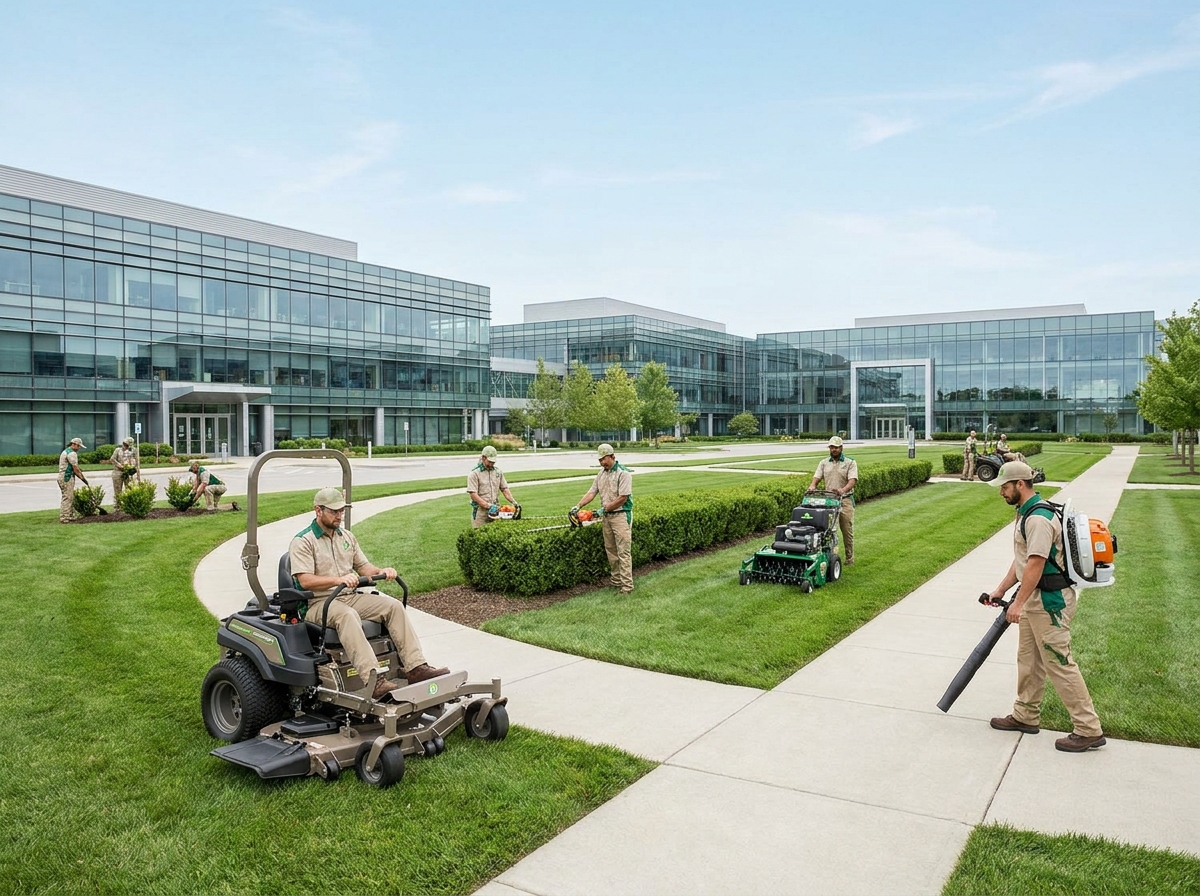
Making the Right Choice for Your Lawn Care Business
Deciding between a sole proprietorship and an LLC for your lawn care business is a critical step that requires careful consideration of your immediate needs and long-term aspirations. There's no universal 'best' choice; the ideal structure depends on your specific circumstances, risk tolerance, and growth projections.
When a Sole Proprietorship Might Be Right
- Low perceived risk: If you're starting small, with minimal equipment, and plan to serve only a few clients, the immediate personal liability might seem manageable, especially if you have robust insurance.
- Testing the waters: For those who want to validate their business idea with the absolute minimum of administrative overhead, a sole proprietorship allows for a quick launch.
- Part-time venture: If lawn care is a side hustle or a part-time endeavor, the simplicity of a sole proprietorship can be appealing.
When an LLC is the Smarter Choice
- Asset protection: If you own significant personal assets (a home, substantial savings) that you want to shield from business liabilities, an LLC is indispensable.
- Growth ambitions: If you plan to scale your business, hire employees, invest in expensive machinery, or seek commercial contracts, the LLC structure provides the necessary legal and professional foundation.
- Enhanced credibility: For businesses looking to project a highly professional image, attract larger clients, or secure financing, an LLC offers a significant advantage.
- Tax optimization: As your profits grow, the ability to elect S-corp taxation within an LLC can lead to substantial self-employment tax savings.
Ultimately, for most serious lawn care entrepreneurs looking to build a sustainable, growing business, an LLC offers superior protection, flexibility, and credibility. While it involves a bit more initial paperwork and ongoing compliance, the peace of mind and strategic advantages it provides are often well worth the effort. Lovie's $499 one-time fee covers the state filing fee, a year of registered agent service, your EIN application, five scanned mailpieces a year, and one domain name for a year. It is the same price in every state. Don't let administrative hurdles prevent you from securing your future.
Frequently asked questions
Can I switch from a sole proprietorship to an LLC later?
Yes, absolutely. Many entrepreneurs start as sole proprietors for simplicity and convert to an LLC as their business grows or their risk tolerance changes. The process typically involves filing Articles of Organization with your state and obtaining a new EIN for the LLC. You’ll also need to update any business licenses or permits. While it's generally easier to start with an LLC if you know you'll need one, converting is a common and straightforward process that Lovie can assist with.
Do I need a business license for my lawn care business?
Yes, regardless of whether you operate as a sole proprietorship or an LLC, you will likely need one or more business licenses and permits. These are typically issued by your city or county and can include a general business license, specific permits for pesticide application (if you offer those services), or vehicle permits. Always check with your local municipal and county governments to ensure full compliance before beginning operations.
What is an EIN and why do I need one for my lawn care business?
An Employer Identification Number (EIN) is a nine-digit number assigned by the IRS to identify businesses for tax purposes. If you plan to hire employees, operate as an LLC, or elect S-corp taxation, an EIN is mandatory. Even sole proprietors often get an EIN to avoid using their Social Security Number for business transactions. Lovie assists with obtaining your EIN as part of its formation service, simplifying IRS registration.
Does business insurance replace the need for an LLC?
No, business insurance does not replace the need for an LLC; they serve different, complementary purposes. Business insurance (like general liability) protects against specific risks such as property damage or injury, up to policy limits. An LLC provides statutory limited liability protection, creating a legal separation between your personal assets and business liabilities. While insurance covers financial losses from covered events, an LLC offers a fundamental legal shield for your personal wealth from business debts and lawsuits, even those exceeding insurance coverage.
Quick answers
What do I need to know about Lawn Care Llc Or Sole Proprietorship for my business?
Understanding Lawn Care Llc Or Sole Proprietorship is essential for business compliance and operational success. The specific requirements vary by state and industry.
How does Lawn Care Llc Or Sole Proprietorship affect my business formation?
This aspect of business formation directly impacts your legal standing, tax obligations, and operational flexibility.
Explore Formation Guides
State-specific formation guides, cost breakdowns, compliance checklists, and expert comparisons — updated for 2026.
Popular Guides
- Lawsuit Against DBA | Lovie — US Company Formation
- Legal Name of LLC | Lovie — US Company Formation
- Legit LLC Website | Lovie — US Company Formation
- Letter Of Good Standing Illinois — US Company Formation
- Liability Insurance For An LLC — US Company Formation Guide
- Licencia LLC | Lovie — US Company Formation
- License For Cleaning Business IN Florida — US Company
- Licenses And Permits Needed To Start A Business — US Company
- Limited Liability Company California — US Company Formation
- Limited Liability Company LLC — US Company Formation Guide
- Limited Liability Company Ohio — US Company Formation Guide
- Limited Liability Company Oklahoma — US Company Formation
- Limited Liability Corporation Definition — US Company
- Limited Liability Partnership Llp — US Company Formation
- Limited Liability Partnership Vs LLC — US Company Formation

Lovie is not a government agency, law firm, or professional advisory organization. Lovie is a private business-formation service that prepares and submits filings to the appropriate state agencies on your behalf — we do not issue government documents, and state approval times are not controlled by Lovie. Information on this page is general and not legal, tax, or financial advice.